


Pathways to Learning through a Global Vision
Educating the Next Generation of Scientists and Leaders
The School of Natural Sciences prepares broadly educated and socially conscious scientists who bring diverse backgrounds, perspectives, and experiences to the scientific community and workforce. Our dedicated faculty and staff empower students to achieve their goals, pursue rewarding careers and make positive contributions to society.
Through innovative teaching, personalized support and mentoring, and extensive opportunities for experiential learning (including internships and research with faculty), we meet students where they are and help them become the scientists, scholars, and professionals they aspire to be.
Hands-on Learning in and Outside the Classroom
Our curriculum also places a strong emphasis on collaborative, hands-on learning. Classwork and evidence-based research are conducted in world-class classrooms, labs and in the Wild Basin Creative Research Center. We formed the Institute for Interdisciplinary Science (i4), an educational and professional framework that aids in building cross-sector partnerships and interdisciplinary collaborations through funding mechanisms for NSCI faculty and students. In addition, study abroad opportunities have been integrated into our programs so students can explore the world without extending their degree completion timelines.
Our Departments
The School of Natural Sciences comprises six academic departments offering more than 30 undergraduate major, minor and certificate programs.
Department of Biological Sciences
The Department of Biological Sciences explores the processes which maintain life, as well as the events that disrupt it. Students will approach the study of biology from the level of genes, through cells and organ systems, to populations of living organisms.
Department of Chemistry
In the Chemistry Department, students learn basic chemical principles and theories through unique, hands-on, collaborative learning experiences designed to prepare graduates for a variety of careers.
Department of Computer Science
Study the theory and development of computer software by learning algorithmic processes that create, describe and transform information.
Department of Forensic Science
Learn how to collect and analyze evidence from crime scenes so it can be used in court cases or the criminal justice system.
Department of Kinesiology
Explore the principles and theories related to fitness and the human body — from the basics of bio-mechanics to exercise physiology.
Department of Mathematics
Pursue your passion for problem-solving and prepare for high-impact careers in engineering, statistics, finance, cryptography, aeronautics, scientific research or business.
Our Programs
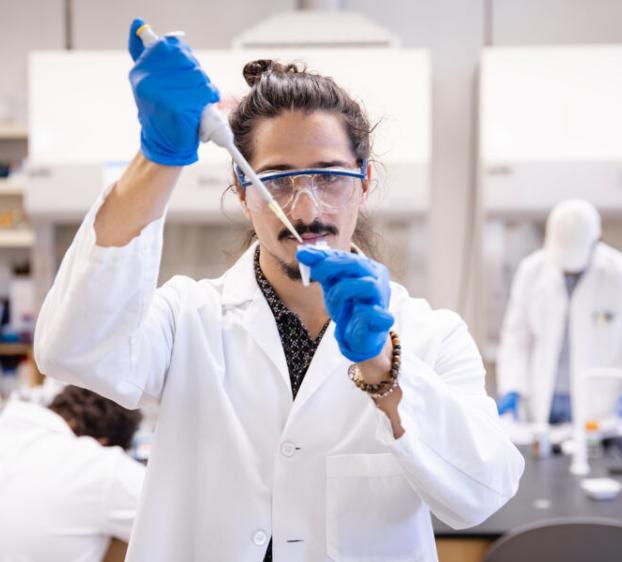
The School of Natural Sciences’ degree, certifications and partner programs prepare students for careers in the sciences, medicine and agriculture, and entry into graduate and professional schools.
Academic Advising
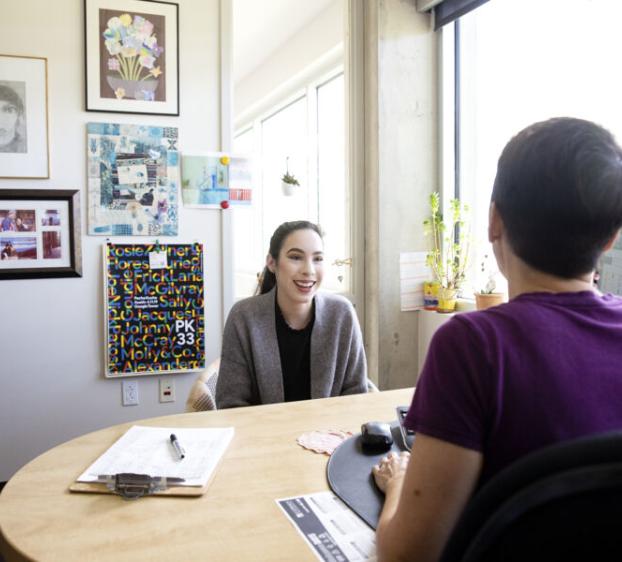
The School of Natural Sciences provides students with personalized academic guidance that can play an important role when choosing a major, selecting courses and making progress toward graduation.
The School of Natural Sciences Stories

Meet Our Faculty
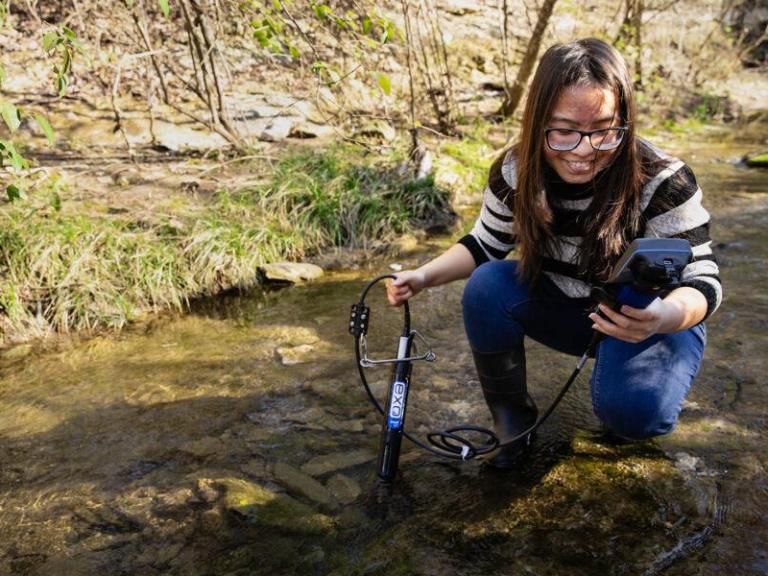
Student-faculty collaborations provide irreplaceable opportunities for insights, innovation and growth. Under the leadership of Dean Jonathan Hodge, our faculty are dedicated teachers and research scholars encourage our students’ intellectual curiosity and critical thinking about the natural world.
Our Facilities
Classes and labs take place in our three facilities where students engage in hands-on education that emphasizes interdisciplinary connections, original research and active learning.

John Brooks Williams North
The John Brooks Williams North building is home to the University's cutting-edge laboratory instrumentation, including a Confocal Microscopy system by Olympus, compound and dissecting fluorescent scopes and a Nuclear Magnetic Resonance room.
John Brooks Williams South
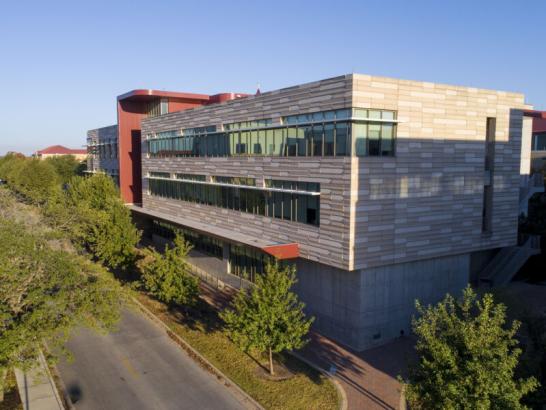
The John Brooks Williams South building houses high-powered computing laboratories that support projects in robotics, environmental science and bioinformatics. It was awarded Austin Energy Green Building (AEGB) program's 3-star rating for its environmentally sensitive design. The sun penetrates southern-facing windows in the winter to increase solar heat intake, while large overhangs and window screens limit solar radiation in the summer.

Wild Basin Creative Research Center
St. Edward’s Wild Basin Creative Research Center serves as an interdisciplinary research lab and a hands-on learning center for students. Wild Basin extends over 227 acres within the Balcones Canyonlands Preserve system with hiking trails, volunteer opportunities and events open to the public.
Institutes and Symposiums

The mission of the Institute for Interdisciplinary Science (i4) is to build capacity in interdisciplinary sciences, informatics and emerging technologies as we increase students’ readiness for the 4th Industrial Revolution.
The Institute coordinates on-campus interdisciplinary events, organizes cross-sector cooperative agreements with public and private entities, networks STEM majors with employers and graduate programs through guaranteed internships, and more.
Follow i4 on X (Twitter), Instagram and YouTube!

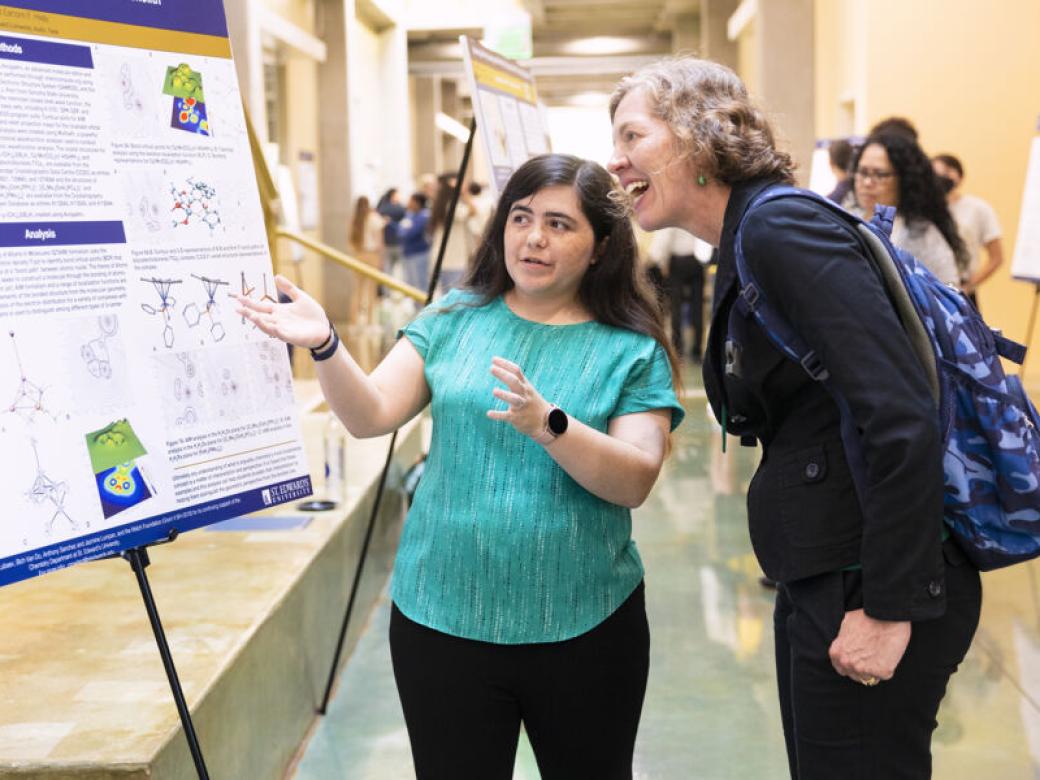
The Senior Seminar Symposium, an annual event dating back to 1993, gives all Natural Sciences students an opportunity to present their research at the end of the academic year.
The Lucian Symposium honors the late Brother Lucian Blersch, CSC, a longtime professor of Engineering at St. Edward’s. An endowment in his name provides support for research endeavors of the NSCI professor chosen as Lucian Chair.
Since 2001, the Lucian Chair has helped organize a public symposium that brings noted scientists to campus and highlights natural science research.
The mission of the Institute for Interdisciplinary Science (i4) is to build capacity in interdisciplinary sciences, informatics and emerging technologies as we increase students’ readiness for the 4th Industrial Revolution.
The Institute coordinates on-campus interdisciplinary events, organizes cross-sector cooperative agreements with public and private entities, networks STEM majors with employers and graduate programs through guaranteed internships, and more.
Follow i4 on X (Twitter), Instagram and YouTube!
The Senior Seminar Symposium, an annual event dating back to 1993, gives all Natural Sciences students an opportunity to present their research at the end of the academic year.
The Lucian Symposium honors the late Brother Lucian Blersch, CSC, a longtime professor of Engineering at St. Edward’s. An endowment in his name provides support for research endeavors of the NSCI professor chosen as Lucian Chair.
Since 2001, the Lucian Chair has helped organize a public symposium that brings noted scientists to campus and highlights natural science research.
Contact the Dean’s Office
- NSCIoffice@stedwards.edu (syllabi requests, general administrative inquiries)
- NSCIdean@stedwards.edu (registration help, student petitions/waivers, personnel inquiries)
- Office main line: (512) 448-8460
Dean’s Message
Welcome to the School of Natural Sciences at St. Edward’s University.
We are an inclusive community of scientists and educators, dedicated to helping you achieve your educational goals and pursue meaningful and rewarding careers in the sciences.
Our faculty are innovative teachers and scholars who engage students both in and out of the classroom. They are experts in their fields who regularly publish peer-reviewed papers, present their work at academic conferences, and obtain competitive grants. As a student in the School of Natural Sciences, you’ll have the opportunity to join in this work. Experiential learning is built into our academic programs, and each summer dozens of students participate in paid internships and research experiences.
We believe that there is a critical need within the scientific community for broadly educated and socially conscious scientists who bring diverse backgrounds, perspectives, and experiences to their work. Our approach to science education is grounded in SEU’s Holy Cross mission. This means that when you study the natural sciences at St. Ed’s, you’ll not only gain the scientific and technical expertise you need to be successful in your chosen field, but you’ll also learn how to communicate effectively, navigate the moral and ethical implications of your work, and use your education to help build a more just and humane world.
You’ll do all of this from our beautiful campus located just three miles south of downtown Austin. The John Brooks Williams Natural Science Center houses over 110,000 square feet of modern classroom and laboratory space, including advanced scientific instrumentation and computing facilities. You may also choose to explore and conduct research at our Wild Basin Creative Research Center, located within the 227-acre Wild Basin Wilderness Preserve. From Austin’s thriving science and tech economy to the natural beauty of Central Texas, you’re in the right place to pursue your dreams and become the scientist, scholar, or professional you aspire to be.
We’re here to help, and we are committed to your success at every step of your educational journey. Please don’t hesitate to reach out to me if you have any questions or if I can support you in any way.
Sincerely,
Jonathan Hodge, PhD
Dean, School of Natural Sciences
Professor of Mathematics