

School
Off
Academic Department
On
Administrative Department
Off

Environmental Management

Ornate door

Unlock Career Opportunities in Environmental Management

Make a difference in natural resources conservation and oversight with a Certificate in Environmental Management from St. Edward’s.

This 12-credit hour certificate program allows you to acquire tools and research skills such as applying ecological principles and environmental surveying and monitoring techniques that prepare you for conservation and management fields in the private and public sectors.

What will you learn?

Required courses in the program will equip you with a working knowledge of the plant and animal species of Texas, threats to native species, wildlands, and soil and water resources, and an interdisciplinary understanding of conservation and restoration approaches. You’ll gain ecological skills in plant and animal identification, habitat monitoring and restoration.

Because much of the success of conservation activities relies on being able to work with people, there is also a large emphasis placed on stakeholder engagement and science communication. Elective courses within the program emphasize building additional skills and knowledge that help you succeed in this field, including proficiency with Geographical Information Systems (GIS), social and natural science research skills, and a good understanding of environmental laws and policies.

Who is a candidate for this certificate?

The certificate is restricted to students majoring or minoring in the Environmental Science and Policy program. The certificate curriculum goes beyond the required interdisciplinary courses for the degree by providing specific training and research experience needed to prepare students for employment and graduate study in ecology and natural resource conservation and management.  

What are job opportunities?

This certificate will equip students for a variety of jobs in environmental management, including natural resource conservation and management, ecological monitoring, and ecological restoration with public agencies such as the City of Austin’s Watershed Protection, the City of Austin’s Parks and Recreation Department, the Balcones Canyonlands Preserve, and the Hill Country Conservancy.  

Required Courses

There are two required courses for this program:

  • Texas Ecology – ENSP 2316 
  • Natural Resources Conservation and Management – ENSP 3326 

Elective Courses

Students must choose at least two elective courses from the following list, all of which are regularly offered and require no prerequisites:

  • Environmental and Ecological Field Methods – ENSP 3329
  • Geographic Information Systems – ENSP 4333 
  • Environmental Law – ENSP 3399
  • Environmental Politics and Policy – ENSP 4330 

Amy Concilio, PhD, associate professor of Environmental Science and Policy, is the certificate director. She teaches courses in ecology, natural resources conservation and climate change, and has an active undergraduate-centered research program focused on ecological restoration, climate change and biodiversity conservation in the Texas Hill Country.

James Checkley, JD, a practicing environmental attorney with several decades of experience, teaches ENSP 3399 – Environmental Law. This course will provide you with a solid understanding of the legislation that impacts environmental decision-making on public and private lands, such as NEPA and the ESA. This is an elective course for the certificate but we highly recommend taking it!
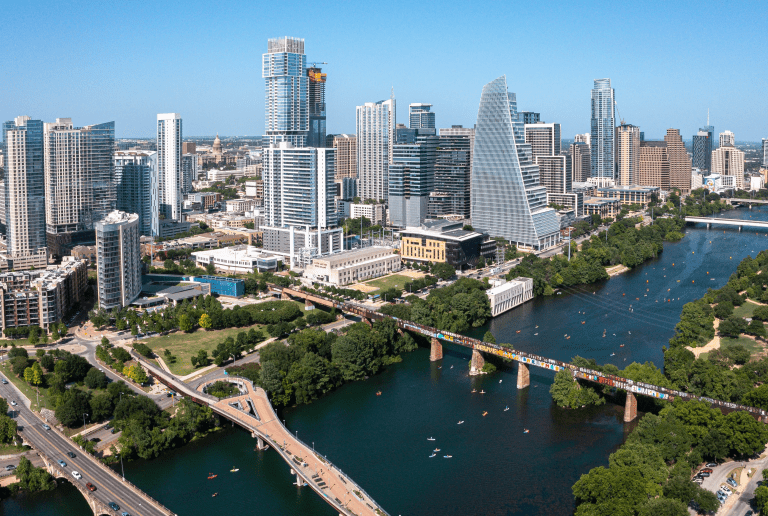

Political and Civic Engagement

Ornate door

Become a More Engaged Citizen

Develop expertise in navigating the political world through academic and hands-on experiences with a minor in  Political and Civic Engagement. 

Through the St. Edward’s tradition of academic excellence, award-winning faculty, and rigorous curriculum, we ensure that graduates will have the skills to succeed in the 21st-century workplace. In keeping with the St. Edward’s mission, students in the Political and Civic Engagement minor will analyze problems and propose solutions to society’s most critical issues.

The Political and Civic Engagement minor enables students to apply their classroom knowledge to the community through applied courses, internships and a Civics Laboratory.  

This distinctive program amplifies opportunities provided by Austin’s diverse community to bring the political world into the classroom. Austin is the best city in Texas to study politics through direct involvement, and this minor maximizes the university’s location and its resources as a destination university. Minoring in Political and Civic Engagement enhances the skills and credentials of students majoring in Communications, Environmental Science and Policy, and Business Administration, as well as students seeking skills-based coursework.

What can our graduates do?

By taking advantage of Austin’s experiential opportunities and coursework at St. Edward’s, this minor prepares students to work directly in politics or a related field. Here’s a sample of career paths:

  • Lobbying and Advocacy
  • Campaign Managers
  • Nonprofit Management
  • Public Policy
  • Public Service
  • Project Manager
  • Elected Official

Who is an ideal candidate for this minor?

The Political and Civic Engagement minor takes your existing degree to the next level by developing the transferable skills that employers seek — in collaboration, creative problem-solving, decision-making, critical thinking, communication and leadership. The compact and exciting curriculum makes it attractive to students from any discipline who are interested in practical classes and pursuing a more just world. 

Minor Requirements

The Political and Civic Engagement Minor provides a blend of required and elective courses that enable students to progress quickly through the curriculum. It has 18 required hours taken within the Political Science Major.

Required Courses:

  • The Civics Lab
  • State and Local Government

Choose elective courses to total 18 hours. These elective courses may include:

  • Public Policy
  • Nonprofit Advocacy
  • The Legislative Process and Lobbying
  • Austin Politics in Action
  • A mentored internship course

Our Faculty

At St. Edward’s, our faculty are outstanding scholars, thought leaders, teachers and mentors who bring energy and enthusiasm to our vibrant learning community. They take pride in getting to know you, helping you achieve your goals and celebrating your successes.

View a list of our faculty members and their contact information on the Department of Political Science, International Affairs, and Environmental Science and Policy webpage.

Undergraduate

Political Science

Ornate door

Create Positive Change Across the Globe With a Degree in Political Science

Majoring in Political Science will prepare you to make bold, strategic decisions grounded in your values through critical-thinking, writing, public speaking and people skills that make a difference.

Why earn your political science degree at St. Edward's?

Whether you’re looking to become a lobbyist, foreign service officer, political journalist, campaign manager or attorney, one thing is certain: The advantages of your St. Edward’s education will prepare you to succeed. You’ll find opportunities in and outside the classroom to learn, give back and achieve your goals. And your mentors will support you every step of the way.

Build relationships with your professors

You’ll learn in small classes taught by award-winning professors who make a point of getting to know you and becoming your trusted advisors. They’ll help you identify and focus on your goals, and provide guidance and insight during and after your college years.

Intern at the Texas State Capitol

Austin is the capital of Texas and is the ideal place to study politics at the local or state level. You’ll have the opportunity to intern for a state senator or representative during the biannual Texas legislative session, where you’ll learn how a bill becomes a law (or doesn’t).

Gain skills with experiential learning

State and Local Governments use the city of Austin as a lab. You’ll complete hands-on learning activities in and around City Hall in Texas’ top political scene.

Make your voice heard on a civics life podcast

One of the most exciting ventures that Political Science offers is the opportunity to assist with The Civics Lab, a podcast that gives St. Edward's students the opportunity to discuss issues around the intersection of politics, economics, society, public policy, religion and much more.

test

Reap the Rewards of Austin

Austin is the home base for nonprofits and advocacy groups that work to shape state laws that affect children, the environment, and dozens of different industries. As a Political Science major, you’ll have the chance to learn how to lobby for a cause you care about.

What do our graduates do?

Political Science majors go on to a variety of careers and graduate schools from St. Edward’s. Here’s a sample.

  • Foreign service officer for the U.S. Department of State
  • Judicial law clerk at Court of Appeals for the First District of Texas
  • Asylum and immigration attorney
  • Health policy and advocacy director for Young Invincibles
  • Director of marketing for FILA North America
  • Trial attorney for the U.S. Department of Housing and Urban Development
  • Data Analyst for the Center on Budget and Policy Priorities 
  • Law students at The University of Texas at Austin, the University of Pennsylvania and George Washington University
  • Graduate students at the Elliott School of International Affairs at George Washington University, Georgetown University, New York University, and Stanford University.

Explore Details About a Degree in Political Science

Major Requirements: The Bachelor of Arts in Political Science requires 45 hours of major courses, which include a combination of different political studies classes. In addition, students choose two of the following tracks: American Politics, Applied Politics, International Politics or Pre-Law.

Electives: Students complete 6 hours of Political Studies electives and 21 hours of elective courses in any area of study they choose. 

General Education Requirements: The degree requires 54 hours of general education courses that students complete over four years in addition to their major courses and electives.

View and download the full degree plan for our Political Science major (PDF).

A few examples of courses students in this major take:             

  • Politics and the Media – explore how public officials, political campaigns, and interest groups attempt to influence media coverage.
  • Civil Rights and Liberties – examine the way the U.S. Constitution protects individual rights in the context of competing claims by various groups and interests.
  • Strategic Intelligence and Covert Action – delves into the role the intelligence community plays in American foreign relations.


What You Will Learn

  • You’ll study how people obtain and use power at the local, state, national and international level.
  • Your courses will teach you the history and theory behind the political process and then immerse you in the practice.
  • You will learn how to work towards positive change in your community.

Skills You Will Gain

  • Political Science will give you the knowledge required for understanding and navigating political processes at the local, national, and international levels.
  • You will develop the analytical skills required for developing strategic political solutions for thorny issues of relevance for your community.
  • You will sharpen your ability to critically assess how to translate your values into political action.

Experiential Learning

Your courses will teach you the history and theory behind the political process and then immerse you in the practice. Legislative Process and Lobbying meets when the Texas legislature is in session. You’ll alternate between attending classroom lectures and discussions on campus, and sitting in on hearings, debates and programs at the Texas State Capitol.

Scholarships, Conferences and Summer Institutes

Political Science majors have been selected for many competitive learning opportunities domestically and abroad. They include:

  • The Benjamin A. Gilman International Scholarship, sponsored by the State Department, which offers grants to undergraduates to study or intern abroad in locations including Chile, Brazil and Morocco.
  • The State Department Critical Language Scholarship, an intensive overseas language and cultural immersion designed to expand the number of Americans mastering foreign languages that are critical to national security and economic prosperity.
  • The Public Policy and International Affairs Junior Summer Institute at Carnegie Mellon University, a highly competitive seven-week program that trains students in the quantitative, analytical and communication skills they’ll need to study public policy in graduate school and enter a career that serves the public good.
  • The highly selective Harvard Kennedy School Public Policy Leadership Conference, which introduces students to graduate programs in public policy at Harvard.
  • The John Jay Fellows Program in Philadelphia, a semester-long leadership development program based on Christian principles that prepares participants for careers in public service.

Internships

Every Political Science major completes at least one internship, but you’ll be encouraged to go beyond that requirement to expand your education. Students recently have interned with these organizations:

  • No Labels, a Washington, D.C.-based organization that supports nonpartisan problem solving
  • Office of Austin Mayor Steve Adler
  • Office of U.S. Representative Lloyd Doggett
  • Office of State Rep. Oscar Longoria
  • Office of former Colorado Governor John Hickenlooper
  • Office of Texas Governor Greg Abbott
  • Beto O’Rourke Senate Campaign
  • Texas Public Policy Foundation
  • Texas Senate Finance Committee
  • Equal Justice Center, a nonprofit law firm
  • Workers Defense Project
  • Foley & Lardner LLP
  • Generation Citizen, a nonprofit that teaches middle- and high-school students civic participation and engagement strategies
  • Mighty Citizen, a local marketing agency focused on promoting community-impact organizations
  • Annie’s List
  • Caritas of Austin
  • Texas Democratic Party
  • Congressional Hispanic Caucus Institute in Washington, D.C.
  • Public Citizen, a nonprofit consumer advocacy organization
  • Make-A-Wish Central and South Texas

Student Organizations

  • The St. Edward’s Criminal Justice Club is a chapter of the American Criminal Justice Association, Lambda Alpha Epsilon. The club meets twice a month to hear guest speakers, go on field trips, offer community service, and complete training together.
  • Alpha Phi Sigma is the national criminal justice honor society.
  • Phi Alpha Delta, the pre-law organization, meets weekly to listen to guest speakers, learn about the law school admission process, participate in mentorship programs, do service work and learn about internships. The club also has a mock trial team that competes in events hosted by the American Mock Trial Association and Phi Alpha Delta. The team has traveled to Washington, D.C., to compete.
  • Student Government Association represents the ideas and needs of all St. Edward’s students.
  • Students for Sustainability educates the St. Edward’s community about eco-friendly practices and works with the St. Edward’s administration to implement environmental initiatives. Members help maintain the campus garden, learn about biking and public transportation, encourage fellow students to reduce their use of plastic water bottles, and have clothing swaps and upcycled craft nights.
  • Hilltop Views, the weekly student newspaper, is published both in print and online. Student journalists report news from the campus and greater Austin community. You can get involved as early as your freshman year as a writer, editor, photographer or designer.
  • The S.E.R.V.E. program, coordinated by Campus Ministry, connects you with volunteer opportunities in Austin. You can participate in a Saturday-morning program where you clean up a park or paint a school building, or commit to weekly service for the whole semester at an organization helping immigrants, children or the elderly.

Students interested in pursuing a role in law or government can enhance their knowledge and skill sets with a Political Science minor. Students must complete the 18 hours of required coursework.

Required Courses:

  • American National Government
  • International Relations
  • Comparative Politics
  • Any three upper-division Political Science courses

At St. Edward’s, our faculty are outstanding scholars, thought leaders, teachers and mentors who bring energy and enthusiasm to our vibrant learning community. They take pride in getting to know you, helping you achieve your goals and celebrating your successes.

View a list of our faculty members and their contact information on the Department of Political Science, International Affairs, and Environmental Science and Policy webpage.

St. Edward's graduates in cap and gown show off their diplomas

Earn Two Degrees in Five Years

With our Accelerated Graduate Pathways, you can complete your BA in Political Science and one of four master’s degrees in as little as five years, saving time and money. See details and requirements.

Success coaches and academic advisors guide you through undergraduate and graduate courses to maximize benefits.

Undergraduate

International Affairs

Ornate door

Create a More Prosperous Future With a Degree in International Affairs

Through the study of world history, international politics, global economics and peace and conflict, International Affairs majors discover solutions for contemporary problems such as climate change, mass migration, and transnational crime networks that require global cooperation.

Why earn your International Affairs degree at St. Edward’s?

Whether you want to build positive relationships between nations as a diplomat, tackle humanitarian issues such as disaster relief or human trafficking, work for governmental and nongovernmental organizations, enter the world of international business enterprises or consulting companies, one thing is certain: The advantages of your St. Edward’s education will prepare you to succeed. You’ll find opportunities in and outside the classroom to learn, give back and achieve your goals. And your mentors will support you every step of the way.

Study abroad opportunities with your peers.

Develop expertise in the politics, economy, culture and history of a specific region, choosing from Africa, Asia, Europe, Latin America or the Middle East. You will have the opportunity to gain direct knowledge about that region through a study abroad program.

Gain insight from meaningful internships.

International Affairs majors have access to internship opportunities at organizations that support underserved communities throughout Austin and other Texas cities.

Gain skills with experiential learning.

Cultivate an international perspective by participating in active-learning projects in your classes and meeting with global experts through the Kozmetsky Center for Excellence.

Build relationships with professors.

You’ll learn in small classes taught by award-winning professors who make a point of getting to know you and becoming your trusted advisors. They’ll help you identify and focus on your goals, and provide guidance and insight during and after your college years.

test

Reap the Rewards of Austin

International Affairs majors in Austin have a plethora of opportunities to work with diverse organizations and nonprofits that support immigrants, research global economic and political trends or facilitate international trade.

What do our graduates do?

International Affairs majors go on to a variety of careers and graduate schools from St. Edward’s. Here’s a sample.

  • Foreign service officer for the U.S. Department of State
  • Foreign affairs officer for the National Nuclear Security Administration in the U.S. Department of Defense
  • Consultant for Deloitte
  • Active channels associate lead at Google
  • Junior Officer in Strategic Partnerships for the European Climate Foundation
  • Senior Associate in Resilience and Net Zero for iDE - International Development Enterprises.
  • Public Health Advisor at the Center for Disease Control and PreventionGraduate students at Columbia University School of International and Public Affairs, Georgetown University, New York University and the LBJ School of Public Affairs at The University of Texas at Austin

Explore Details About a Degree in International Affairs

Major Requirements: The Bachelor of Arts in International Affairs requires 43-57 hours of major courses, which include a combination of global studies, history, and political studies. In addition, students choose both a regional concentration and a thematic concentration to specialize their studies.

Electives: Students complete 18 hours of elective courses in any area of study they choose. These courses do not have to relate to the major.

General Education Requirements: The degree requires 45 hours of general education courses that students complete over four years in addition to their major courses and electives.

View and download the full degree plan for our International Affairs major (PDF).

A few examples of courses students in this major take:

  • Comparative Politics - identifies and explains the political, economic, and social differences between countries of the world.
  • International Security and Conflict Resolution - explores the causes of war and the nature of diplomacy
  • American Foreign Relations - delves into the interactions the United States has with other countries and the policymakers who craft those relations

What You Will Learn

  • A variety of current and vital issues including challenges to democracy and freedom around the world; equity and inequality in the global distribution of wealth; the roles of identity and culture in societies; conflicts arising from nationalism and globalization; the causes of war and the means to promote peace, among others.
  • To apply your knowledge to real life scenarios and simulations. You will explore the challenges and opportunities for cooperation between the governments and peoples of the globe, and use your knowledge to help devise solutions for international and transnational problems.


Skills You Will Gain

  • Gain the knowledge base required for effectively understanding and engaging with crucial global issues.
  • Gain the analytical skills required for making sense of how political, economic, and social factors interact on a global scale to produce local and international outcomes.
  • Develop the critical thinking skills required for the design and assessment of solutions for existing global challenges. 

Experiential Learning

  • Students will have the opportunity to participate in a Model Organization of American States conference with peers from other universities. They will take on the role of diplomats for a country in the hemisphere, and collaborate with other delegates on the solution of a crisis scenario. 

Internships

Internships help you develop cultural competency and gain experience in a professional work environment. Students have interned with these organizations:

  • Henry Davis Foundation
  • Global Austin
  • The Refugee and Immigrant Center for Education and Legal Services (RAICES)
  • Community development internship in Ecuador
  • Equal Justice Center, a nonprofit law firm
  • LifeWorks, an Austin agency that supports youth and families with housing, education and counseling
  • AIDS Foundation Houston

Student Organizations

  • The Kozmetsky Center of Excellence at St. Edward’s brings international experts to campus, either in person or virtually, to share their knowledge with the university community. Past speakers have included American and foreign diplomats, policy makers, university scholars, and leaders of the business, non-profit and cultural communities. You’ll have the chance to listen and ask questions of these global experts in sustainable development, peace and security, global health, climate change and global finance.
  • Students for Sustainability educates the St. Edward’s community about eco-friendly practices and works with the St. Edward’s administration to implement environmental initiatives. Members help maintain the campus garden, learn about biking and public transportation, encourage fellow students to reduce their use of plastic water bottles, and have clothing swaps and upcycled craft nights.
  • The S.E.R.V.E. program, coordinated by Campus Ministry, connects you with volunteer opportunities in Austin. You can participate in a Saturday-morning program where you clean up a park or paint a school building, or commit to weekly service for the whole semester at an organization helping immigrants, children or the elderly.
  • Service Break Experiences give you the chance to travel to another community, volunteer and learn about local life. SBEs are built on ongoing relationships between St. Edward’s and the service location and require students to prepare — educationally and spiritually — for several months beforehand. The trips incorporate structured reflections so you’ll integrate what you’ve learned and use it to fuel your charity and justice work going forward. A hallmark of SBEs is their emphasis on living simply — you’ll leave your phone and other luxuries behind. In previous years, SBEs have gone to Peru, Canada, and India.

Traveling abroad is the perfect way to learn about another culture, government, and economy and strengthen your language skills. You’ll be able to study abroad at one of St. Edward’s partner universities across more than 15 countries, or take your studies almost anywhere in the world through another international education provider. You can also choose to intern abroad, helping increase your cultural agility, add to your skill set and expand your global network.

The St. Edward’s–Asia Pacific University dual-degree program gives you the chance to earn two degrees in four years and spend two years studying abroad. You’ll spend your first and fourth years of college at St. Edward’s, earning a Bachelor of Arts in International Affairs, and your second and third years at our partner university Ritsumeikan Asia Pacific University in Beppu, Japan, earning a Bachelor of Social Science degree. APU is a multicultural campus with students from nearly 100 countries and offers most classes in Japanese and English. Your courses there will focus on Asia Pacific studies and business. The dual degrees — along with the cultural understanding, language skills and international perspective you’ll gain — will make you a stronger applicant for jobs or graduate school.

Contact Dr. William Nichols williamn@stedwards.edu for more information.

Learn more about the Dual Degree Program

The minor in International Affairs is an asset for any student who wishes to add an international perspective to their education. Students are required to take 18 hours to complete the minor.

Required Courses:

  • Global Issues
  • One International Affairs area survey course and one advanced History, Political Science or Economics course in that region
  • Senior Seminar in International Affairs
  • One course from each thematic track (International Business & Economics, International Conflict, Cooperation & Security, and Global Public Health) 

At St. Edward’s, our faculty are outstanding scholars, thought leaders, teachers and mentors who bring energy and enthusiasm to our vibrant learning community. They take pride in getting to know you, helping you achieve your goals and celebrating your successes.

View a list of our faculty members and their contact information on the Department of Political Science, International Affairs, and Environmental Science and Policy webpage.

St. Edward's graduates in cap and gown show off their diplomas

Earn Two Degrees in Five Years

With our Accelerated Graduate Pathways, you can complete your BA in International Affairs and one of four master’s degrees in as little as five years, saving time and money. See details and requirements.

Success coaches and academic advisors guide you through undergraduate and graduate courses to maximize benefits.

Undergraduate

Environmental Science and Policy

Ornate door

Protect the Quality of Our Environment With a Degree in Environmental Science and Policy

Study the science underlying environmental problems such as climate change, water quality and biodiversity loss as well as the policy strategies that will enable you to develop solutions to these issues.

Why earn your Environmental Science and Policy degree at St. Edward’s?

Whether you plan on pursuing an environmental career in the public, private or non-profit sector, one thing is certain: The advantages of your St. Edward’s education will prepare you to succeed. You’ll find opportunities in and outside the classroom to learn, give back and achieve your goals. And your mentors will support you every step of the way.

Study abroad opportunities with your fellow students

As part of your international education experience, you may conduct research about other countries’ environmental strategies, ecotourism plans, conservation practices and agricultural techniques.

Conduct graduate-level research

Students conduct field research at Wild Basin Preserve, the Spicewood Ranch ecolab in the rural Hill Country and in tropical forests in Costa Rica. Apply your research skills to projects like examining the environmental impacts of electric scooters, testing Travis County residents’ water for lead contamination or examining whether paying Costa Rican and Ugandan farmers to not cut down their forests helps reduce deforestation.

Join student organizations promoting sustainability

Students for Sustainability educates the St. Edward’s community about eco-friendly practices and works with the St. Edward’s administration to implement environmental initiatives.

Build relationships with your professors

You’ll learn in small classes taught by award-winning professors who make a point of getting to know you and becoming your trusted advisors. They’ll help you identify and focus on your goals, and provide guidance and insight during and after your college years.

test

Reap the Rewards of Austin.

Austin is known for being a sustainability-oriented city and is the perfect place to study Environmental Science and Policy, providing students with a wide range of internship opportunities with state agencies such as Texas Commission for Environmental Quality.

What do our graduates do?

Environmental Science and Policy majors go on to a variety of careers from St. Edward’s. Here’s a sample.

  • US State Department
  • The Open Reforestation Protocol
  • Texas Water Development Board
  • Texas Commission on Environmental Quality (TCEQ)
  • Loureiro Engineering Associates
  • AECOM
  • SWA Environmental Consultants

Explore Details About a Degree in Environmental Science and Policy

Major Requirements: The degree requires 49 hours of coursework. All students take 25 hours of a core curriculum that includes introductory courses on sustainability and environmental science, as well as upper level courses on environmental politics and policy, research in environmental science and policy, and internship. In addition, students will choose between an environmental policy track more focused on politics, communication, law and economics, and an environmental science track more focused on biology and chemistry. 

View Degree Plan

Electives: Students complete 15 hours of elective courses in any area of study they choose. These courses do not have to relate to the major.

General Education Requirements: The degree requires 48 hours of general education courses that students complete over four years in addition to their major courses and electives.

A few examples of courses students in this major take:             

  • Climate Change – explores the issue of global climate change through an interdisciplinary lens, covering the science, impacts on the environment and human populations, and management and policy responses
  • Chemistry in the Environment - students learn about how nutrients and toxic chemicals move through the environment and what we can do to reduce their impacts, and participate in a hands-on service-learning project testing lead in tap water of at-risk homes in Travis County
  • Environmental Politics and Policy – examines the political process through which environmental decisions are made and the different regulatory and market-based policy alternatives for achieving environmental goals. 
  • Research Experience in Environmental Science and Policy – students train in research methods and design and conduct a guided research project on an environmental topic of their choosing. 

What You Will Learn

As an Environmental Science and Policy major, you’ll learn about both the natural world and the world of government and politics.

Experiential Learning

  • Your courses will take you all over Central Texas, as you visit parks and preserves and conduct research in the field. Your classes will also feature guest speakers from local environmental organizations, helping you learn about potential career paths and start to build your network.
  • Introduction to Sustainability is the first course you’ll take in your major. You’ll apply the sustainability concepts you learn to campus projects like planting and maintaining the campus garden. You’ll also research sustainability initiatives to pitch to school officials for potential adoption on campus.
  • Natural Resource Conservation and Management emphasizes the real-world challenges of natural resource conservation and management. You’ll go on numerous outings to parks preserves and private lands throughout Texas to learn about different resource management techniques and meet professionals in the field.
  • In Environmental and Ecological Field Methods, you’ll learn different methods natural and social scientists use to collect data for research. Students in this course recently studied how dockless scooters were affecting traffic and safety in central Austin and whether scooters are helping people drive less. They also measured the diversity of species in Blunn Creek, a preserve next to the St. Edward’s campus, comparing patches of forest that were mostly native trees and patches that had been taken over by invasive species.

Research

ENSP majors will work closely with faculty members to gain research skills and experience both in the laboratory and at our Wild Basin Wilderness Preserve. Funding is available through the Hook Fellowship for students interested in conducting field research at Wild Basin and other properties in the Balcones Canyonlands Preserve.  Students can also apply for the BSS Research Award to obtain funding to present their research at academic conferences. This research experience has been influential in enabling graduates to acquire positions with employers and graduate schools.

Internships

ENSP majors gain valuable practical experience conducting internships within the public, private and non-private sectors. ENSP majors have interned with state and federal legislators, state agencies such as Texas Commission for Environmental Quality, environmental organizations such as the Sierra Club, Nature Conservancy and Save Our Springs Alliance and private companies such as Freedom Solar and Wildlife Management Services.

Student Organizations

Students for Sustainability educates the St. Edward’s community about eco-friendly practices and works with the St. Edward’s administration to implement environmental initiatives. Members help maintain the campus garden, organize the campus Earth Day festival and initiate numerous sustainability measures on campus, including composting and reusable plates and silverware in the dining halls, clothing swaps and water-bottle-filling stations throughout campus.

The St. Edward’s Office of Sustainability offers internships and welcomes volunteers who help coordinate Earth Week and maintain the office’s blog.

Learning about environmental issues overseas can help you develop perspective on the problems American cities and states are trying to solve. In recent semesters, ENSP faculty have led environmental-themed study abroad programs in France, Costa Rica and South Africa, although this is not an exhaustive list of places you can study abroad.

Learn more about St. Edward’s enhanced study abroad opportunities with 20 partner universities across 17 countries and 5 continents.

In the Sustainable Development in Costa Rica source, you’ll take on a community service project; the program includes a study tour of Costa Rica, where you’ll explore issues of sustainable development and ecotourism.

Whether you are interested in environmental consulting, research management, or simply adding an environmental perspective to your prospective field of interest, a minor in Environmental Science and Policy can help you prepare for a more sustainably mindful career.

Required Coursework:
  • Introduction to Sustainability
  • Environmental Science
  • Environmental Politics and Policy
  • Two other upper-division ENSP courses
  • One additional ENSP elective

At St. Edward’s, our faculty are outstanding scholars, thought leaders, teachers and mentors who bring energy and enthusiasm to our vibrant learning community. They take pride in getting to know you, helping you achieve your goals and celebrating your successes.

View a list of our faculty members and their contact information on the Department of Political Science, International Affairs, and Environmental Science and Policy webpage.

St. Edward's graduates in cap and gown show off their diplomas

Earn Two Degrees in Five Years

With our Accelerated Graduate Pathways, you can complete your BS in Environmental Science and Policy and one of four master’s degrees in as little as five years, saving time and money. See details and requirements.

Success coaches and academic advisors guide you through undergraduate and graduate courses to maximize benefits.

Subscribe to Environmental Science and Policy, International Affairs, and Political Science