St. Edward’s and H-E-B Launch Central Texas’ First Tiny Forest for Climate Resilience in Austin
St. Edward’s University has partnered with H-E-B to create the first-ever Tiny Forest in Central Texas, forging a greener future for local communities.
A Small Forest with Big Environmental Benefits
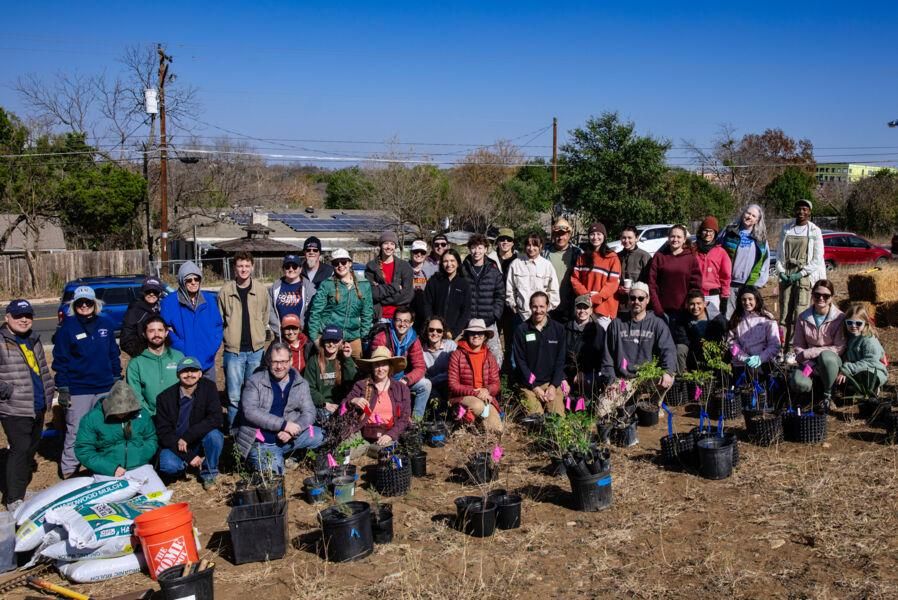
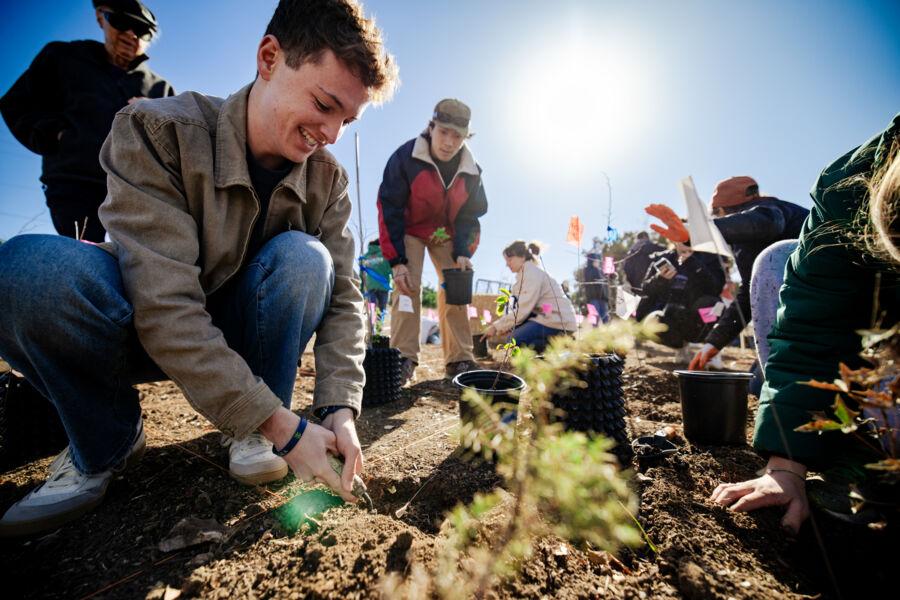
Hilltoppers, H-E-B team volunteers and nearby residents came together to plant nearly 600 square feet of more than 160 trees and shrubs at a plot located across from the Lucian-Hamilton Baseball Field and East Hall.
University Arborist and Sustainability Coordinator Roy Johnson says the Tiny Forest was established using the Miyawaki Method, an innovative approach that helps trees grow up to 10 times faster and sequester up to 10 times more carbon than conventional tree planting methods. This approach will allow the Tiny Forest trees to reach full maturity within our lifetime.
The trees will be completely self-sustaining in two to three years and are expected to grow up 15 feet by 2030.
Building a Sustainable Environment, One Tree at a Time
The Tiny Forest planting event marks the university’s second year collaborating with H-E-B’s Trees for Texans program to support healthier landscapes for schools and Texas communities.
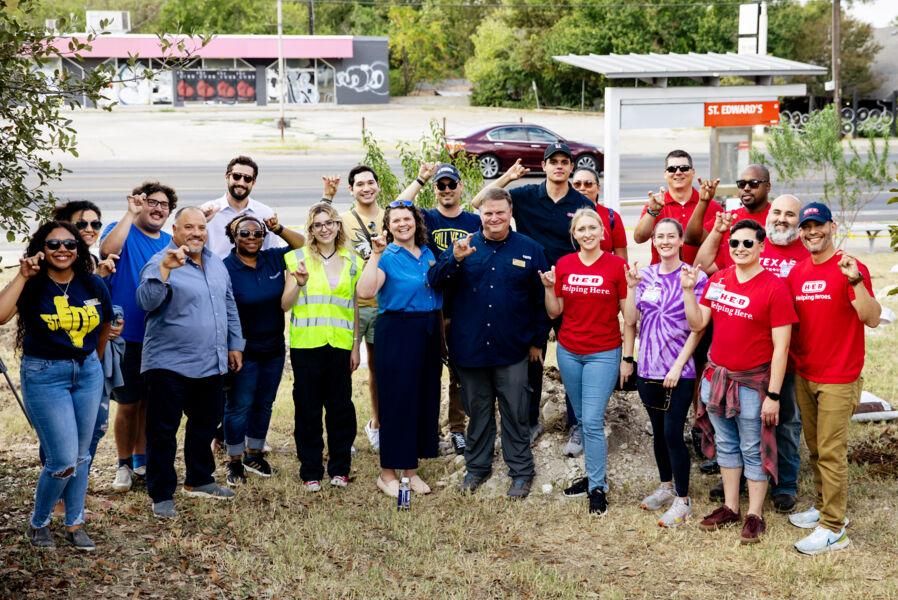
In Fall 2024, dozens of H-E-B volunteers joined students, faculty and staff in planting nearly 20 trees at the St. Edward's bus stop on Congress Avenue to help provide shade for students and Austinites in the area who rely on public transportation. In addition, Cli-Res members have been using TreeTag devices to monitor the health of these trees and others across campus. Data captured through the devices is being used to study the impacts of severe weather as well as enhancing the university's campus sustainability and beneficiation efforts.
Planting Seeds of Equity
The Tiny Forest campus installation is intended to serve as a proof-of-concept model to share with overdeveloped Central Texas communities where residents don’t have access to tree canopy cover advantages, such as shade during the summer months or an improved wildlife habitat.
The Climate Resiliency Living Lab (Cli-Res) group at St. Edward’s intends to collaborate with local community leaders over time to guide them through the Tiny Forest planting process and educate them on how it could enhance Austin neighborhoods with low tree equity scores.
A Greener and Cleaner Campus Community
Learn about recent accolades the university has earned for its eco-friendly initiatives and commitment to supporting a culture of sustainability among students, faculty, staff, visitors and the surrounding wildlife on the hilltop.