

Undergraduate

Forensic Science

Ornate door
Program Snapshot
Program Type
Bachelor of Science
Department
Forensic Science

Prepare Scientific Work to be Presented in Courts of Law

As a Forensic Science major, you’ll learn how to collect and analyze evidence from crime scenes so it can be used in court cases or the criminal justice system. Become an expert witness in criminal cases, or work in the field as a crime scene or fingerprint technician. You’ll learn how to approach crime scenes in a methodical, detail-oriented way that engages both critical and creative thinking. And you’ll graduate ready to use science to create a more just and safe society.

Why earn your Forensic Science degree at St. Edward’s?

Whether you want to pursue a forensic career with police or fire departments, coroner’s offices, the FBI or CIA, or private enterprises — or continue your education in forensics, law, or medical school — one thing is certain: your St. Edward’s education will prepare you to succeed. You’ll find opportunities both in and outside the classroom to learn, give back and achieve your goals. Your mentors will support you every step of the way.

Build relationships with your professors

You’ll learn in small classes taught by award-winning professors who keep up with the newest developments in forensic science. They’ll get to know you, help you identify and focus on your goals, and provide guidance and insight during your college years and after you graduate.

Conduct advanced research

You’ll engage in faculty-mentored research in the university’s state-of-the-art labs — or Wild Basin Creative Research Center in Austin, a nature preserve managed by St. Edward’s. You’ll advance the state of forensic science by conducting research into potential new technologies and techniques.

Gain skills with experiential learning

Courses are designed to give you an immersive experience that parallels real-life scenarios you’ll encounter in your career. For example, you’ll investigate simulated crime scenes, master crime scene photography, and take on the role of an expert witness in a mock criminal trial. 

Get involved in the professional science community

The St. Edward’s chapters of the American Criminal Justice Association and the American Chemical Society open doors to exploring internships, research and volunteer opportunities, and science-based careers. You’ll connect with people who love the challenge of forensic science as much as you do. 
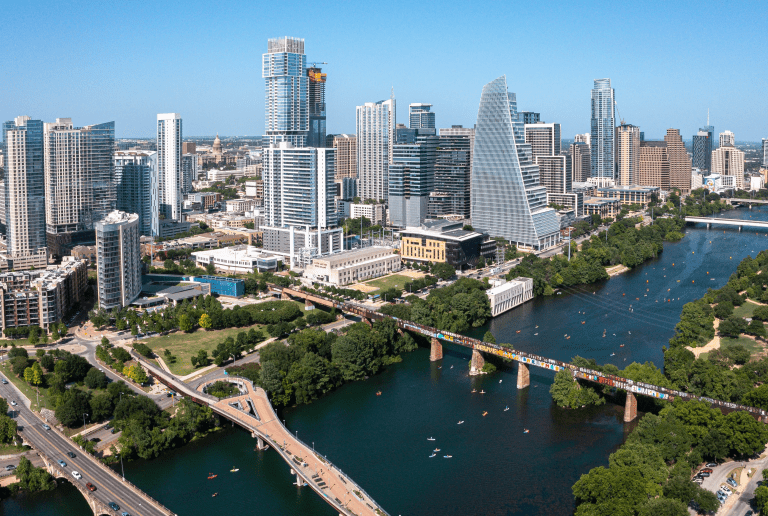
test

Reap the Rewards of Austin

Austin is a fast-growing technology hub and emerging center of science research and innovation. As a Forensic Science major, you can explore career paths and practical application of your studies through internships and interactions within the greater Austin community.

What do our graduates do?

Forensic Science majors go on to a variety of careers and graduate schools from St. Edward’s. Here’s a sample.

  • Pursuing careers at the Texas Department of Public Safety, Travis County Sheriff’s Office, Travis County Medical Examiner’s Office, Austin Police Department, Houston Forensic Science Center, San Antonio Police Department and Round Rock Police Department
  • Attending the South Texas College of Law
  • Attending graduate school at Sam Houston State University, University of North Texas and University of Central Lancashire
  • Attending medical school at the St. George’s University Charter Program to Medicine and the Universidad Autónoma de Guadalajara Medical School

Explore Details About a Degree in Forensic Science

Major Requirements: The Bachelor of Science in Forensic Science major requires 96–97 hours of Forensic Science major courses, including courses in subjects such as Bioinformatics, Chemistry, Mathematics and Physics. 

General Education Requirements: In addition to the major program requirements, all students must satisfy the general education requirements. Talk with your success coach and faculty advisor about which courses are right for you.

View and download the full degree plan for the BS in Forensic Science major (PDF). This helpful course map shows the sequence of prerequisites in the department.

What You Will Learn

The Forensic Science program combines rigorous classroom, lab and experiential learning that covers crime scene investigation techniques, scientific methods for analyzing the data you collect, and legal and ethical protocols. You’ll be well prepared to handle these tasks and responsibilities:

  • Analyze crime scenes to determine what evidence should be collected and how.
  • Take photographs or make sketches of the crime scenes and evidence.
  • Record observations and findings, such as the location and position of evidence.
  • Collect and preserve evidence, including weapons, fingerprints and bodily fluids.
  • Reconstruct crime scenes.
  • Perform chemical, biological and microscopic analyses on evidence taken from crime scenes.
  • Explore possible links between suspects and criminal activity, using the results of DNA or other scientific analyses from specialists, such as toxicologists (poisons) or odontologists (teeth). 
  • Prepare written reports that detail your findings and investigative methods. 
  • Explain your reports to lawyers, detectives and other law enforcement officials. 
  • Testify as an expert witness in court about your findings and methods.

Skills You Will Gain

As a Forensic Science major, you’ll cultivate a range of skills that employers look for and that prepare you to excel in the workplace. 

  • Critical and creative thinking
  • Problem-solving 
  • Attention to details
  • Data collection and analysis
  • Laboratory research and safety techniques
  • Math and science skills to analyze evidence
  • Communicate effectively orally and in writing
  • Teamwork 

Experiential Learning

Your classes are taught by professors who have years of experience in the field and keep up with new developments as forensic science evolves. Each course is designed to give you an immersive, engaging experience that parallels real-life scenarios you’ll encounter in your career. Here’s a sample of courses:

  • In Crime Scene Photography, you will learn the parts of a digital camera, learn to document indoor and outdoor scenes and practice photographing wounds on faux body parts, creating a portfolio of your work. You also will review photographs in a virtual setting using virtual reality headsets to explore the immersive experience of being on a crime scene. 
  • In Crime Scene Investigations I & II, you’ll assess and document mock crime scenes that simulate common field experiences. You’ll also process simulated evidence with field and laboratory techniques. Some of these mock crime scenes are staged in person, either on the main St. Edward’s campus or at the Wild Basin Creative Research Center. For others, you’ll use a virtual reality headset or your computer to investigate evidence at mock crime scenes — like a hotel room where a body was found — and click on hotspots with embedded photos and case information.
  • In Forensics in the Wild, you’ll explore the distinct challenges of investigating crimes committed outdoors. You’ll critically analyze environmental factors affecting outdoor crime scenes and learn to evaluate samples within forensic botany, soil recovery and analysis, and anthropology.
  • In Principles and Practices of Science and Law, you’ll explore the interaction between the ideas and practices of the scientific community and the legal community. Taking on the persona of an expert witness, you’ll prepare to present a piece of forensic evidence in a mock criminal trial. You’ll also pose as an attorney, calling the “expert” to testify.

Study Abroad

History and Philosophy of Science, a required course for Forensic Science majors, has been taught both on campus and abroad. When taught in London and Edinburgh, the class focused on the history of medicine and disease and how it intersects with the history of crime. Students in the course visited sites in London related to scientific and medical history, including the Alexander Fleming Museum, which showcases the laboratory where Fleming discovered penicillin. They also visited the Surgeons’ Hall Museums in Edinburgh, which has collections of pathological anatomy specimens and an anatomy theater with an interactive dissection table.

Research

You’ll advance the state of forensic science by conducting research into potential new technologies and techniques. College students can test whether these techniques show enough promise to merit investment by professional labs. Through your research, you’ll address challenges currently being faced by investigators in the field and build marketable skills.

Internships

You’ll have an opportunity to apply for internships where you’ll utilize some of the same skills you’ve been developing in your experiential classes. Forensic Science majors have earned highly competitive internships at state and local agencies, including: 

  • Travis County Medical Examiner's Office
  • Austin Police Department
  • Travis County Sheriff's Office
  • Leander Police Department
  • El Paso Police Department
  • Bexar County Sheriff's Office

STEM students at St. Edward’s can access paid internships offered by our National Science Foundation-funded Institute for Interdisciplinary Science (i4). For more information on these internship programs, please visit the Institute for Interdisciplinary Science (i4).

Student Organizations

The Forensic Association Committed to Truth — SEU F.A.C.T. for short — is a student organization dedicated to forensic science and meets biweekly. Members build their networks and learn about careers. F.A.C.T. also hosts fun collaborative events that give you the chance to explore other science-based fields, like teaming up with the American Chemical Society chapter to conduct spooky Halloween-themed experiments.

The St. Edward’s Criminal Justice Club is a chapter of the American Criminal Justice Association, Lambda Alpha Epsilon. The club meets twice a month to hear guest speakers, go on field trips, offer community service and complete training together.

The St. Edward’s student affiliate chapter of the American Chemical Society hosts guest speakers who talk about their research, industry jobs, and the ins and outs of graduate school. Members have volunteered at the ACS Southwest Regional Meeting and given poster presentations of their research, and they have traveled to other universities for hands-on training at advanced instrumentation workshops. Our ACS chapter also hosts social and fun events like tie-dyeing lab coats and movie nights.

Service

Forensic Science students have worked for several years on a grant-funded STEM outreach program for sixth-graders. The St. Edward’s students create crime-scene kits that the younger students use to solve a case. The program encourages elementary- and middle-school students to get curious about careers in science.

Students who are interested in the forensic field can complete a minor in Forensic Science to establish baseline knowledge and experience within the subject. This is especially helpful for individuals who are interested in pursuing careers where forensic knowledge enhances their job applicant profile.

Required Coursework

  • Criminology
  • Intro to Forensic Science
  • Crime Scene Investigation I with Lab
  • Crime Scene Investigation II with Lab
  • Crime Scene Photography
  • Professional Practice in Forensic Science

Are you a current student? Contact your advisor for the next steps in declaring your major or minor.

At St. Edward’s, our faculty are outstanding scholars, thought leaders, teachers and mentors who bring energy and enthusiasm to our vibrant learning community. They take pride in getting to know you, helping you achieve your goals and celebrating your successes.

View a list of our faculty members and their contact information on the Department of Forensic Science webpage.

Undergraduate

Environmental Science and Policy

Ornate door

Protect the Quality of Our Environment With a Degree in Environmental Science and Policy

Study the science underlying environmental problems such as climate change, water quality and biodiversity loss as well as the policy strategies that will enable you to develop solutions to these issues.

Why earn your Environmental Science and Policy degree at St. Edward’s?

Whether you plan on pursuing an environmental career in the public, private or non-profit sector, one thing is certain: The advantages of your St. Edward’s education will prepare you to succeed. You’ll find opportunities in and outside the classroom to learn, give back and achieve your goals. And your mentors will support you every step of the way.

Study abroad opportunities with your fellow students

As part of your international education experience, you may conduct research about other countries’ environmental strategies, ecotourism plans, conservation practices and agricultural techniques.

Conduct graduate-level research

Students conduct field research at Wild Basin Preserve, the Spicewood Ranch ecolab in the rural Hill Country and in tropical forests in Costa Rica. Apply your research skills to projects like examining the environmental impacts of electric scooters, testing Travis County residents’ water for lead contamination or examining whether paying Costa Rican and Ugandan farmers to not cut down their forests helps reduce deforestation.

Join student organizations promoting sustainability

Students for Sustainability educates the St. Edward’s community about eco-friendly practices and works with the St. Edward’s administration to implement environmental initiatives.

Build relationships with your professors

You’ll learn in small classes taught by award-winning professors who make a point of getting to know you and becoming your trusted advisors. They’ll help you identify and focus on your goals, and provide guidance and insight during and after your college years.

test

Reap the Rewards of Austin.

Austin is known for being a sustainability-oriented city and is the perfect place to study Environmental Science and Policy, providing students with a wide range of internship opportunities with state agencies such as Texas Commission for Environmental Quality.

What do our graduates do?

Environmental Science and Policy majors go on to a variety of careers from St. Edward’s. Here’s a sample.

  • US State Department
  • The Open Reforestation Protocol
  • Texas Water Development Board
  • Texas Commission on Environmental Quality (TCEQ)
  • Loureiro Engineering Associates
  • AECOM
  • SWA Environmental Consultants

Explore Details About a Degree in Environmental Science and Policy

Major Requirements: The degree requires 49 hours of coursework. All students take 25 hours of a core curriculum that includes introductory courses on sustainability and environmental science, as well as upper level courses on environmental politics and policy, research in environmental science and policy, and internship. In addition, students will choose between an environmental policy track more focused on politics, communication, law and economics, and an environmental science track more focused on biology and chemistry. 

View Degree Plan

Electives: Students complete 15 hours of elective courses in any area of study they choose. These courses do not have to relate to the major.

General Education Requirements: The degree requires 48 hours of general education courses that students complete over four years in addition to their major courses and electives.

A few examples of courses students in this major take:             

  • Climate Change – explores the issue of global climate change through an interdisciplinary lens, covering the science, impacts on the environment and human populations, and management and policy responses
  • Chemistry in the Environment - students learn about how nutrients and toxic chemicals move through the environment and what we can do to reduce their impacts, and participate in a hands-on service-learning project testing lead in tap water of at-risk homes in Travis County
  • Environmental Politics and Policy – examines the political process through which environmental decisions are made and the different regulatory and market-based policy alternatives for achieving environmental goals. 
  • Research Experience in Environmental Science and Policy – students train in research methods and design and conduct a guided research project on an environmental topic of their choosing. 

What You Will Learn

As an Environmental Science and Policy major, you’ll learn about both the natural world and the world of government and politics.

Experiential Learning

  • Your courses will take you all over Central Texas, as you visit parks and preserves and conduct research in the field. Your classes will also feature guest speakers from local environmental organizations, helping you learn about potential career paths and start to build your network.
  • Introduction to Sustainability is the first course you’ll take in your major. You’ll apply the sustainability concepts you learn to campus projects like planting and maintaining the campus garden. You’ll also research sustainability initiatives to pitch to school officials for potential adoption on campus.
  • Natural Resource Conservation and Management emphasizes the real-world challenges of natural resource conservation and management. You’ll go on numerous outings to parks preserves and private lands throughout Texas to learn about different resource management techniques and meet professionals in the field.
  • In Environmental and Ecological Field Methods, you’ll learn different methods natural and social scientists use to collect data for research. Students in this course recently studied how dockless scooters were affecting traffic and safety in central Austin and whether scooters are helping people drive less. They also measured the diversity of species in Blunn Creek, a preserve next to the St. Edward’s campus, comparing patches of forest that were mostly native trees and patches that had been taken over by invasive species.

Research

ENSP majors will work closely with faculty members to gain research skills and experience both in the laboratory and at our Wild Basin Wilderness Preserve. Funding is available through the Hook Fellowship for students interested in conducting field research at Wild Basin and other properties in the Balcones Canyonlands Preserve.  Students can also apply for the BSS Research Award to obtain funding to present their research at academic conferences. This research experience has been influential in enabling graduates to acquire positions with employers and graduate schools.

Internships

ENSP majors gain valuable practical experience conducting internships within the public, private and non-private sectors. ENSP majors have interned with state and federal legislators, state agencies such as Texas Commission for Environmental Quality, environmental organizations such as the Sierra Club, Nature Conservancy and Save Our Springs Alliance and private companies such as Freedom Solar and Wildlife Management Services.

Student Organizations

Students for Sustainability educates the St. Edward’s community about eco-friendly practices and works with the St. Edward’s administration to implement environmental initiatives. Members help maintain the campus garden, organize the campus Earth Day festival and initiate numerous sustainability measures on campus, including composting and reusable plates and silverware in the dining halls, clothing swaps and water-bottle-filling stations throughout campus.

The St. Edward’s Office of Sustainability offers internships and welcomes volunteers who help coordinate Earth Week and maintain the office’s blog.

Learning about environmental issues overseas can help you develop perspective on the problems American cities and states are trying to solve. In recent semesters, ENSP faculty have led environmental-themed study abroad programs in France, Costa Rica and South Africa, although this is not an exhaustive list of places you can study abroad.

Learn more about St. Edward’s enhanced study abroad opportunities with 20 partner universities across 17 countries and 5 continents.

In the Sustainable Development in Costa Rica source, you’ll take on a community service project; the program includes a study tour of Costa Rica, where you’ll explore issues of sustainable development and ecotourism.

Whether you are interested in environmental consulting, research management, or simply adding an environmental perspective to your prospective field of interest, a minor in Environmental Science and Policy can help you prepare for a more sustainably mindful career.

Required Coursework:
  • Introduction to Sustainability
  • Environmental Science
  • Environmental Politics and Policy
  • Two other upper-division ENSP courses
  • One additional ENSP elective

At St. Edward’s, our faculty are outstanding scholars, thought leaders, teachers and mentors who bring energy and enthusiasm to our vibrant learning community. They take pride in getting to know you, helping you achieve your goals and celebrating your successes.

View a list of our faculty members and their contact information on the Department of Political Science, International Affairs, and Environmental Science and Policy webpage.

St. Edward's graduates in cap and gown show off their diplomas

Earn Two Degrees in Five Years

With our Accelerated Graduate Pathways, you can complete your BS in Environmental Science and Policy and one of four master’s degrees in as little as five years, saving time and money. See details and requirements.

Success coaches and academic advisors guide you through undergraduate and graduate courses to maximize benefits.

Undergraduate

Behavioral Neuroscience

Ornate door

Explore How Biology Impacts Our Habits With a Degree in Behavioral Neuroscience

Behavioral Neuroscience explores topics in mental health, cognitive functions, sleep, social behavior and much more. 

Students who pursue this major have varying interests in professional or research careers in medicine, pharmaceuticals, animal science and neuroscience.


Why earn your Behavioral Neurosicence degree at St. Edward's?

Whether you want to pursue a career helping people coping with mental-health concerns or addiction, in a hospital or physical therapy clinic setting, one thing is certain: The advantages of your St. Edward’s education will prepare you to succeed. You’ll find opportunities in and outside the classroom to learn, give back and achieve your goals. And your mentors will support you every step of the way.

Beneficial for students on a pre-health path

Pre-health students find this major an ideal fit, because the degree requirements align with medical or graduate school requirements. 

Gain knowledge as a teaching assistant

You’ll have the chance to serve as a teaching assistant and lead study sessions. You’ll enhance your leadership, communication and people skills — all while helping fellow students learn the material.

Conduct graduate-level research

The Behavioral Neuroscience program helps you develop top-notch research skills. You’ll learn how to design and conduct your own study, analyze your data, and write a manuscript explaining the results.

Build relationships with your professors

You’ll learn in small classes taught by award-winning professors who make a point of getting to know you and becoming your trusted advisors. They’ll help you identify and focus on your goals, and provide guidance and insight during and after your college years.

test

Reap the Rewards of Austin

As an upperclassman, you’ll take the Research and Field Experience course, which requires the completion of an internship at a community organization, lab or clinical facility. Austin is home to many treatment facilities, hospitals and clinics suitable for students who need to gain educational internship experiences.

What do our graduates do?

Behavioral Neuroscience majors go on to a variety of careers and graduate schools from St. Edward’s. Here are examples from recent graduates.

  • Business development executive for startups
  • Behavioral data coordinator at MediaScience
  • Neuropsychiatry research coordinator at Baylor College of Medicine
  • Outreach program and data coordinator for Girls Inc.
  • School psychologist in Austin Independent School District
  • Graduate school placement in doctorate programs in neuroscience at Colorado State University, University of Texas, Scripps Institute, and Icahn School of Medicine
  • Clinical Psychology doctorate program at Palo Alto University
  • Medical school placement at various schools across the country

Explore Details About a Degree in Behavioral Neuroscience

Major Requirements: The BS in Behavioral Neuroscience requires 60 hours of major-specific courses, which include a combination of psychology and natural sciences coursework. 

Electives: Students complete 39 hours of elective courses in any area of study they choose. These courses do not have to relate to the major.

General Education Requirements: The degree requires 748 hours of general education courses that students complete over four years, in addition to their major courses and electives.

View and download the full degree plan for the Behavioral Neuroscience major (PDF).

A few examples of courses students in this major take:

  • Biopsychology – Delves into the function and anatomy of the nervous system and the role it plays in directing thought and behavior.
  • Behavioral Neuroscience – Students will examine how the central nervous system mediates perceptions, emotions, memories, and other behaviors.
  • Learning and Cognition - Students study how our experiences change the brain’s structure and how the brain works. The course examines learning principles, memory processes, language, and cognitive skills.

Skills You Will Gain

Behavioral Neuroscience majors are outstanding scientists with excellent research skills. You’ll develop those skills in classes that include labs, so you can apply what you’ve learned, and in internships and research you conduct with professors.

Research

Classes like Research Methods equip you with skills learned through hands-on experience. You’ll have the opportunity to assist faculty with their research projects and pursue your own area of inquiry. Behavioral Neuroscience majors have examined the following topics:

  • The impact of recreational drug and alcohol use on stress response
  • The impact of the COVID-19 pandemic on coping behaviors, relationships, and social media dependency
  • The influence of race and gender on pain empathy
  • How sex education shapes people’s attitudes about gender, bodily autonomy and sex
  • How different types of trauma exposure are associated with the stress hormone cortisol

Students present their research at professional academic conferences like the Southwestern Psychological Association, the Society for Neuroscience and the Society for Behavioral Neuroendocrinology. They win national awards and are accepted into top graduate programs in the country.

Students are encouraged to gain internship experience at any point during their college career. Behavioral Neuroscience majors have recently completed internships at the following sites:

  • MD Anderson Cancer Research Center
  • The Twin Project at the University of Texas
  • Pricilla Pond Flawn Child and Family Lab
  • BlueSprig, which specializes in Applied Behavior Analysis therapy for children with autism
  • Anxiety Treatment Center of Austin
  • National Alliance on Mental Illness
  • Center for Autism and Related Disorders
  • Trinity Child Development Center

At St. Edward’s, our faculty are outstanding scholars, thought leaders, teachers and mentors who bring energy and enthusiasm to our vibrant learning community. They take pride in getting to know you, helping you achieve your goals and celebrating your successes.

View a list of our faculty members and their contact information on the Department of Psychology and Behavioral Neuroscience webpage.

St. Edward's graduates in cap and gown show off their diplomas

Earn Two Degrees in Five Years

With our Accelerated Graduate Pathways, you can complete your BS in Behavioral Neuroscience and one of two master’s degrees in as little as five years, saving time and money. See details and requirements.

Success coaches and academic advisors guide you through undergraduate and graduate courses to maximize benefits.

Subscribe to Bachelor of Science