


Prepare for success in a high-demand field with our 100% online medical billing and coding course. You’ll gain in-depth knowledge of legal, ethical and regulatory concepts central to this profession, including HIPAA compliance, official coding guidelines and third-party payer requirements.
This program allows you to choose one of three certification vouchers that best align with your interests and career goals:
Professional medical billing and coding certification (Certified Professional Coder (CPC)
Certified Coding Associate (CCA)
Certified Billing and Coding Specialist (CBCS)
You’ll learn about every element of billing and coding first before deciding which certification you want to pursue. Upon completing this course, you’ll earn a Certification of Completion and be prepared for your selected certification exam.
St. Edward’s University offers this certificate program in partnership with ed2go.
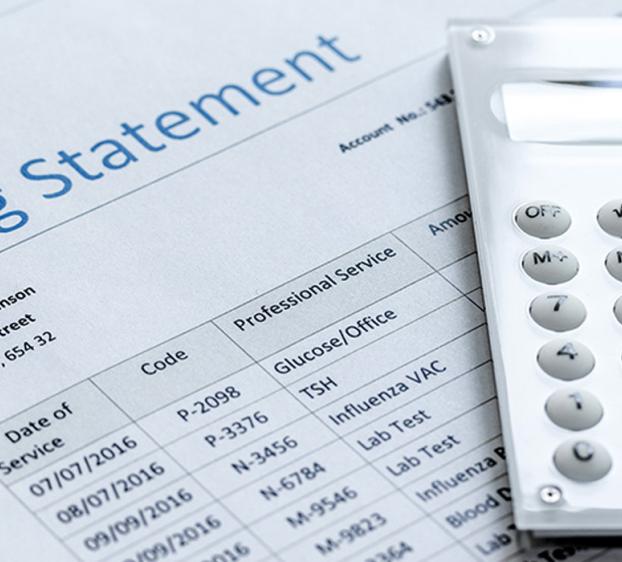
Why Complete Your Medical Billing and Coding Training with St. Edward’s?
- 100% Online: Start anytime
- Course Access: 12-month access, 370 hours
- Self-Paced: Study on your own schedule
- Success Team: Expert instructors support your success
- Certification Prep: Ready for your choice of CPC, CCA or CBCS certification
- All Inclusive: Course materials and exam fees
- Payment Options: Flexible payment plans available
Job Outlook
FAQs and Course Objectives
What does a medical biller and coder do?
Medical billers and coders are responsible for processing patient data, including medical records and related insurance. In this position, you’ll code a patient’s diagnosis and then request payment from the patient’s insurance company. You’ll play an important role in ensuring that healthcare providers are quickly and accurately paid for the treatment they give patients.
Is there a difference between medical billing and medical coding?
Yes. Medical coders translate patient care into current procedural terminology (CPT) codes. Their primary responsibility is to ensure that the medical services provided are accurately coded. Medical billers are responsible for creating a claim based on the codes a medical coder provides. Many professionals in this area have both medical billing and medical coding skills.
Is medical billing and coding a good career?
U.S. News & World Report ranked medical records technicians (professionals who perform medical billing, medical coding or both) in the top 5 on its list of “25 Best Jobs that Don’t Require a College Degree,” #12 in “Best Health Care Support Jobs” and on the “The 100 Best Jobs” list.
What are the requirements for a medical billing and coding career?
Entry-level positions typically require completion of a certificate and passing one of the certification exams or an associate degree program in medical billing and coding. Additionally, medical billing and coding professionals must understand the Health Insurance Portability and Accountability Act (HIPAA).
How long does it take to become a medical biller and coder?
In most cases, it takes between one and three years to become a medical biller and coder. Earning a medical billing and coding certification can take up to one year, while earning an associate degree can take up to three years.
What is the difference between certification exams (CPC, CCA, and CBCS)?
Obtaining a CPC, CCA, or CBCS certification implies that an individual has met competencies in medical billing and coding. Students have an opportunity to make confident, informed decisions about the national certification they prefer.
- The Certified Professional Coder (CPC) exam is offered by the American Academy of Professional Coders (AAPC). It is the gold standard entry-level coding certification for physicians or professional-fee coders.
- The Certified Coding Associate (CCA) is offered by the American Health Information Management Association (AHIMA). It is an entry-level medical coding certification across all settings — physician practices and inpatient hospitals.
- The Certified Billing and Coding Specialist (CBCS) is offered by the National Healthcareer Association (NHA) and is an entry-level medical billing and coding certification for physician practices, which includes ICD-10-CM, CPT and HCPCS Level II testing.
Where do medical billing and coding specialists work?
Medical billing and coding specialists work in a range of environments, both in office settings and from home. Depending on their certifications and specialties, they are employed in hospitals, insurance companies, physicians’ offices, clinics, nursing homes, assisted living facilities, or government agencies, such as the Department of Veterans Affairs, the U.S. Army Medical Command, or state-based departments of human services.
Can I earn college credits with this medical billing and coding course?
Please note that our Medical Billing and Coding program is noncredit-bearing. It is designed to prepare you to enter the workforce quickly.
Course Objectives
Our Medical Billing and Coding program prepares you to enter the workforce quickly, in just one year. You’ll learn from expert Instructors, through interactive lessons, hands-on practice and 24/7 access to self-paced lessons. The course covers these objectives:
- Medical coding terminology (required for medical coding), including the structures and functions of the human body
- Anatomy and the anatomical aspects of coding
- Disorders and medical procedures common to each body system
- Legal, ethical and regulatory concepts central to the field, including HIPAA compliance and third-party guidelines for filing insurance claims
- Main coding manuals: ICD-10-CM, ICD-10-PCS, CPT and HCPCS Level II
- Coding diagnoses, services and procedures for all systems of the body
- Fundamentals of medical billing, coding and medical terminology
Prerequisites and Requirements
There are no prerequisites to take this course.
Take the Next Step
Get on the path to becoming a certified medical billing and coding specialist. Our 100% online program lets you enroll anytime. Want to stay up to date on new certificate programs and events offered by St.Edward’s? We’ll send you information to keep you in the loop.