How a Cherokee Partnership at St. Edward’s Is Reviving Heirloom Corn Through the “Three Sisters” Farming Method
Nestled on the east side of campus between Maryhill Apartments and I-35 is a colorful 14,500-square-foot oasis. Pollinators buzz. Birds warble. Leaves rustle. And the hands of students like Agatha Ais ’27 carefully tend to rows of deep blue and white heirloom corn, green and purple beans, and orange squash planted through a partnership with the Central Texas Cherokee Township.

Started three years ago, this “food forest” does more than provide organic homegrown crops for students and the community — it’s a living tribute to Cherokee culture and sustainable farming practices. The township provided carefully preserved corn seed varieties, such as colored flour and White Eagle, from the Cherokee Nation’s seed bank in Oklahoma, and students have planted the seeds according to the Cherokee “Three Sisters” method, which arranges corn alongside beans and squash to maximize soil nutrients, minimize water usage and avoid employing pesticides.
“Even though my country is thousands of miles away, the corn here reminds me of home,” says Ais, a Forensic Science major from Jinja, Uganda. “The Cherokee call it maize and cultivate it differently, but it’s similar to the corn I’ve grown my entire life. Working in the food forest has been a way to connect with my homeland while also feeding my curiosity about a new culture.”
Ais, a waste management intern in the Office of Sustainability, organizes teams of students to weed the garden, water the plants with rain collected in barrels and add compost to the soil. With university sustainability coordinator Roy Johnson, she oversees planting new seeds in February, harvesting in July and maintaining the crops in the intervening months.
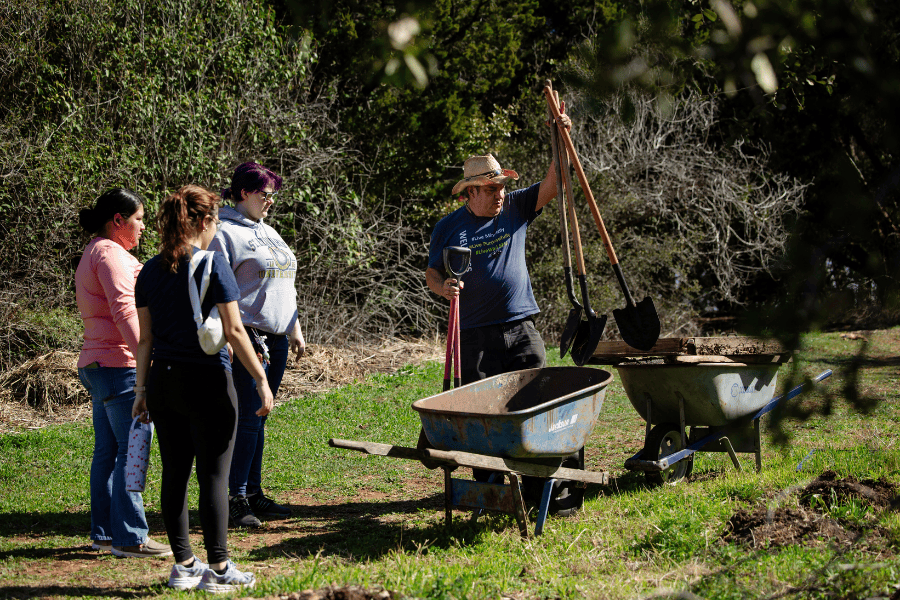
St. Edward’s community have learned about Cherokee culture from members of the township. Rachel Caldwell Hill, a township board member who advises students tending the food forest, has taught the students traditional Native practices such as nixtamalization to break down corn’s hard outer coating and maximize nutrients. Students have also learned about the legend of Selu the Corn Mother and Native traditions such as stickball, corn husk dolls, Trail of Tears corn bead necklaces and ribbon skirts.
“We have been blessed in our partnership with St. Edward’s,” Caldwell Hill says. “Working together gives us the opportunity to respect the land that we’re living on while treating each other’s existence as sacred and important. In the Cherokee language, we call it ᎤᎵᏍᎨᏗ ᏕᏣᏓᏰᎸᏎᏍᏗ, or ulisgedi detsadayelvsesdi — we are truly caring for each other through the land.”