Menu
School of Natural Sciences
School
Off
Academic Department
On
Administrative Department
Off
Visiting Asst Professor of Chemistry
Phone:
Office: North - John Brooks Williams 215
Email Lauren Freeman
Asst Professor of Practice in Chemistry
Phone:
Office: North - John Brooks Williams 113
Email Jackson Reyna

Undergraduate

Physics

Ornate door

Strengthen Your Quantitative Reasoning and Analytical Skills

Broadly defined, physics is the scientific study of how matter and energy interact. From quarks to cosmos, physics offers a portal into understanding how the world works at a fundamental level and a view of the frontier of the unanswered questions that remain.

Why study Physics at St. Edward's?

Studying physics enhances your skills in critical thinking, research and analysis, teamwork, and communication — valuable assets to any career. The Physics minor strengthens almost any degree you pursue, especially degrees in mathematics, computer science, biology, chemistry and engineering.

Hands-on learning and research opportunities

As a Physics minor, you will have the opportunity to carry out atmospheric science research with a faculty mentor. You’ll work together to collect and analyze measurements from balloon-borne instruments and ground-based spectrometers to help inform what factors are affecting air pollution.

Attend interactive conferences and fairs

In the University Physics sequence of courses, students work in teams to complete projects and show their work at a culminating project fair. Students interested in physics can also attend and present their research at a conference.

Explore Details About a Minor in Physics

Required Courses (8 hours)

  • University Physics I, Lab
  • University Physics II, Lab

Electives (10 hours total)

  • Physical Chemistry I
  • Physical Chemistry I, Lab
  • Physical Chemistry II
  • Numerical and Scientific Methods
  • Special Topics in Physics
  • Independent Study In Physics
  • Research in Physics

Total  Hours: 18

For more details and course descriptions for the Physics Minor, view the current Undergraduate Bulletin (PDF).

What You Will Learn

The Physics minor offers students the opportunity to study quantum mechanics, thermodynamics and more advanced computational approaches to modeling scientific phenomena. The minor’s introductory physics sequence consists of two courses that involve studying mechanics, as well as electricity and magnetism, both of which incorporate an introduction to programming using VPython.

A few examples of courses students in this minor take:

  • University Physics I – Topics include fundamentals of classical mechanics. Primarily for science or pre-engineering students. Calculus is used in derivations and problem-solving.
  • Mechanics and Waves Lab – Experiments in mechanics and waves. Includes experience with computer-assisted data recording, analysis and graphing, basic considerations of experimental design, and introduction to report writing.

Research and Presentations

In the Physics minor, you and your classmates will have the opportunity to carry out atmospheric science research with a faculty mentor. You’ll work together to collect and analyze measurements from balloon-borne instruments and ground-based spectrometers to help inform what factors are affecting air pollution.

In the University Physics sequence of courses, students work in teams to complete projects and show their work at a culminating project fair. Students interested in physics can also attend and present their research at a conference.

Students are invited to join the Physics Club, which in addition to various activities, helps prepare students for the different opportunities available to students studying physics.

Undergraduate

Forensic Chemistry

Ornate door
Program Snapshot
Program Type
Bachelor of Science
Department
Chemistry

Help Solve Crimes by Using Chemistry to Analyze Evidence

Majoring in Forensic Chemistry will give you a solid background in chemistry, forensics and criminal justice that you can apply to fields in law enforcement, public safety or private enterprise. You’ll learn the fundamentals of crime scene investigation and how to collect, analyze and present evidence. You’ll graduate ready to use chemistry to uncover the truth and keep communities safe.

Why earn your Forensic Chemistry degree at St. Edward’s?

Whether you want to pursue a career with police or fire departments, the coroner’s office, the military, the FBI or CIA, bomb squads or private labs — or pursue a graduate degree in forensic chemistry — one thing is certain: The advantages of your St. Edward’s education will prepare you to succeed. You’ll find opportunities in and outside the classroom to learn, give back and achieve your goals. And your mentors will support you every step of the way. 

Students and professor collaborate on a biochemistry experiment in the School of Natural Sciences lab.

Build relationships with your professors

You’ll learn in small classes taught by dedicated professors who make a point of getting to know you and becoming your trusted advisors. They’ll help you identify and focus on your goals, and provide guidance and insight during your college years and after you graduate.

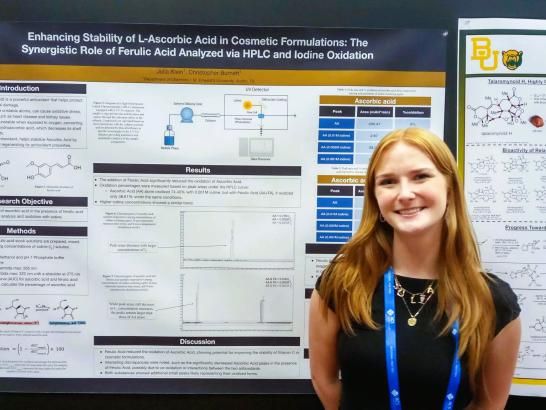
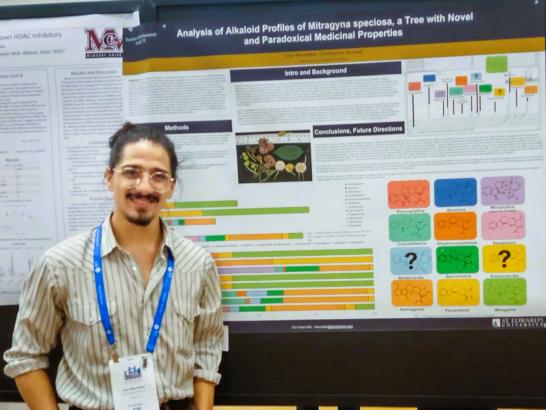
St. Edward's student presents his Forensic Chemistry research poster

Conduct research

You’ll have the opportunity to engage in faculty-mentored research, present your work at professional conferences, and submit your findings for publication.  

Teaching Assistants work with students on a biochemistry experiment in the School of Natural Sciences lab

Develop your career path as a chemist

Love chemistry but unsure what you would like to do with your degree? The Chemistry department’s annual guest speaker series connects you with professionals in the field. Learn firsthand from chemists in academia, industry and government agencies about their professional journey as a chemist. It’s an excellent opportunity to network and gain firsthand knowledge about the field. In addition, gain  valuable experience as a teaching assistant for a laboratory course where you’ll enhance your benchwork, leadership and teamwork skills — all while helping fellow students

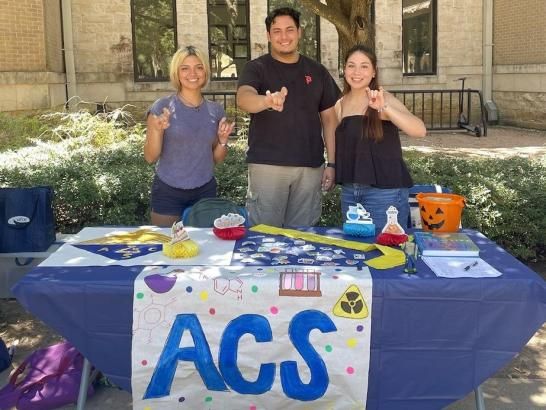
ACS students pose for photo at their display table during campus student organization event

Get involved in the American Chemical Society student chapter

The American Chemical Society (ACS) student chapter is a professional organization focused on enhancing student networking with professionals in the field, exploring careers in chemistry, and building a sense of community with people who love forensic chemistry as much as you do. The ACS student group works closely with the Department of Chemistry in coordinating its annual guest speaker series and volunteering for chemistry-focused community events.

test

Reap the Rewards of Austin

Austin is a fast-growing technology hub and emerging center of science research and innovation. As a Forensic Chemistry major, you can explore career paths and practical application of your studies through internships and interactions within the greater Austin community.

What do our graduates do?

Forensic Chemistry majors advance to a variety of careers and graduate schools from St. Edward’s. Here’s a sample:

  • Forensic scientist at the Texas Department of Public Safety
  • Gas and chemical project manager at Freescale Semiconductors
  • Project manager at NXP Semiconductors
  • Master’s student at the University of Albany

Explore Details About a Degree in Forensic Chemistry

Major Requirements: The Bachelor of Science in Forensic Chemistry requires 69 hours of major courses, which include a combination of introductory coursework, developmental chemistry, labs and research methods.

General Education Requirements: In addition to the major program requirements, all students must satisfy the general education requirements. Talk with your success coach and faculty advisor about which courses are right for you.

View and download the full degree plan for our Forensic Chemistry major (PDF).

A few examples of courses students in this major take:

  • Crime Scene Investigation – Examine, learn, understand and employ the techniques of crime scene investigation. The objective is to teach the fundamentals of crime scene investigation.
    Students should be able to assess any crime scene and determine proper procedures
  • Instrumental Analysis – A study of some of the modern instrumental methods including
    atomic and molecular spectroscopy, analytical separations, mass spectrometry, magnetic resonance spectrometry and other salient techniques.
  • Forensic Chemistry – Major facets of forensic analytical chemistry will be covered, including drug analysis, forensic toxicology, trace analysis, and arson and DNA typing. The use of Bayesian probability in the evaluation of guilt and innocence will also be covered. Real-world case studies will be used to illustrate the application of these principles.

The Department of Chemistry also offers BS degrees in ChemistryBiochemistry and Environmental Chemistry.

What You Will Learn

Forensic Chemistry courses include a combination of introductory coursework, developmental chemistry, labs and research methods, and support courses in criminal justice. 

  • Through classroom studies, lab work, field experiences and research, you’ll develop an understanding of how to collect, organize and interpret chemical data.
  • Learn the fundamentals of crime scene investigation, and analyze blood and tissue samples to identify DNA or run toxicology screens.
  • Understand how to verify the chemical composition of drugs taken as evidence and how to detect chemicals associated with explosives, firearms or toxic substances. 

Skills You Will Gain

As a Forensic Chemistry major, you’ll cultivate a range of skills that prepare you to excel in the workplace. You’ll be able to:

  • Search, access, contextualize and effectively summarize readings of discipline-specific literature.
  • Apply appropriate experimental techniques and instruments in the context of designing and executing an experiment.
  • Use quantitative tools for data collection and analysis.
  • Explain the purpose of general laboratory safety guidelines and their implementation in various lab settings.
  • Communicate the findings of independent research in a manner appropriate to the audience, including oral presentations and the writing of experiments, research manuscripts, poster presentations and research proposals.
  • Demonstrate an ability to collaboratively arrive at a common goal within a team. 

Research

You’ll perform research with cutting-edge instrumentation — St. Edward’s is proud to be considered one of the best-equipped and best-funded small college chemistry departments in the country. We’ve been highly successful in securing external funding in support of an advanced curriculum, modern laboratory instrumentation and undergraduate research. 

Departmental and Research Funding
In addition to an ongoing research grant from the Robert A. Welch Foundation, the Department of Chemistry has secured curricular and equipment grants from the National Science Foundation, the Keck Foundation and the Educational Advancement Foundation. 

The Chemistry department is grateful for the ongoing gift of the Lewis fund, which supports student research. Given in memory of Dr. JD Lewis, longtime faculty member in the Chemistry department, this fund provides support for summer six-week and eight-week student research experiences

Scholarships

  • In addition to performing research over the academic year in one of the faculty-led research groups, students may apply for participation in the Chemistry Department’s full-time summer research program. The summer program is fully funded and successful applicants receive competitive student stipends.
  • Students in chemistry-related majors at St. Edward’s may apply for Welch Foundation undergraduate research scholarships or Lewis scholarships — including a summer scholarship that provides a six-week or eight-week stipend to conduct research.
  • Apply for a summer research experience for undergraduates [REU] at local and national universities where you can gain experience studying different subfields of chemistry and focus on your career direction. 

Summer Research Experiences for Undergraduates (REU) include:

  • The University of Texas at Austin
  • Texas State University
  • Baylor University
  • University of Texas at San Antonio
  • University of North Carolina
  • Michigan State University
  • University of Nebraska
  • University of Michigan
  • University of Mississippi
  • North Carolina State University
  • Boston University

Conferences and Presentations

  • Students are encouraged to present their results at professional meetings, such as regional and national meetings of the American Chemical Society and the Texas Academy of Science.
  • Students also have the opportunity to present their research at the annual Lucian Symposium [fall semester] and SOURCE Symposium [spring semester] on the St. Edward's campus.

At St. Edward’s, our faculty are outstanding scholars, thought leaders, teachers and mentors who bring energy and enthusiasm to our vibrant learning community. They take pride in getting to know you, helping you achieve your goals and celebrating your successes.

View a list of our faculty members and their contact information on the Department of Chemistry webpage.

Undergraduate

Environmental Chemistry

Ornate door
Program Snapshot
Program Type
Bachelor of Science
Department
Chemistry

Examine the Impact Chemical Substances Have On the Earth’s Ecosystems

Get ready to confront climate change, find ways to clean up air and water pollution, and respond to environmental disasters. Or figure out solutions to problems related to energy, waste and recycling. You’ll build your knowledge of both chemistry and environmental science — and a solid understanding of the connections between the environment, economics and policy.

Why earn your Environmental Chemistry degree at St. Edward’s?

If you want to use chemistry to safeguard the environment through public policy, natural resource management, corporate sustainability practices, teaching or other fields, one thing is certain: The advantages of your St. Edward’s education will prepare you to succeed. You’ll find opportunities in and outside the classroom to learn, give back and achieve your goals. And your mentors will support you every step of the way. 

Students and professor collaborate on a biochemistry experiment in the School of Natural Sciences lab.

Build relationships with your professors

You’ll learn in small classes taught by dedicated professors who make a point of getting to know you and becoming your trusted advisors. They’ll help you identify and focus on your goals, and provide guidance and insight during and after your college years. 

St. Edward's student presents her chemistry poster at ACS meeting

Conduct research

You’ll have the opportunity to engage in faculty-mentored research , present your work at professional conferences, and submit your findings for publication.  

Teaching Assistants work with students on a biochemistry experiment in the School of Natural Sciences lab

Develop your career path as a chemist

Love chemistry but unsure what you would like to do with your degree? The Chemistry department’s annual guest speaker series connects you with professionals in the field. Learn firsthand from chemists in academia, industry and government agencies about their professional journey as a chemist. It’s an excellent opportunity to network and gain firsthand knowledge about the field. In addition, gain valuable experience as a teaching assistant for a laboratory course where you’ll enhance your benchwork, leadership and teamwork skills — all while helping fellow students. 

ACS students pose for photo at their display table during campus student organization event

Get involved in the American Chemical Society student chapter

The American Chemical Society (ACS) student chapter on campus is a professional organization focused on enhancing student networking with professionals in the field, exploring careers in chemistry, and building a sense of community with people who love chemistry as much as you do. The ACS student group works closely with the Department of Chemistry in coordinating its annual guest speaker series and volunteering for chemistry-focused community events.


test

Reap the Rewards of Austin

Austin is a fast-growing technology hub and emerging center of science research and innovation. As an Environmental Chemistry major, you can explore career paths and practical application of your studies through internships and interactions within the greater Austin community.

What do our graduates do?

Environmental Chemistry majors go on to a variety of careers and graduate schools from St. Edward’s. Here’s a sample:

  • Geochemist and risk assessment officer at Tetra Tech, a consulting and engineering company
  • Master’s student at Texas A&M University
  • PhD candidate at DePaul University
  • PhD candidate at the University of North Texas

Explore Details About a Degree in Environmental Chemistry

Major Requirements: The Bachelor of Science in Environmental Chemistry requires 78 to 79 hours of major courses, which include a combination of environmental science, chemistry, philosophy, biology, math, and physics. 

General Education Requirements: In addition to the major program requirements, all students must satisfy the general education requirements. Talk with your success coach and faculty advisor about which courses are right for you.

View and download the full degree plan for our Environmental Chemistry major (PDF).

A few examples of courses students in this major take:             

  • Environmental Politics and Policy – Explore new demands worldwide for dealing with the risks of climate change, population growth, loss of biological diversity and terrorism, which will force governments everywhere to rethink policy strategies and find new ways to reconcile environmental and economic goals.
  • Environmental Chemistry – Examine the behavior and interactions of chemicals in natural and anthropogenic systems; their distribution, transport and fate.  
  • Environmental Ethics – Delve into moral concerns and ethical decision-making concerning the environment. Topics include individual, corporate, and state freedoms and responsibilities, permissible uses of animals, and comparison of strategies for protecting natural resources, as well as case studies regarding equity, justice, and individual and community rights to environmental resources.
  • Biochemistry – Survey of the fundamentals of biochemistry. Topics include the structure of proteins, lipids and carbohydrates, catalysis, kinetics, bioenergetics and metabolism, and information pathways.

The Department of Chemistry also offers degrees in ChemistryBiochemistry and Forensic Chemistry.

What You Will Learn

Some of the most critical and challenging issues that must be addressed in this century are environmental in nature. Finding good policy solutions to address these issues will require an understanding of the underlying processes that drive environmental changes. Many of these processes are chemical in nature and must be studied using the techniques of chemistry. 

The professional tools needed to address these problems are extensive expertise in the field of chemistry and a general knowledge of the field of environmental science. The BS degree program in Environmental Chemistry is designed to prepare college graduates with this type of expertise. A degree in Environmental Chemistry provides professional preparation for students interested in applying a rigorous scientific degree to careers in the environmental field. 

Graduates with this degree have a background appropriate for attending graduate school in chemistry or environmental science, or for professional employment in environmental analysis and environmental remediation positions with corporations, research labs and governmental agencies. Graduates of this program would also be well qualified to pursue a professional career in other areas of chemistry.

Skills You Will Gain

As an Environmental Chemistry major, you’ll cultivate a range of skills that prepare you to excel in the workplace. You’ll be able to:

  • Search, access, contextualize and effectively summarize readings of discipline-specific literature.
  • Apply appropriate experimental techniques and instruments in the context of designing and executing an experiment.
  • Use quantitative tools for data collection and analysis.
  • Explain the purpose of general laboratory safety guidelines and their implementation in various lab settings.
  • Communicate about the findings of independent research in a manner appropriate to the audience, including oral presentations and the writing of experiments, research manuscripts, poster presentations and research proposals.
  • Demonstrate an ability to collaborate and arrive at a common goal within a team. 

Experiential Learning and Research

We emphasize experiential learning, so students majoring in Environmental Chemistry enroll in at least two semesters of research courses and join a student-faculty research group with the goal of producing and presenting professional-level work.

You’ll perform research with cutting-edge instrumentation — St. Edward’s is proud to be considered one of the best-equipped and best-funded small college chemistry departments in the country. We’ve been highly successful in securing external funding in support of an advanced curriculum, modern laboratory instrumentation and undergraduate research. 

Departmental and Research Funding
In addition to an ongoing research grant from the Robert A. Welch Foundation, the Chemistry Department has secured curricular and equipment grants from the National Science Foundation, the Keck Foundation and the Educational Advancement Foundation. 

The Chemistry department is grateful for the ongoing gift of the Lewis fund, which supports student research. Given in memory of Dr. JD Lewis, longtime faculty member in the Chemistry department, this fund provides support for summer six-week and eight-week student research experiences

Scholarships

  • In addition to performing research over the academic year in one of the faculty-led research groups, students may apply for participation in the Chemistry Department’s full-time summer research program. The summer program is fully funded, and successful applicants receive competitive student stipends.
  • Students in chemistry-related majors at St. Edward’s may apply for Welch Foundation undergraduate research scholarships or Lewis scholarships — including a summer scholarship that provides a six-week or eight-week stipend to conduct research.
  • Apply for a summer research experience for undergraduates [REU] at local and national universities, where you can gain experience studying different subfields of chemistry and focus on your career direction.  

NSF summer Research Experiences for Undergraduates (REU) include:

  • The University of Texas at Austin
  • Texas State University
  • Baylor University
  • University of Texas at San Antonio
  • University of North Carolina
  • Michigan State University
  • University of Nebraska
  • University of Michigan
  • University of Mississippi
  • North Carolina State University
  • Boston University

Conferences and Presentations

  • Students are encouraged to present their results at professional meetings, such as regional and national meetings of the American Chemical Society and the Texas Academy of Science.
  • Students also have the opportunity to present their research at the annual Lucian Symposium [fall semester] and the SOURCE Symposium [spring semester] on the St. Edward's campus.

Our internship program acquaints students with practical experience. Our students have recently interned with:

  • Tetra Tech
  • Texas Commission on Environmental Quality

STEM students at St. Edward’s can access paid internships offered by our Institute for Interdisciplinary Science (i4). For more information on these internship programs, please visit the Institute for Interdisciplinary Science (i4).

At St. Edward’s, our faculty are outstanding scholars, thought leaders, teachers and mentors who bring energy and enthusiasm to our vibrant learning community. They take pride in getting to know you, helping you achieve your goals and celebrating your successes.

View a list of our faculty members and their contact information on the Department of Chemistry webpage.

Undergraduate

Chemistry

Ornate door
Program Snapshot
Program Type
Bachelor of Arts
Bachelor of Science
Department
Chemistry

Develop Innovative Solutions to Problems in Health and Energy Usage

Study how material substances interact, combine and change. Use that knowledge to find cures for diseases, create new products, develop nutritious food for the world’s growing population, monitor sources of pollution to protect the environment, or analyze evidence to solve crimes.

Why earn your Chemistry degree at St. Edward’s?

Whatever field you choose to pursue as a chemist — from pharmacology to toxicology to forensics to teaching — one thing is certain: The advantages of your St. Edward’s education will prepare you to succeed. You’ll find opportunities in and outside the classroom to learn, give back and achieve your goals. And your mentors will support you every step of the way.

Students and professor collaborate on a biochemistry experiment in the School of Natural Sciences lab.

Build relationships with your professors

You’ll learn in small classes taught by dedicated professors who make a point of getting to know you and becoming your trusted advisors. They’ll help you identify and focus on your goals, and provide guidance and insight during your and after college years.

St. Edward's student presents her chemistry poster at ACS meeting

Conduct research

You’ll have the opportunity to engage in faculty-mentored research, present your work at professional conferences, and submit your findings for publication. 

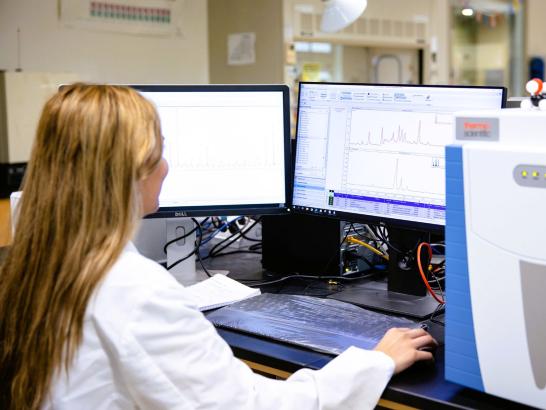
GCMS research student works on computers in lab

Develop your career path as a chemist

Love chemistry but unsure what you would like to do with your degree?  The Chemistry department’s annual guest speaker series connects you with professionals in the field.  Learn firsthand from chemists in academia, industry and government agencies about their professional journey as a chemist.  It’s an excellent opportunity to network and gain firsthand knowledge about the field.  In addition, gain valuable experience as a teaching assistant for a laboratory course where you’ll enhance your benchwork, leadership and teamwork skills — all while helping fellow students

ACS students pose for photo at their display table during campus student organization event

Get involved in the American Chemical Society student chapter

The American Chemical Society (ACS) student chapter is a professional organization focused on enhancing student networking with professionals in the field, exploring careers in chemistry, and building a sense of community with people who love chemistry as much as you do.  The ACS student group works closely with the Department of Chemistry in coordinating its annual guest speaker series and volunteering for chemistry-focused community events

test

Reap the Rewards of Austin

Austin is a fast-growing technology hub and emerging center of science research and innovation. As a Chemistry major, you can explore career paths and practical application of your studies through internships and interactions within the greater Austin community.

What do our graduates do?

Chemistry majors advance to a variety of careers and graduate schools from St. Edward’s. Here’s a sample:

  • Associate Professor of Pathology, Duke University
  • Scientific researcher at Braskem
  • Chemist at Quality Chemical Laboratories
  • R&D researcher at Procter & Gamble
  • Postdoctoral associate at the Air Force Research Lab
  • Chemical Biology PhD candidate at the University of Michigan
  • Inorganic Chemistry PhD candidate at the University of California Irvine
  • Graduate students at The University of Texas at Austin, the South Dakota School of Mines and Technology and the University of California Santa Cruz

Explore Details About a Degree in Chemistry

Students pursuing a degree in Chemistry have two degree plans to choose from. This helpful course map (PDF) shows the sequence of prerequisites in the department. 

1. Bachelor of Science in Chemistry

The BS in Chemistry is a rigorous course of study that incorporates more math and laboratory experience. This degree track is intended primarily to meet the needs of a student who wishes to seek employment in the chemical industry or to prepare for graduate study in chemistry.

Major Requirements: 69 hours of major courses, of which 23 hours are supporting courses from math, physics and biology.

General Education Requirements: In addition to the major program requirements, all students must satisfy the general education requirements. Talk with your success coach and faculty advisor about which courses are right for you. 

View and download the full degree plan for the BS in Chemistry major (PDF). 

2. Bachelor of Arts in Chemistry

This BA in Chemistry provides more opportunities to take non-science-related courses for a broader-based education and is intended primarily for students who wish to teach at the secondary school level or would like to use chemistry as a supporting discipline.

Major Requirements: 52 hours of major courses, of which 20 hours are supporting courses from math, physics and biology.

General Education Requirements: In addition to the major program requirements, all students must satisfy the general education requirements. Talk with your success coach and faculty advisor about which courses are right for you.

View and download the full degree plan for the BA in Chemistry major (PDF).

The Department of Chemistry also offers degrees in Biochemistry, Environmental Chemistry and Forensic Chemistry.

What You Will Learn

As a Chemistry major at St. Edward’s, you’ll learn to think both scientifically and creatively. You’ll delve into the study of matter — its characteristics, behavior and structure. You’ll examine the way materials act and react in certain situations, and you’ll produce and observe these reactions, both in nature and artificially in a lab setting. 

Through classroom studies, lab work and research, you’ll develop an understanding of how to collect, organize and interpret chemical data. In the process, you’ll learn to appreciate the world on the macro-scale while learning the underlying principles occurring on the molecular level.

Skills You Will Gain

As a Chemistry major, you’ll cultivate a range of skills that prepare you to excel in the workplace. You’ll be able to …

  • Search, access, contextualize and effectively summarize readings of discipline-specific literature.
  • Apply appropriate experimental techniques and instruments in the context of designing and executing an experiment.
  • Use quantitative tools for data collection and analysis.
  • Explain the purpose of general laboratory safety guidelines and their implementation in various lab settings.
  • Communicate the findings of independent research in a manner appropriate to the audience, including oral presentations and the writing of experiments, research manuscripts, poster presentations, and research proposals.
  • Demonstrate an ability to collaborate and arrive at a common goal within a team.

Research

You’ll perform research with cutting-edge instrumentation — St. Edward’s is proud to be considered one of the best-equipped and best-funded small college chemistry departments in the country. We’ve been highly successful in securing external funding in support of an advanced curriculum, modern laboratory instrumentation and undergraduate research. 

Departmental and Research Funding
Along with an ongoing research grant from the Robert A. Welch Foundation, the Chemistry Department has secured curricular and equipment grants from the National Science Foundation, the Keck Foundation and the Educational Advancement Foundation. 

The Chemistry department is grateful for the ongoing gift of the Lewis fund, which supports student research. Given in memory of Dr. JD Lewis, longtime faculty member in the Chemistry department, this fund provides support for summer six-week and eight-week student research experiences. 

Scholarships

  • In addition to performing research over the academic year in one of the faculty-led research groups, students may apply for participation in the Chemistry Department’s full-time summer research program. The summer program is fully funded and successful applicants receive competitive student stipends.
  • Students in chemistry-related majors at St. Edward’s may apply for Welch Foundation undergraduate research scholarships or Lewis scholarships — including a summer scholarship that provides a six-week or eight-week stipend to conduct research.
  • Apply for a summer research experience for undergraduates [REU] at local and national universities, where you can gain experience studying different subfields of chemistry and focus on your career direction. 

Research Experiences for Undergraduates (REU) include:

  • University of Texas at Austin
  • Texas State University
  • Baylor University
  • University of Texas at San Antonio
  • University of North Carolina
  • Michigan State University
  • University of Nebraska
  • University of Michigan
  • University of Mississippi
  • North Carolina State University
  • Boston University

Conferences and Presentations

  • Students are encouraged to present their results at professional meetings, such as regional and national meetings of the American Chemical Society and the Texas Academy of Science, where they’ll rub shoulders with professional chemists.
  • Students also have the opportunity to present their undergraduate research at the annual Lucian Symposium [fall semester] and SOURCE Symposium [spring semester] on the St. Edward’s campus.

Our internship program acquaints students with practical experience. Our students have recently interned with …

  • MilliporeSigma 
  • Electroninks

STEM students at St. Edward’s can access paid internships offered by our Institute for Interdisciplinary Science (i4). For more information on these internship programs, please visit the Institute for Interdisciplinary Science (i4).

A Chemistry minor is available for students interested in the field of chemistry, or for students who would benefit from adding courses in chemistry to their education for their future endeavors. 

Required courses:

  • General Chemistry
  • General Chemistry Lab
    General Chemistry II
  • General Chemistry II Lab

      Or

  • Inorganic Chemistry I
  • Inorganic Chemistry I Lab
  • Organic Chemistry 
  • Organic Chemistry I Lab
  • Chemistry Electives

At St. Edward’s, our faculty are outstanding scholars, thought leaders, teachers and mentors who bring energy and enthusiasm to our vibrant learning community. They take pride in getting to know you, helping you achieve your goals and celebrating your successes.

View a list of our faculty members and their contact information on the Department of Chemistry webpage.

Undergraduate

Biochemistry

Ornate door
Program Snapshot
Program Type
Bachelor of Science
Department
Chemistry

Make a Difference in Biochemical Research and Medicine

Be part of the front lines in battling illness and infection by discovering how diseases work and conducting research to find a cure — or by helping your patients understand, improve and take care of their health.

Why earn your Biochemistry degree at St. Edward’s?

Whether you’re looking to enter medical or dental school or a graduate program in chemistry, biochemistry or pharmacology, one thing is certain: The advantages of your St. Edward’s education will prepare you to succeed. You’ll find opportunities in and outside the classroom to learn, give back and achieve your goals. And your mentors will support you every step of the way.

Students and professor collaborate on a biochemistry experiment in the School of Natural Sciences lab.

Build relationships with your professors

You’ll learn in small classes taught by dedicated professors who make a point of getting to know you and becoming your trusted advisors. They’ll help you identify and focus on your goals, and provide guidance and insight during and after your college years.

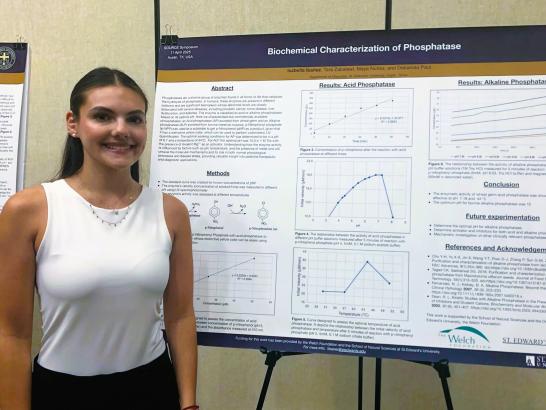
Biochemistry student presents her poster at SOURCE forum on campus

Conduct research

You’ll have the opportunity to engage in faculty-mentored research, present your work at professional conferences and submit your findings for publication. 

Teaching Assistants work with students on a biochemistry experiment in the School of Natural Sciences lab

Develop your career path as a chemist

Love chemistry but unsure what you would like to do with your degree?  The Chemistry department’s annual guest speaker series connects you with professionals in the field. Learn firsthand from chemists in academia, industry and government agencies about their professional journey as a chemist. It’s an excellent opportunity to network and gain firsthand knowledge about the field. In addition, gain  valuable experience as a teaching assistant for a laboratory course where you’ll enhance your benchwork, leadership and teamwork skills.

ACS students pose for photo at their display table during campus student organization event

Get involved in The American Chemical Society student chapter

The American Chemical Society (ACS) student chapter on campus is a professional organization focused on enhancing student networking with professionals in the field, exploring careers in chemistry, and building a sense of community with people who love biochemistry as much as you do.  The ACS student group works closely with the Department of Chemistry in coordinating its annual guest speaker series and volunteering for chemistry-focused community events. 

test

Reap the Rewards of Austin

Austin is a fast-growing technology hub and emerging center of life-sciences research and innovation. As a Biochemistry major, you can explore career paths and practical application of your studies through internships and interactions within the greater Austin community.

What do our graduates do?

Biochemistry majors advance to a variety of careers and graduate and professional schools from St. Edward’s. Here’s a sample:

  • Chemistry staff scientist at Vernier Software & Technology, after earning a PhD from the University of California at Davis
  • Hospital pharmacist, after earning a PharmD from the University of Connecticut School of Pharmacy
  • Psychiatrist, after earning an MD from The University of Texas Medical Branch in Galveston
  • Postdoctoral associate at Harvard University

Explore Details About a Degree in Biochemistry

Major Requirements: The Bachelor of Science in Biochemistry requires 71 hours of major courses, which include a combination of chemistry, biology, math and physics courses. 

General Education Requirements: In addition to the major program requirements, all students must satisfy the general education requirements. Talk with your success coach and faculty advisor about which courses are right for you.

View and download the full degree plan for Biochemistry.

What You Will Learn

You’ll learn to utilize chemical knowledge to study biological processes at the molecular level — including structure, function and regulation — applicable to everything from metabolic disorders to better understanding how chemicals promote or inhibit growth.

A few examples of courses students take in this major:

  • Organic Chemistry II –  Principles of designing multi-step synthesis schemes. Chemistry of aldehydes, ketones, carboxylic acids and their derivatives, aromatic compounds, amines, amides, and proteins.
  • Biochemistry I – Survey of the fundamentals of biochemistry. Topics include the structure of proteins, nucleic acids, lipids and carbohydrates, catalysis, kinetics, bioenergetics, and information pathways. Gain an overview of the field through in-depth coverage of protein structure and enzyme catalysis.
  • Cell Biology Investigate the structure of the eukaryotic cell, the trafficking of macromolecules within cells, the mechanisms by which cell division is regulated, how cells communicate, and the biogenesis of cancer. The laboratory emphasizes current techniques utilized to study cell biology.

Skills You Will Gain

Upon completing the Biochemistry program, you’ll be ready to:

  • Search, access, contextualize and effectively summarize readings of discipline-specific literature.
  • Apply appropriate experimental techniques and instruments in the context of designing and executing an experiment.
  • Use quantitative tools for data collection and analysis.
  • Explain the purpose of general laboratory safety guidelines and their implementation in various lab settings.
  • Communicate the findings of independent research in a manner appropriate to the audience, including oral presentations and the writing of experiments, research manuscripts, poster presentations, and research proposals.
  • Demonstrate the ability to collaborate and arrive at a common goal within a team. 

At St. Edward’s, our faculty are outstanding scholars, thought leaders, teachers and mentors who bring energy and enthusiasm to our vibrant learning community. They take pride in getting to know you, helping you achieve your goals and celebrating your successes.

View a list of our faculty members and their contact information on the Department of Chemistry webpage.

Visiting Asst Professor of Chemistry
Office: North - John Brooks Williams 213
Email Debamita Paul
Subscribe to Chemistry