Growing a Greener Hilltop Through Sustainability and Innovation
St. Edward’s continues to earn notable recognition for its dedication to fostering a culture of environmental stewardship across campus.
Explore the milestones celebrated during Earth Month and throughout the 2025-2026 academic year, highlighting university initiatives that inspire a more sustainable way of living.
Rooted in Excellence: 11 Years Strong
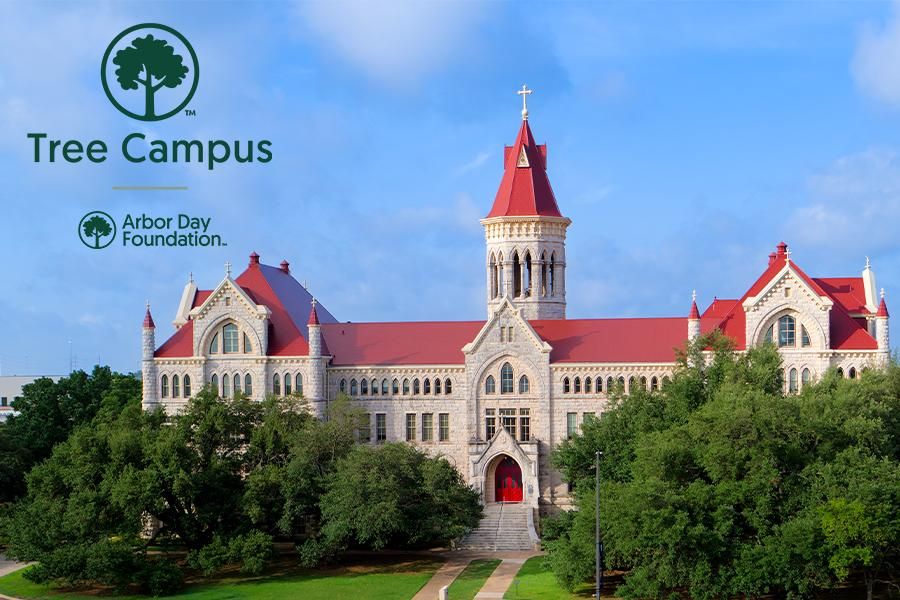
The Arbor Day Foundation has awarded the university the 2025 Tree Campus Higher Education designation for the 11th consecutive year.
This national recognition honors colleges and universities that effectively manage campus trees, promote tree education and create meaningful service-learning opportunities.
At St. Edward’s, these efforts translate into hands-on learning experiences, ongoing campus beautification and long-term investment in campus gardens and forested spaces.
Planting Global Connections Through the International Food Forest
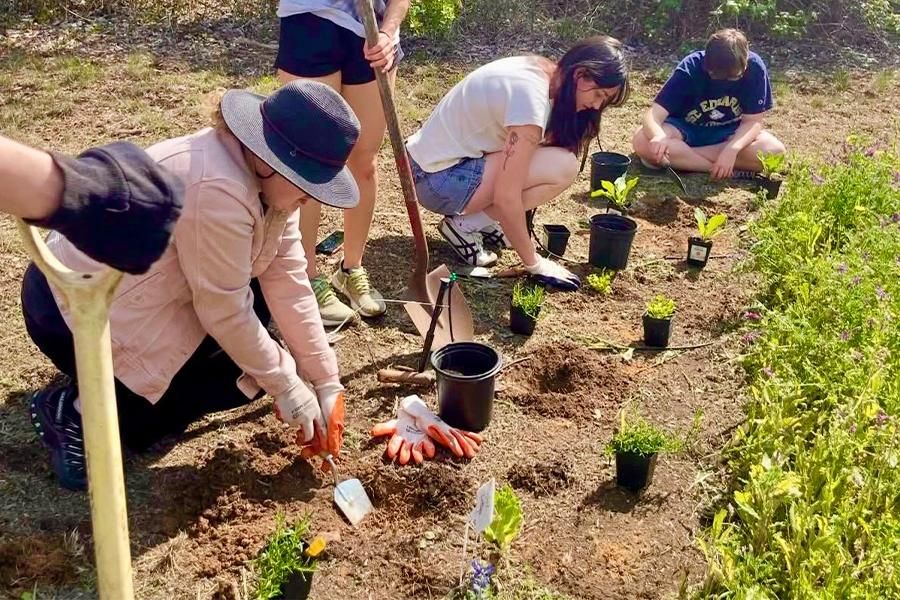
The International Food Forest is a new garden space that reflects the diversity of the university’s student body.
Located behind Teresa Hall as part of the broader SEU Food Forest, this expanding initiative features plant species representing more than 35 countries.
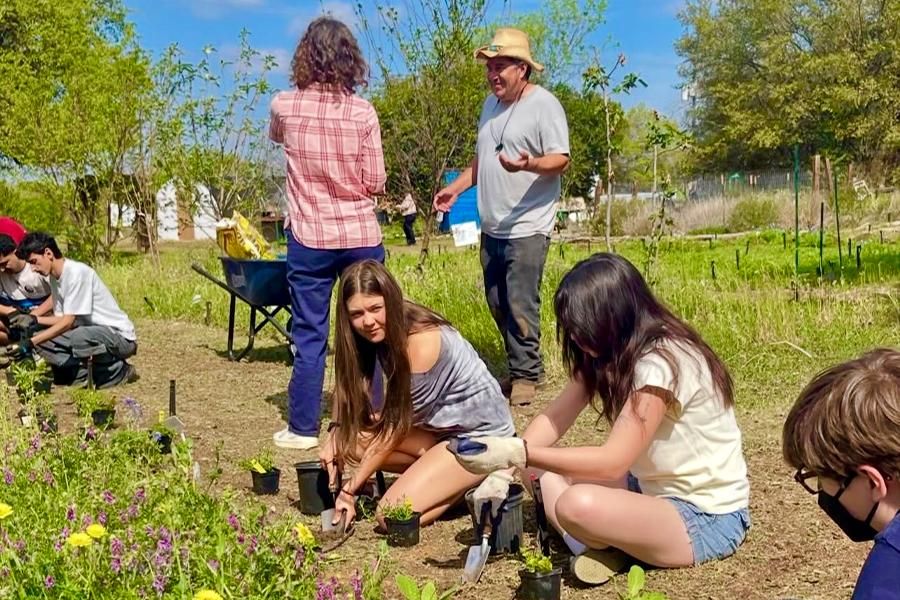
Designed to celebrate cultural heritage through agriculture, the space will eventually support programming centered on food harvesting, preparation, and cross-cultural exchange. The International Food Forest builds on existing sustainability efforts, including nearby garden collaborations, and reinforces the university’s commitment to inclusive, globally minded environmental practices.
Tiny Forest, Big Environmental Impact
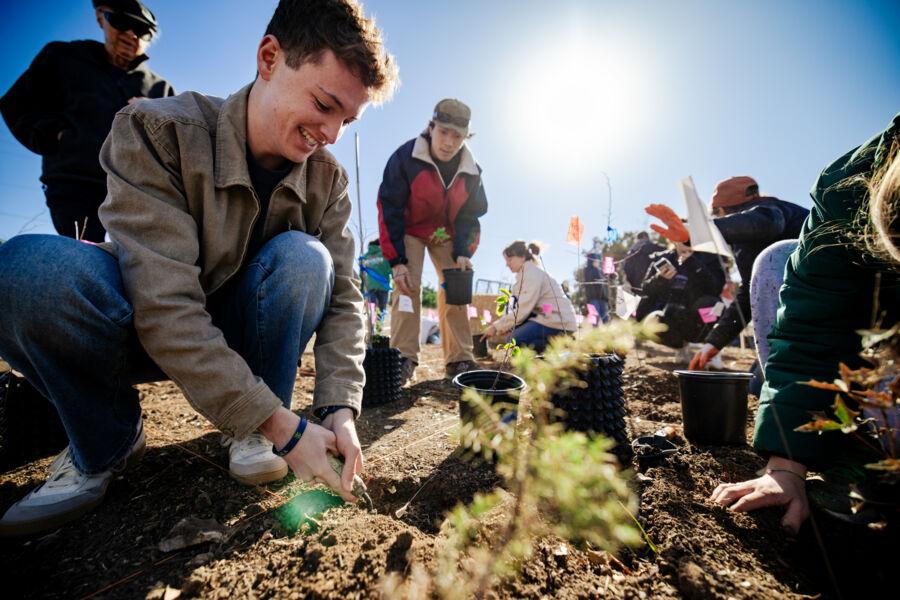
St. Edward's is now home to Central Texas’ first Tiny Forest — a densely planted, 600-square-foot plot featuring more than 160 trees and shrubs.
Located across from Lucian-Hamilton Baseball Field and East Hall, the fast-growing forest uses the Miyawaki Method to accelerate growth and maximize ecological benefits in a compact space.
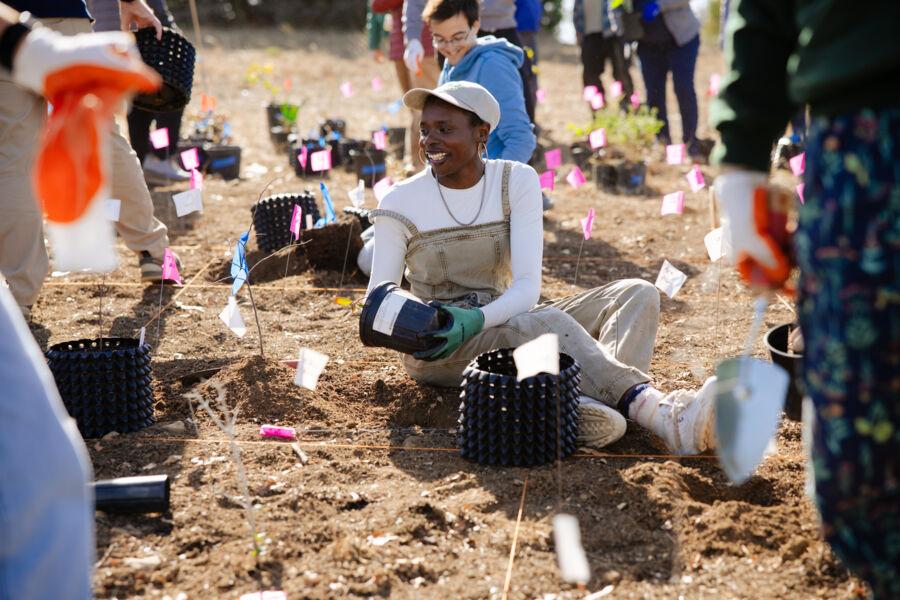
Trees in the Tiny Forest are expected to grow up to 10 times faster and sequester up to 10 times more carbon than those planted through conventional methods. The forest is projected to become fully self-sustaining within two to three years and reach heights of up to 15 feet by 2030.
Beyond its rapid growth, the Tiny Forest enhances biodiversity, improves air quality and strengthens ecological resilience while serving as a living laboratory for students. It reflects a forward-thinking approach to land use — one that prioritizes both environmental impact and hands-on learning.
Rolling Toward Sustainable Transportation with Electric Bikes
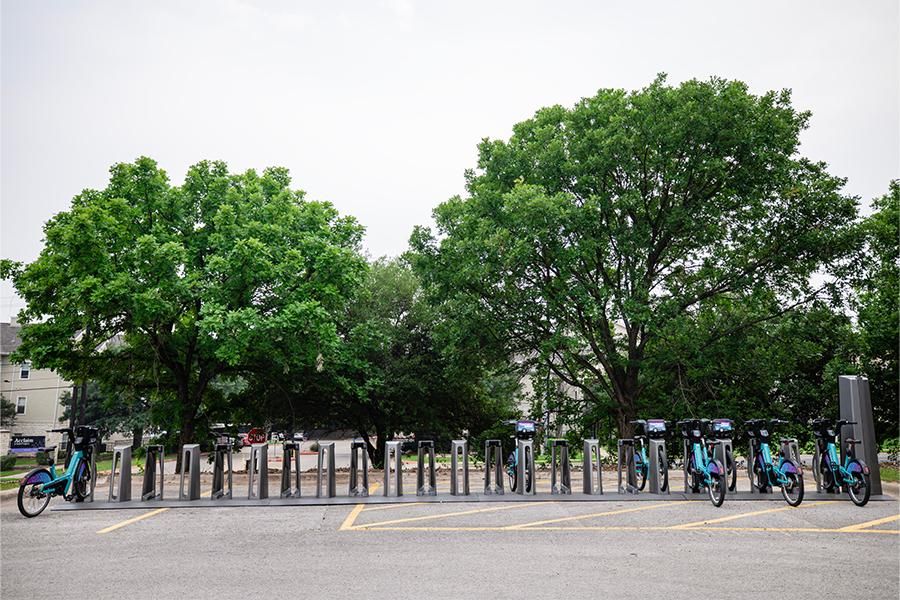
In partnership with the Capital Metropolitan Transportation Authority (CapMetro), St. Edward’s recently welcomed a new bikeshare station on campus, expanding access to eco-friendly transportation for students, faculty and staff.
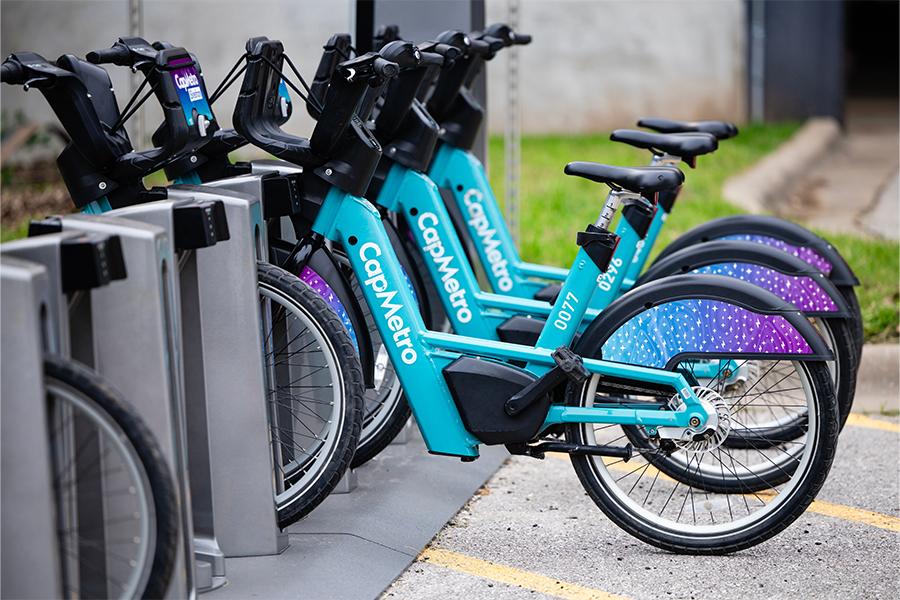
The new station is one of CapMetro’s largest electrified bikeshare stations, making it easier for the campus community to reduce carbon emissions while commuting or exploring Austin.
By integrating alternative transportation options into campus infrastructure, the university continues to support more sustainable mobility choices.