Menu
School of Arts and Humanities
School
On
Academic Department
Off
Administrative Department
Off

Digital Storytelling and Content Creation

Ornate door
Program Snapshot
Program Type
Bachelor of Arts
Department
Visual Studies

Get Ready for an Exciting Job in a Creative Field 

The Digital Storytelling and Content Creation major at St. Edward’s prepares you to shape, design and produce compelling interactive stories in demand by employers across sectors — and its fun.

This degree program sits at the intersection of content creation, technology and innovation. Professionals in the field conceive, plan and produce projects in diverse digital media platforms using cutting-edge techniques and skills. By blending interactivity, story structure and visual expression, students in this major explore the opportunities and challenges raised by transmedia approaches to content design and creation. 

What will you learn?

You’ll gain expertise in conceiving, planning and producing digital stories for an array of audiences, purposes and employers. And you’ll acquire the cutting-edge skills and the deep understanding needed to deploy digital interactive content in a wide range of workplaces, from media startups, arts organizations and nonprofits to corporate public relations and marketing teams.

This 30-hour degree brings together knowledge and methods from different academic disciplines, preparing you for the highly collaborative teamwork required in todays workplaces. Embedded in this degree is an embrace of diversity, equity and inclusion as central to producing content that helps inform and empower diverse communities.

Why earn your Digital Storytelling and Content Creation degree at St. Edward’s?

The skills you acquire in this major can lead to jobs in any industry that benefits from well-crafted digital storytelling and content. Whatever your career path, one thing is certain:&nbsThe advantages of your St. Edward’s education will prepare you to succeed. You’ll find opportunities in and outside the classroom to learn, give back and achieve your goals. And your mentors will support you every step of the way. 

Build relationships with your professors

Learn in small classes taught by award-winning professors with years of real-world expertise. They’ll get to know you, help you identify and focus on your goals, and provide guidance and insight during and after your college years. They’ll leverage their experience — and connections — to help you build your network.

Join a vibrant, like-minded community

Connect with peers who share your passion for digital storytelling and content development. Get involved with student organizations on campus that allow you to apply your skills in various digital mediums, such as videos, animation, podcasts, webpages and social media content.

test

Reap the Rewards of Austin

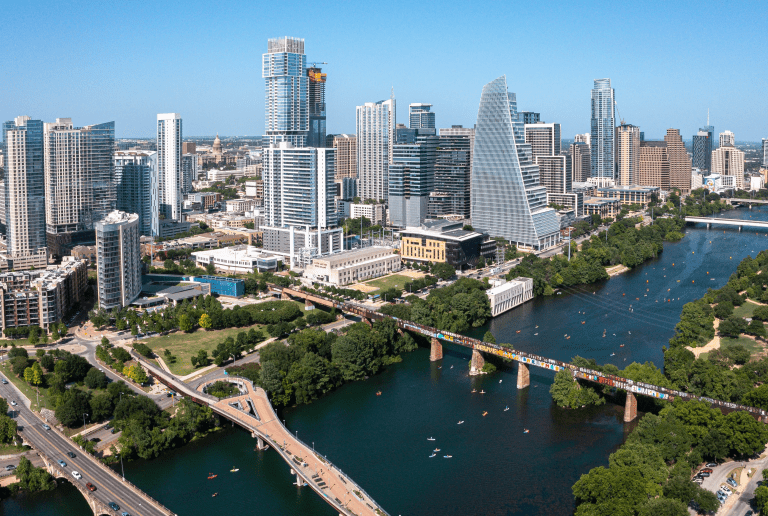
Austin is one of the fastest-growing technology and entrepreneurship hubs in the U.S., and home to nearly 100 Fortune 500 firms. Our Austin partnerships and connections open doors to a dynamic business environment that’s ideal for internships and jobs in the digital media economy. What’s more, Austin’s growing film and gaming industries are home to prominent studios, many of which hire students from St. Edward’s as interns.

Who are ideal candidates for this degree?

The degree is open to all students and targeted to transfer students for two-year completion. Digital Storytelling and Content Creation courses are taught in the classroom and some courses are taught online to allow for maximum schedule flexibility. St. Edward's accepts AAS degree courses in Visual Design, Graphic Media Production and Film and Emerging Media specializations for elective credit towards the Digital Storytelling and Content Creation degree. 

Worried about cost? St. Edward's offers transfer students an average award of $29,066. Check out this financial aid and scholarship information for transfers and part-time students, and connect with a financial counselor to learn how we can help.

For questions about the program, contact Program Director Jena Heath, professor of Journalism and Digital Media, and associate dean, School of Arts and Humanities. The Digital Storytelling and Content Creation major is an interdisciplinary program housed in the Department of Visual Studies.

Explore More Details About the BA in Digital Storytelling and Content Creation

A Flexible Degree Program

The Digital Storytelling and Content Creation program is open to all students. Courses are taught through a blend of in-person and online formats to allow for maximum schedule flexibility

Traditional undergraduate students can easily major in Digital Storytelling and Content Creation with a double-major, minor or double-minor in a related or complementary field such as Animation, Communication, Computer Science, Graphic Design, Digital Media Management, Entrepreneurship, Marketing, User Experience Design, Video Game Development, or Writing and Rhetoric.  

Transfer students who enter with an associates degree can graduate in two years. If youve taken the Texas Common Core, you’ll be able to finish in three. Some courses within the program are offered online to allow you greater flexibility in balancing academics, work and family responsibilities.

Degree Plan

Major Requirements: 
The Digital Storytelling and Content Creation degree requires 30 hours of major coursework.

General Education Requirements: 
All majors require 44 hours of general education that students complete over four years, in addition to their major courses.

View and download the full degree plan for the Digital Storytelling and Content Creation major (PDF). View the Transfer Advising Guides for Digital Storytelling and Content Creation.

Student Organizations and Campus Resources 

Get involved with student organizations that give you the opportunity to apply your storytelling and content development skills in a cross section of digital mediums.

  • Hilltop Views, the student news site, published both digitally and in print. Student journalists report news from the campus and greater Austin community. You can get involved as early as your freshman year as a writer, editor, photographer, videographer or designer.
  • The Command G graphic design group furthers skills through studio tours, museum visits, lecture series, workshops, screen printing and risograph workshops.
  • Topper Radio is the student-run radio station.
  • Topper Studios is the digital media club. Members are involved in creating podcasts, YouTube channels, short films, music videos and comedy sketches, and helping their fellow students produce digital content. Students in Topper Studios also frequently make promotional videos for other clubs at St. Edward’s.
  • The Digital Media Center in the Munday Library is a resource for creating your own content and learning new skills. Here, you can produce and edit videos, podcasts and visual design projects with the help of your fellow students. The lab is equipped with top-of-the-line computers running the latest software including the Adobe Creative Suite. It also has a group editing/podcasting studio, a green screen room and a “whisper room” used for voiceovers. If you are skilled at software, hardware repair, graphic design or video editing, you can apply to work in the lab as a digital media specialist.

Internships

Join the Arts and Humanities Digital Storytelling team as a paid intern and earn course credit, too. 

You’ll work with faculty mentors to connect with internships at a range of off-campus workplaces. Tech start-ups, large companies, newsrooms and PR/Marketing firms, nonprofits and the Austin Film Festival all seek qualified digital storytellers and content creators.

Professionals in the film and news industry, among others, serve as guest speakers and instructors and help connect students with opportunities off campus.

Any student at St. Edwards may minor in Digital Storytelling and Content Creation. The minor provides a broad-based introduction to the discipline of digital storytelling as well as an opportunity for students to explore — in more depth — a specific concentration.

Students who wish to earn a Digital Storytelling and Content Creation minor must take the following required coursework, totaling 18 hours, plus one 3-hour elective course.

Required Courses: (15 required hours + 1 elective = 18 hours)

  • Introduction to Digital Storytelling and Content Creation – DSCC 1301 
  • Visual Studies 1 – VISU 1311 
  • Digital Media Production and Design – JOUR 3314 
  • Interactive Storytelling – VGAM 3328 
  • Collaboration in the Digital Workplace – DSCC 4331 

At St. Edward’s, our faculty are outstanding scholars, thought leaders, teachers and mentors who bring energy and enthusiasm to our vibrant learning community. They take pride in getting to know you, helping you achieve your goals and celebrating your successes.

View a list of our faculty members and their contact information on the Department of Visual Studies webpage.
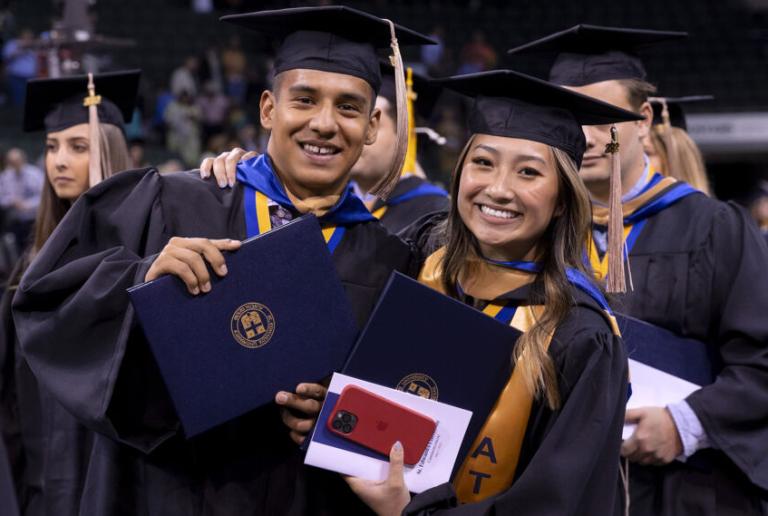
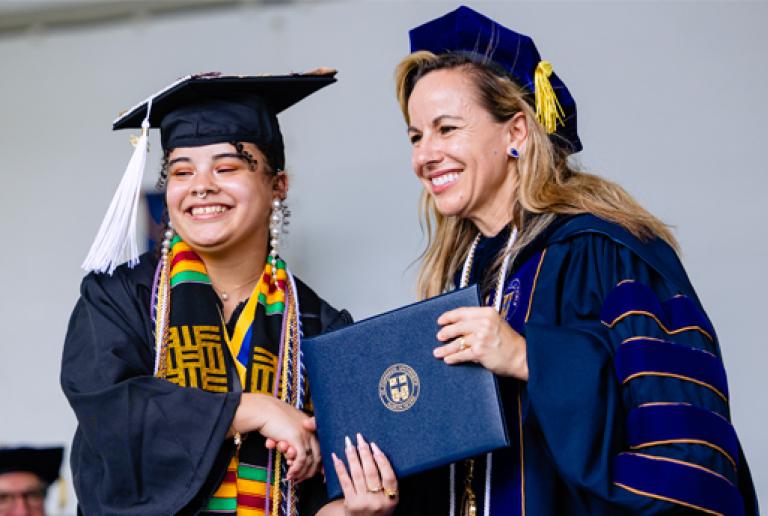
St. Edward's graduates in cap and gown show off their diplomas

Earn Two Degrees in Five Years

With our Accelerated Graduate Pathways, you can complete your BA in Digital Storytelling and Content Creation and master’s degree in Digital Marketing and Analytics in as little as five years, saving time and money. See details and requirements.

Success coaches and academic advisors guide you through undergraduate and graduate courses to maximize benefits.
UNDERGRADUATE

Women's and Gender Studies

Ornate door

Understand Why Gender Matters With a Minor in Women’s and Gender Studies

Analyze how gender is socially constructed and investigate how power and patriarchal institutions impact people’s actual lives.


Why study Women's and Gender Studies at St. Edward's?

Investigate how gender intersects with other identities such as race, ethnicity, national origin, religion, class, ability and sexuality. You'll graduate with a multi-faceted understanding of gender issues so you can create a more just world. 

Learn through service

All students in the Women’s and Gender Studies minor will complete community service for course credit. You will get a chance to apply what you are learning to real-world problems. Previous students have worked in organizations and nonprofits that focus on the places where gender intersects with health, violence, financial security, and many other issues.
 

Prepare for any career

Through knowledge you gain in the classroom and in the community, you will learn how to address gender issues in multiple careers—including business, nonprofits, counseling, law, medicine, religious service, education, social work and teaching.
 

Explore Details About a Minor in Women’s and Gender Studies

Required Courses (9 hours)

  • Introduction to Women's and Gender Studies (3 hours)
  • Community Service in Women's and Gender Studies (students need three (3) hours total, but can take the one- or two-credit courses over more than one semester)
  • Feminist Theories and Practice (3 hours)

Electives (9 hours)

Nine (9) hours of elective classes in the following various disciplines and fields:

  • Literature
  • Sociology
  • History
  • Communication
  • Religious Studies

Six (6) of these elective hours need to be upper-division courses.

Total of 18 hours

At St. Edward’s, our faculty are outstanding scholars, thought leaders, teachers and mentors who bring energy and enthusiasm to our vibrant learning community. They take pride in getting to know you, helping you achieve your goals and celebrating your successes.

View a list of our faculty members and their contact information on the Department of English webpage.

UNDERGRADUATE

Professional Ethics

Ornate door

Become a Virtuous Leader With a Minor in Professional Ethics

Graduate prepared to confront challenging issues and work through them in a thoughtful, fair way.  


Why Study Professional Ethics at St. Edward's?

Develop the reasoning skills you’ll need to navigate an increasingly complicated world with a lot of gray areas.

Learn how to answer the difficult questions

Should you serve only sustainable food at your restaurant? Should you fire employees to keep costs down and please stakeholders? If you design your own fashion line, how do you make sure the people making your clothes are treated fairly? With classes like Ethical Analysis, Ethics, and Legal, Medical, Environmental or Business Ethics, you'll gain the tools ethically lead others. 

Marinate on ethical dilemmas

Sit in on our Food & Philosophy Ethic Series, a recurring event designed to stimulate intellectual conversations about current topics. Past discussions have centered around topics such as Decisional Capacity and the Adolescent: Reconsidering the Doctrine of the Mature Minor, Genetically Engineering Our Children and Drug Peddlers & Politicians: Why Al Capone is Morally Superior to Al Gore.

Discuss films with peers

The Department of Philosophy hosts Film Screenings welcome to all students. Watch a film and engage in thoughtful discussion afterward about issues presented in the film. Students have previously screened and discussed "Made in Dagenham," "The Cantinera" and "Which Way Home."

Listen and share perspectives

Faculty, staff, and students discuss their diverse and distinct perspectives on important and relevant issues. A brief reading is selected for discussion during lunch. Past discussion topics have included Jan Hoffman's article, "What Your Therapist Thinks About You," a New York Times article looking at the therapist’s view of the patient;  “Small Change, Why the revolution will not be tweeted,” written by Malcolm Gladwell for The New Yorker;  and “The Disruption Machine, What the gospel of innovation gets wrong,” written by Jill Lepore for The New Yorker. 

Explore Details About a Minor in Professional Ethics

Required Courses (6 hours)

  • Ethical Analysis
  •  Internship in Philosophy 

Electives (12 hrs)
Choose four of these Professional Ethics courses:

  • Legal Ethics
  • Ethics and Public Policy
  • Ethics and Technology
  • Special Topics in Philosophy (when topic is relevant to applied ethics)
  • Medical Ethics
  • Environmental Ethics
  • Business Ethics 

Total 18 hours

UNDERGRADUATE

Musical Theater

Ornate door

Amplify Your Passion for Performing With a Minor in Musical Theater

Take courses in musical theater performance, private voice lessons, piano, ballet, tap and musical theater dance from industry professionals. 

Why study Musical Theater at St. Edward's?

Learn by collaborating with working artists from the Austin theater community, and gain professional experience that can count toward your application for membership in Actor’s Equity Association, the union of professional actors and stage managers in the United States. 

Learning outside of the classroom

Mary Moody Northen Theater (MMNT) stands at the center of the theater training program and operates on a professional model.  At MMNT, students work and perform alongside professionals in the field, and benefit from workshops and mentorship from those guest artists. MMNT produces at least one musical each season, and all musical theater minors are involved either onstage or behind the scenes.

Join the troupe

The Transit Theatre Troupe is a student-led organization that provides multiple opportunities for involvement in theater production in addition to the university's main stage and class-related productions.

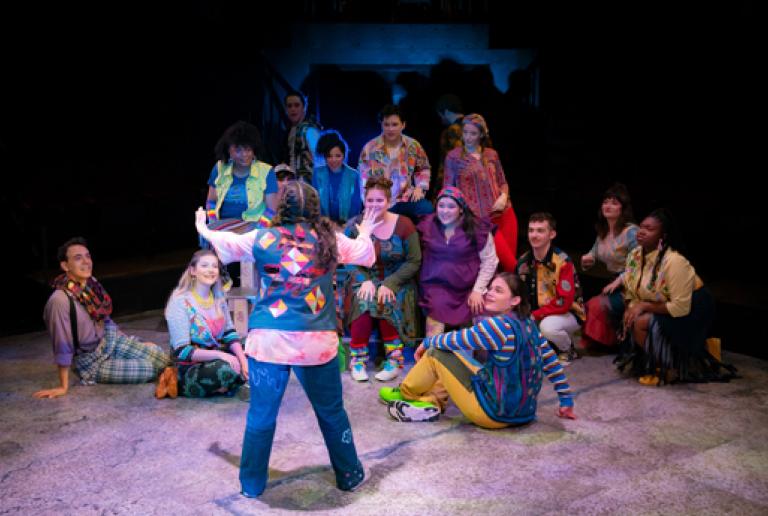
Musical theater students in their performance of Godspell.

Reap the Rewards of Austin

Take advantage of life in Austin, the Live Music Capital of the World, where students can see bands perform and catch local and touring productions every week. Current students and recent graduates often make connections with local theater companies including Austin Playhouse, Austin Shakespeare, Summer Stock Austin, Magnolia Musical Theater, Zilker Summer Musicals, TexArts, and Zach Theater.

Explore Details About a Minor in Musical Theater

Required Courses (10 hours)

  • Basic Musicianship
  • Survey of Musical Theater
  • Topics: Musical Theater Showcase
  • Musical Theater Performance
  • Applied Voice
  • Applied Piano

Required Electives (8 hours)

Select eight (8) hours total from the following groups; at least eight (8) hours of minor coursework must be upper division.

Music Electives - Select at least six (6) hours from the following:

  • Piano Class I (2 hrs)
  • Piano Class II (2 hrs)
  • Piano Class III (2 hrs)
  • Applied Voice (1 hr)
  • St. Edward’s University Chorale (1 hr)
  • St. Edward’s Mariachi Alas de Oro (1 hr)
  • Omni Singers (1 hr)
  • Madrigal Chamber Choir (1 hr)
  • Applied Voice (2 hrs)
  • Applied Piano (2 hrs)
  • Song Interpretation (1 hr)
  • Omni Vocal Jazz (1 hr)

Dance Electives - Select at least two (2) hours from the following:

Dance courses based on level appropriate to student. These hours should be in two different dance disciplines.

  • Ballet I (1 hr)
  • Ballet II (1 hr)
  • Tap I (1 hr)
  • Tap II (1 hr)
  • Musical Theater Dance (1 hr)

Remaining hours may be selected from any MUSI or THAR course to complete the total 18 hours for the minor.

TOTAL 18 


At St. Edward’s, our faculty are outstanding scholars, thought leaders, teachers and mentors who bring energy and enthusiasm to our vibrant learning community. They take pride in getting to know you, helping you achieve your goals and celebrating your successes.

View a list of our faculty members and their contact information on the Department of Performing Arts webpage.

UNDERGRADUATE

Legal Studies

Ornate door

Fight Injustices and Advance Equity with a Minor in Legal Studies

Gain a deeper understanding of how the law system in the United States works.


Why study Legal Studies at St. Edward's?

A Legal Studies minor will prepare you to enter law school or careers where you will work alongside attorneys, such as in corporate, nonprofit or governmental settings.

Explore the benefits of an interdisciplinary minor

With a minor in Legal Studies, you'll get a grounding in Legal Ethics, Logic, Legal Writing, the American Court System and more. Once you complete this minor, you’ll have the critical thinking, writing, public speaking and people skills you need to work in fields where legal reasoning is front and center.

Prepare for any career path

The Legal Studies minor is well-suited for students not already in an existing pre-law track. It is designed to have minimal prerequisites and is open to all students. This minor is valuable for students who plan to attend law school or pursue careers in which familiarity with legal studies provides an advantage, such as in business, law enforcement, human resources, real estate, dispute resolution or government service.

Explore Details About a Minor in Legal Studies

Required Courses 

Nine (9) credits must be 3000 or higher courses and those nine credits must be taken at St. Edward's University.

  • PHIL 3301: Legal Ethics
  • PHIL 2302: Logic or PHIL 3339: Advanced Logic
  • WRIT 3326: Legal Writing
  • CRIJ 1302: Administration of Justice
  • CRIJ 2306: American Court System
  • POLS 3336: Constitutional Law or POLS 4346: Civil Liberties or BUSI 2303: Business Law 

Note: Political Research and Statistics (3 credits) is recommended but is not required.

As the American Bar Association (ABA) notes, there is no single pre-law course of study. Instead, the ABA recommends that undergrads take classes where they learn to write and critically analyze different types of arguments.

At St. Edward’s, our faculty are outstanding scholars, thought leaders, teachers and mentors who bring energy and enthusiasm to our vibrant learning community. They take pride in getting to know you, helping you achieve your goals and celebrating your successes. The Department of Philosophy faculty has also adopted the Chicago Statement on free speech, affirming our commitment to free expression. 

View a list of our faculty members and their contact information on the Department of Philosophy webpage.

UNDERGRADUATE

Journalism and Digital Media

Ornate door

Keep Citizens Informed With a Minor in Journalism and Digital Media

Learn to interview, organize information, write, edit, and use digital tools, ensuring that you can update your skills as newsroom technology evolves.

Why study Journalism and Digital Media at St. Edward's?

Our program trains students to conceptualize and produce stories using data and digital tools in a liberal arts context that holds humanism as a core value. Issues around privacy, data ownership, and automation are actively considered and discussed as students learn to write chatbots, create data visualizations, shoot and edit video, and tell compelling audio stories.

Improve your news literacy

Journalism and Digital Media at St. Edward’s encompasses news literacy, journalistic practice and digital skills through the lens of civic understanding and engagement. Students are challenged to demonstrate new solutions and approaches when researching and reporting on complex situations and experiences. 

Report right here on the hilltop

Outside the classroom, hone your craft as a reporter or editor at the student news outlet, Hilltop Views. Student journalists report, produce and edit stories for publication online and the twice/monthly print edition. They use robust social media to share their work, copy edit, and design and sell ads. Hilltop Views staffers are all paid interns through the School of Arts and Humanities and also earn course credit.

Get hands-on training in Austin

Students are strongly encouraged to participate in internships to get on-the-job experience and to get a better idea of whether or not you can see yourself in this career. Examples of internships our students have completed are: The Austin American-Statesman, The Texas Observer, The Texas Tribune, Texas Monthly, Austin Monthly, The Houston Chronicle, 2018 Knight CUNYJ Summer Internship Program (NYC), Institute on Political Journalism D.C. Journalism/Communications internship.

Interact with professionals in the field

The Journalism and Digital Media program strives to give students opportunities to interact in- person with practicing journalists. Professionals from KUT, Austin's NPR affiliate, KXAN, the NBC affiliate, the Austin American-StatesmanThe 19th*  and other news outlets teach in our program and create internship opportunities for students.

Kaitlynn Devitt (left) receives her degree at graduation. Devitt was awarded the Michele Kay Outstanding Journalist Award for her photojournalism work.

Michele Kay Outstanding Journalist Award

Each year, an outstanding graduating senior in the Journalism and Digital Media program is selected for the Michele Kay Outstanding Student Journalist Award. This award honors Kay, a St. Edward’s University graduate, professional journalist for 40 years, and St. Edward’s University faculty member. Kay, who died in 2011, inspired students to participate in campus journalism and created the Journalism and Digital Media minor. 

What do our graduates do?

Journalism and Digital Media minors go on a variety of careers and graduate schools from St. Edward’s. Here’s a sample:

  • Reporters and editors at the Austin American-Statesman, the Dallas Morning News, the Juneau EmpireOpenSecrets.org at the Center for Responsive Politics, Washington D.C. and other publications
  • Chief of Policy & Communications for the City of Dallas, Texas
  • Social Media Marketing and Communications professionals
  • Future newsroom leaders earning graduate degrees at elite programs, including the Berkeley Graduate School of Journalism, Columbia University Graduate School of Journalism, CUNY Graduate School of Journalism, Medill School of Journalism at Northwestern University and the S.I. Newhouse School of Public Communications at Syracuse University

Explore Details About a Minor in Journalism and Digital Media

Required Courses (15 hours)

  • COMM 3330 Media Standards and Practices
  • JOUR 2310 Copy Editing
  • JOUR 3314 Interactive Media Production and Design
  • JOUR 2321 Journalism I: Introduction to Writing and Reporting News
  • JOUR 3322 Journalism II: Producing News Online

Electives (6 hours) 

Select two from the following; one must be upper-division

  • JOUR 2328 Broadcast Journalism
  • JOUR 3303 The Persuasive Writer
  • JOUR 3304 Arts and Entertainment Writing
  • JOUR 3320 Advanced Broadcast Journalism
  • JOUR 3324 Sports Journalism for Broadcast
  • JOUR 4305 Journalism III: Advanced News Writing and Reporting
  • JOUR 4331 Special Topics in Print Journalism
  • JOUR 4332 Special Topics in Broadcast Journalism
  • JOUR 4350 Internship
  • COMM 4324 Documentary
  • WRIT 4342 Magazine Writing

Total of 21 hours 

What You Will Learn

The Journalism and Digital Media minor will teach students to identify news, develop story ideas, research and report information, write in a journalistic style, and publish or broadcast information. A significant component of the minor focuses on the ethics of the industry. 

A few examples of courses students in this minor take:

  • Copy Editing - This course is designed to provide extensive practice in editing stories for focus, pace, style and the conventions of written English. It will provide a review of grammar and usage conventions of standard written English, practice with common proofreading and copy-editing symbols used in newsrooms, and practice in editing according to AP style.
  • Journalism I: Introduction to Writing and Reporting News - The class introduces students to how news is defined, reported and shared in our minute-by-minute digital media world. Students are introduced to the history of journalism in the U.S. and taught to become thoughtful and consistent news consumers. The course also teaches students how to generate story ideas, write in journalistic style and produce news stories across platforms and with social media. Students are encouraged to publish their work in the student newspaper/website. Students are also introduced to professionals working in the field.
  • Digital Media Production and Design - This course will build on students’ proficiencies with established and emerging multimedia storytelling tools and techniques. The goal is not only to understand when and how to approach news and other types of stories from an interactive design standpoint, but to explore how and why certain multimedia techniques may allow for a deeper understanding of the world around us. 

Skills You Will Gain

  • Write for digital outlets
  • Use social media as a reporting tool
  • Shoot and edit video
  • Use computer science and coding to enhance your work
  • Graduate prepared to work in any type of media environment

At St. Edward’s, our faculty are outstanding scholars, thought leaders, teachers and mentors who bring energy and enthusiasm to our vibrant learning community. They take pride in getting to know you, helping you achieve your goals and celebrating your successes.

View a list of our faculty members and their contact information on the Department of English webpage.

For More Information About The Minor

Contact Jena Heath, professor of Journalism and Digital Media and area coordinator for Journalism and Digital Media at jennah@stedwards.edu.


Jewish Studies

Ornate door

Explore the History, Religion and Culture With a Minor in Jewish Studies

Whether you want to learn about your own Jewish background or gain a deeper understanding of Jewish communities around the world, these courses will help you reflect and engage in thoughtful discussions with students from varied religious backgrounds. 

Learn about the Hebrew Bible, Jewish literature and Jewish religion. Understand significant world issues related to Judaism, like Zionism and the Holocaust.

Why study Jewish Studies at St. Edward's?

Gain a better understanding of current events that relate to Israel and the Jewish community, and graduate prepared for any career — teaching, journalism, social work, international relations and more — that serves a diverse population.

Practice interdisciplinary collaboration

Students take courses in a variety of disciplines including religious studies, literature, languages, and history. The Jewish Studies Program helps students explore points of contact between Jewish and non-Jewish contexts. In this regard, there is attention to interreligious dialogue, with a special focus to Jewish-Christian relations. 

Engage with students of various backgrounds

Both The Jewish Studies Club and St. Edward's Hillel chapter, HillelToppers, welcome students from all cultures and faiths to create community and understanding of Judaism. The Jewish Studies Club is a student-run organization that gathers students interested in Judaism and Jewish history. They promote the study of Judaism on campus and beyond, hosting forums, fundraisers, lectures, and other events to educate about Jewish communities and traditions. HillelToppers serves to create community and provide an opportunity to explore spirituality. The chapter also notes important Jewish holidays through events such as Hanukkah on the Hilltop and HillelToppers Passover Seder.

What do our graduates do?

Jewish Studies alumni can use their education in myriad ways. While some may continue in academics, other Jewish Studies alumni are physicians, care coordinators, work with nonprofits and for the US government, work for advertising firms, and serve as lead clinical recruiters.   

Our Jewish Studies graduates have pursued careers at the following:

  • USDA Foreign Agricultural Service
  • UMC Health System
  • Dentsu Creative
  • University of Chicago
  • Duke University
  • University of Tel Aviv
  • ABA Centers of America

Explore Details About a Minor in Jewish Studies

Required Courses

TBA

  1. In RELS 2319/3330 Judaism, students work with classmates in a havruta, a traditional approach to collaborative learning. Through the havruta framework, students engage one another in their learning about Jewish Studies.   
  2. Jewish Studies minors conduct in-depth research that they share at conferences and in student publications.   

At St. Edward’s, our faculty are outstanding scholars, thought leaders, teachers and mentors who bring energy and enthusiasm to our vibrant learning community. They take pride in getting to know you, helping you achieve your goals and celebrating your successes.

View a list of our faculty members and their contact information on the Department of Religious and Theological Studies webpage.

UNDERGRADUATE

German

Ornate door

Open Doors to International Careers With a Minor in German

Germany is home to Europe's largest economy. Learn the language and culture and join the one million Americans employed by German companies. 

You’ll graduate with skills you can apply in the financial, medical and educational fields or use in business or diplomacy at this pivotal moment for Germany and European Union.

Why study German at St. Edward's?

Explore German culture right here in Texas

Students interested in German can count of plenty activities right here in Austin. Join Deutschklub to learn about German culture and appreciate german-themed events on campus and in Central Texas. Tune into the German-speaking social hour and join in on trips to local German restaurants and bakeries. 

Make the most out of your career path

Students in STEM fields will find no shortage of opportunities to work and study in Germany before and after graduation. For example, the German Academic Exchange Service offers funding for students and recent graduates to conduct paid Research Internships in Science and Engineering every year. Apply your German-speaking skills to make the most out of your chosen career path. The Congress-Bundestag Youth Exchange (CBYX) for Young Professionals also provides 75 scholarships each year to young adults wishing to improve their German and intern in a setting directly related to their career field.

Check out study abroad opportunities

Study abroad at our partner universities in Eichstatt and Koblenz, Germany, and Innsbruck, Austria, to strengthen your language skills while learning about the rich culture and tumultuous history of the German-speaking world.

Explore Details About a Minor in German

The German Minor consists of 18 hours:

  • 6 hours of GERM 2311 and 2312
  • 12 hours selected from:
    • GERM 3331
    • GERM 3334
    • GERM 3335
    • GERM 3338
    • GERM 3350

The elective classes above include Business German, internships, conversation courses, and courses on literature and culture. You can also earn credit through study abroad!

St. Edward's has an impressive track record of successful Fulbright applicants. Many of these students received grants to teach or conduct research in Germany. In fact, Germany awards more Fulbrights to U.S. students than any other country on earth!

At St. Edward’s, our faculty are outstanding scholars, thought leaders, teachers and mentors who bring energy and enthusiasm to our vibrant learning community. They take pride in getting to know you, helping you achieve your goals and celebrating your successes.

View a list of our faculty members and their contact information on the Department of Languages, Literature and Cultures webpage.

UNDERGRADUATE

Chicanx and Latinx Studies

Ornate door

Study Significant Issues Surrounding the Chicanx and Latinx Population  

Whether you want to create a deeper connection with your own culture, or you’re planning a career where you’ll work with Chicanx and Latinx communities, this minor will equip you with valuable knowledge.

Learn about the historical, social and political experiences of Chicanx and Latinx communities, including social justice movements. Analyze Chicanx and Latinx literary and artistic works, and appreciate how Latin American migration has influenced the United States.

Why study Chicanx and Latinx Studies at St. Edward's?

Consider how differences in national origin, citizenship, gender and sexuality shape experiences within Latinx communities.

Develop understanding and appreciation

Whether you plan to pursue a career in business, government, law, medicine, journalism, social work, teaching, religion or the arts, courses in this minor will equip you to approach issues in the Chicanx and Latinx communities with empathy.

Gain intercultural and cross-cultural awareness

With a minor in Chicanx and Latinx Studies, you learn to critically analyze information as it pertains to the intersection of historical events and the concept of a Latinx identity within the context of being a United States citizen. 

Explore Details About a Minor in Chicanx and Latinx Studies

Required Courses (18 hours)

Students who wish to earn an Art History minor must take the following coursework with at least nine (9) of these hours in upper-division coursework.

  • CHLX 1302: Introduction to Chicanx and Latinx Studies 
  • CHLX 3325: Identities, Communities and Social Justice

In addition, students must take 12 hours of elective courses, including at least nine (9) hours of upper-division coursework. At least nine (9) hours of courses may not be counted to satisfy requirements for any other major or minor. 

Electives include courses on the U.S. Mexico Borderlands, Chicana Writers and Artists, and other courses in Literature, Communication, Spanish, History, Sociology, Political Science and Art History.

Students can intern at various non-profit organizations in Austin that work with immigrant populations, particularly Latinx populations: Worker’s Defense Project, Casa Marianela, Caritas and others.

At St. Edward’s, our faculty are outstanding scholars, thought leaders, teachers and mentors who bring energy and enthusiasm to our vibrant learning community. They take pride in getting to know you, helping you achieve your goals and celebrating your successes.

View a list of our faculty members and their contact information on the Department of Languages, Literature and Cultures webpage.

Art History

Ornate door

Reveal the Role Art Plays in Cultures with a Minor in Art History

Develop a discerning eye for art, an appreciation of the artist’s relationship to the world in which they live, and make connections between past and present. 

Why study Art History at St. Edward's?

Take your knowledge to the next level by studying a range of topics including censorship, the art market and the role of museums. 

Combine your passions

Pair your Art History minor with a major in another area of Visual Studies or a subject like Business or Communication. Turn your passion for art into a career as a gallery director, curator, museum administrator or public-art program coordinator. 

Tailored toward your success

St. Edward's small course sizes allows for the personal attention your studies need to ensure your success. The Art History minor focuses on both a global and interdisciplinary studies so you can apply you knowledge to career path. The Art History minor also has a strong emphasis on context—material, artistic, socio-political and economic understanding.

What do our graduates do?

Students who complete the Art History minor have gone on to the following:

  • Gallery directors and curators
  • Nonprofit art organizations
  • Master's degrees in art History, Curatorial Studies, Arts Administration, and other related degrees
  • Archival and other work with material culture including handling
  • Art Assessors
  • Various galleries an museums from Los Angeles, to Dallas and NYC
  • Significant purveyor of Contemporary Art resources
  • Legal resources for artists or related to indigenous cultural materials

Explore details about a minor in Art History.

Required Courses (18 hours)

Students who wish to earn an Art History minor must take the following coursework with at least nine (9) hours of upper-division coursework.* 

  • Art History I
  • Art History II
  • Modernists + Others –or– Topics in Contemporary Art

Students select three elective courses from among Topics in Art History (repeatable), History of Photography, PHIL 3310 (Aesthetics), and either Modernists & Others –or– Topics in Contemporary Art (whichever not taken for the required 9 credits).

Are you a current student? Contact your advisor for next steps on declaring your major or minor. 

*Art Majors (already taking 12 of these credits for the major) must take an additional three (3) credits in electives to fulfill university requirements for minors.

Through the Art History minors, students have access to local art, artists, exhibitions and art programs for critique experience. Students have also used local internships in galleries or museums toward their minor.

At St. Edward’s, our faculty are outstanding scholars, thought leaders, teachers and mentors who bring energy and enthusiasm to our vibrant learning community. They take pride in getting to know you, helping you achieve your goals and celebrating your successes.

View a list of our faculty members and their contact information on the Department of Visual Studies webpage.

Subscribe to School of Arts and Humanities