Menu
School of Arts and Humanities
School
On
Academic Department
Off
Administrative Department
Off

UNDERGRADUATE

Ethics and Leadership

Ornate door
Program Snapshot
Program Type
Bachelor of Arts
Department
Philosophy

Lead Effectively with Critical Thinking and Clear Communication

The world needs ethical leaders who know how to think critically, solve problems and communicate clearly. Answer the call with a major in Ethics and Leadership.

Why earn your Ethics and Leadership degree at St. Edward’s?

Our Ethics and Leadership program provides you with opportunities to hear from local leaders and discuss ideas with your peers.

Internships

To integrate and apply what you’ve learned in the classroom, you can intern with a business, nonprofit or government entity. Along with gaining experience in the professional world, you will analyze the organization’s activities — as you did in your courses — by writing a detailed research paper that focuses on the entity’s leadership practices and how they advance just outcomes.

Study Abroad

Broaden your understanding of how business decisions are made and how leadership varies across cultures. You’ll be able to study abroad at more than 20 St. Edward’s partner universities across 5 continents. Or take your studies almost anywhere in the world through another international education provider. You can also choose to intern abroad, helping increase your cultural agility, add to your skill set and expand your global network.

What will you learn?

Confidently navigate difficult ethical situations, learn to critically solve problems and clearly communicate with different audiences. This program can teach you how decision makers might make better choices to promote equity and justice.

Courses in Communication and Business will include hands-on projects to apply what you’ve learned. A few examples of courses students take in the major:

  • In Social Responsibility of Business, you’ll participate in a service activity in the community and write a paper about the experience. You’ll also work in a team to create a new product or service for a company that will meet a social need for an underserved community.
  • In Principles of Marketing, you’ll do a marketing simulation as an experiential learning assignment.

What skills will you gain?

Upon completing the Ethics and Leadership program, you’ll be ready to…

  • Effectively communicate complex situations to a wide range of audiences.
  • Confidently assess a situation and provide an appropriate conflict resolution.
  • Develop expertise in reasoning and ethical analysis specific to legal, medical or environmental ethics.
  • Analyze case studies to help you apply what you’re learning to make ethical decisions concerning real-life dilemmas.


Explore Details About the BA in Ethics and Leadership

Major Requirements: Bachelor of Arts with a major in Ethics and Leadership requires 27 hours of major courses. 

General Education Requirements: The Ethics and Leadership degree requires 21 hours of general education courses that students complete over four years in addition to their major courses and electives. See the degree plan for the Ethics and Leadership major.


View and download the full degree plan for our Ethics and Leadership major.

Hilltop Views, the weekly student newspaper, is published both in print and online. Student journalists report news from the campus and greater Austin community. You can get involved as early as your freshman year as a writer, editor, photographer or designer.

Sorin Oak Review is a literary magazine that showcases the poetry, prose and artwork of St. Edward’s students. Working on the editorial staff is a great way to gain experience in project management and the practical details of putting together a publication.

Arete is a student-produced academic journal that publishes student-written research, nonfiction essays and commentary. Editors choose from among the dozens of submissions to create a cohesive journal that represents a variety of perspectives.

New Literati is a student-produced journal of both academic and creative work.

B. Hooved is the student humor journal, inspired by our Hilltopper goat mascot.

The Philosophy Club discusses a brief reading, movie or podcast that’s relevant to a theme the members have chosen for the semester. As a member, you’ll discuss ideas and debate with fellow students who are interested in philosophy and history.


At St. Edward’s, our faculty are outstanding scholars, thought leaders, teachers and mentors who bring energy and enthusiasm to our vibrant learning community. They take pride in getting to know you, helping you achieve your goals and celebrating your successes. The Department of Philosophy faculty has also adopted the Chicago Statement on free speech, affirming our commitment to free expression. 

View a list of our faculty members and their contact information on the Department of Philosophy webpage.

St. Edward's graduates in cap and gown show off their diplomas

Earn Two Degrees in Five Years

With our Accelerated Graduate Pathways, you can complete your BA in Ethics and Leadership and master’s degree in Organizational Leadership in as little as five years, saving time and money. See details and requirements.

Success coaches and academic advisors guide you through undergraduate and graduate courses to maximize benefits.

UNDERGRADUATE

English Literature

Ornate door
Program Snapshot
Program Type
Bachelor of Arts
Department
English

Discover Diverse Career Options Through Reading and Writing

Good readers make the best writers — and we’ll teach you to apply your comprehension skills across the board.

Why earn your English Literature degree at St. Edward’s?

English Literature majors have ample opportunities to attend live theatre and meet visiting writers, contribute to student publications, study abroad, and intern with an organization connected to publishing, literacy, education or communication.

Internships

Intern in a variety of settings where they use their analytical and communication skills and gain professional experience. Students have recently interned at the National Alliance on Mental Illness; Badgerdog children’s and adult creative writing workshops; Literati Books, a curated books-of-the-month club for kids; Women’s Storybook Project of Texas, whose mission is to connect children with their incarcerated mothers through the joy of literature; Annie’s List; and the Harry Ransom Center.

Study Abroad

Take courses in creative writing, literature and literary studies at St. Edward’s partner universities including The National University of Ireland in Galway, Queen Margaret University in Edinburgh, Scotland, and The University of Roehampton in London.

Research

You’ll have the opportunity to conduct research on topics that interest you and present it at the Symposium on Undergraduate Research and Creative Expression, on campus, or at professional conferences. Recent presentations have included Intersections between the political thought of John Milton and Nicolo Machiavelli and How Mary Shelley repurposed the poetry of John Milton to build a feminist ethical vision in the nineteenth century.

On the Hilltop

Student Organizations are a great avenue for meeting students with similar interests and adding to your portfolio. Take up the opportunity to edit, write, design and publish for one of our four student-run publications. The Sorin Oak Review is a literary magazine that showcases poetry, prose and artwork of students. The academic journal, Arete, publishes student research, nonfiction essays and commentary and Hilltop Views is the weekly students newspaper, published in both print and online. Share your witty thoughts with B. Hooved, the student humor journal.

test

Reap the Rewards of Austin

Home to the Texas Book Festival and the renowned Austin Central Library, your courses will draw on the resources of Austin’s cultural and arts scene to help literature come to life. In your Shakespeare class, you’ll attend at least one live performance and interact with the actors. In Milton, you’ll visit the Harry Ransom Center reading room to examine the archives of Milton’s works.

What will you learn?

Learn to analyze literature alongside professors who share your passion for the printed page and develop a global mindset by studying a diverse range of authors from different cultures and communities. 

Students in the English Literature major choose one of three specializations, while building a broad foundation in American and British literature from a variety of periods.

  • The General Specialization offers literature electives that appeal to more specific interests like Native American Literature, Literature of Crime and Punishment, Uncanny Literature, and Science and Fiction.
  • The Creative Writing Specialization guides students through Poetry and Fiction workshops, Writing for Stage and Screen, Fantastical Fiction and Creative Nonfiction.
  • The Language Arts Teaching Specialization provides students with writing and linguistics coursework to fulfill teacher education requirements in Texas.

What skills will you gain?

Upon completing the English Literature program, you’ll be ready to…

  • Analyze American and British literature across multiple time periods.
  • Confidently meet teaching-education requirements to teach English in Texas.
  • Write a screenplay with new worlds and developed characters.
  • Use critical thinking to understand elaborate texts for various audiences and purposes.
  • Creatively and effectively communicate complex messages for appropriate audiences.
  • Implement research methods to successfully construct and introduce an idea or argument.

What do our graduates do?

Acting majors go on to a variety of careers and graduate schools from St. Edward’s. Here’s a sample:

  • English Teaching Assistant in the Fulbright U.S. Student Program
  • Youth services librarian at Matheson Memorial Library
  • Graduate student at The University of Texas at Austin
  • Student at the Columbia University Publishing Institute in Oxford, United Kingdom
  • Graduate student at Brandeis University
  • Fellow at the Library of Congress

Explore Details About the BA in English Literature

Major Requirements: The Bachelor of Arts with a major in English Literature requires 42 hours of core coursework, providing a strong foundation in literary history and analysis and many elective options. Students choose additional electives from one of three specializations: General Literature, Creative Writing, and Language Arts for Teachers.

General Education Requirements: The English literature degree requires an average of 38-44 hours of general education courses that students complete over four years in addition to their major courses and electives.

View the full degree plan for our English Literature major.

See the most current Undergraduate Bulletin for the complete list of courses required and course descriptions for this major.

1. English Literature - General

Students in this specialization gain a broad foundation in American and British literature from a variety of periods, and also take literature electives that appeal to more specific interests.

Major Requirements: 42 hours of English Literature major courses are required.

View the full degree plan for the English Literature - General major (PDF).

A few examples of electives in the General specialization have included:        

  • Native American Literature
  • Literature of Crime and Punishment
  • Science and Fiction
  • "Radicals and Revolutionaries" in Literature
  • Uncanny Literature
  • Literature of Love

See the most current Undergraduate Bulletin for the complete list of courses required and course descriptions for this specialization.

2. English Literature with a Creative Writing Specialization

The Creative Writing specialization also offers a broad foundation in American and British literature from multiple periods, but allows students to take electives in creative writing.

Major Requirements: 42 hours of English Literature major courses, 9 hours of which are concentrated on creative writing.

View the full degree plan for English Literature with a Creative Writing Specialization (PDF).

A few examples of Creative Writing electives within the Literature major have included: 

  • Poetry and Fiction workshops
  • Writing for Stage and Screen
  • Fantastical Fiction
  • Creative Nonfiction

See the most current Undergraduate Bulletin for the complete list of courses required and course descriptions for this specialization.

3. English Literature with a Language Arts Teaching Specialization

The Language Arts Teaching specialization offers a broad foundation in American and British literature from multiple periods but provides students with writing and linguistics coursework to fulfill teacher education requirements in Texas.

Major Requirements: 42 hours of English Literature major courses, 12 hours of which are concentrated on writing and linguistics.

The required writing and linguistics courses are these:

  • Grammar and Style
  • Introduction to Creative Writing
  • Analyzing Rhetoric
  • Workplace Writing

View the full degree plan for English Literature with a Language Arts Teaching Specialization (PDF).

See the most current Undergraduate Bulletin for the complete list of courses required and course descriptions for this specialization.

The English Literature minor makes an excellent pairing with nearly any other major. Recently, for instance, students have paired the English Literature minor with majors in Video Game Development, Criminal Justice, Biology, Communication, Business, and many others. Talk to any of our English Literature professors to figure out how to make this minor work for you.

Required Courses

Students who wish to earn an English Literature minor must take the following coursework, totaling 18 hours.

Introduction to Literary Studies:  ENGL 2300 – 3 hours

Select three hours from the following courses.

  • American Literature I:  ENGL 2301 – 3 hours
  • American Literature II:  ENGL 2302 – 3 hours
  • British Literature I:  ENGL 2322 – 3 hours
  • British Literature II:  ENGL 2323 – 3 hours

Select three additional hours from any 2000-level ENGL course.

  • English Literature Elective:  ENGL 2300 – 3 hours

Select nine additional upper-division hours of elective courses.

  • English Literature Elective (three times):  ENGL 3300+ – 9 hours

At St. Edward’s, our faculty are outstanding scholars, thought leaders, teachers and mentors who bring energy and enthusiasm to our vibrant learning community. They take pride in getting to know you, helping you achieve your goals and celebrating your successes.

View a list of our faculty members and their contact information on the Department of English webpage.

UNDERGRADUATE

Communication

Ornate door
Program Snapshot
Program Type
Bachelor of Arts
Department
Communication

Bring Meaning and Clarity to Complex Situations with a BA in Communication

Prepare for a creative career in one of the most popular majors in the country.

Employers consistently rank communication skills at the top when making hiring decisions.

Why earn your Communication degree at St. Edward’s?

Located in the heart of Austin, there are ample opportunities to gain hands-on experience and apply your communication skills. Our faculty creatively integrate their scholarly research, public engagement, and expertise in communication with a wide range of interests and disciplines in their work with students.

Public Relations Student Society of America (PRSSA)

The Public Relations Student Society of America is all about making connections. Our PRSSA chapter provides out-of-the-classroom experiences that give students enhanced knowledge of the public relations field.  Members have access to exclusive internships and job postings, networking events with local professionals, personalized agency and corporation tours and fun social events.

Lambda Pi Eta (LPH)

Lambda Pi Eta is the National Communication Association’s official honor society at four-year colleges and universities. With more than 450 active chapters nationwide, LPH recognizes, fosters and rewards scholastic achievement, stimulates interest in the field of communication, and promotes professional development and interest in graduate studies among communication majors.

test

Reap the Rewards of Austin

And Austin is the perfect place to be a Communication major. Our students intern at places like Livestrong, Margin Walker Presents, ACL, SXSW, and the Austin Film Society.

What will you learn?

As a Communication major, you’ll begin by studying the principles of communication, but you’ll also become adept at applying them — so you can take your skills to a Fortune 500 company, fledgling nonprofit or buzzing startup.

A few examples of courses students take in the major:

  • In Public Relations for Nonprofit Organizations, you’ll learn the public relations process by creating your own project for an Austin client.
  • In Communication and Popular Culture, you’ll analyze a pop-culture event occurring in the Austin community.
  • In Rhetoric and Public Memory, you’ll study monuments and memorials around campus and around Austin. You’ll analyze what they communicate about the population’s values and power structure.

What skills will you gain?

Upon completing the Communication program, you’ll be ready to…

  • Gain the ability to craft compelling narratives that resonate with diverse audiences.
  • Participate actively in the communication revolution, wielding the power of narrative to navigate the complexities of the modern world and drive positive change.
  • Listen and speak effectively, embrace multiple viewpoints, and discover shared values.
  • Understand human connections and relationships.
  • Analyze persuasive communication’s role in driving positive change by examining impactful speeches, influences and media trends in public relations and advertising.
  • Use persuasive techniques, message crafting and audience analysis to navigate our interconnected world.
  • Critically examine language, imagery, symbols and media’s influence in shaping perception and societal change through critical media studies.
  • Actively shape contemporary discourse and communication practices.

What do our graduates do?

Communication majors go on to a variety of careers (PDF) and graduate schools from St. Edward’s. Here’s a sample:

  • Launched a growing nonprofit for hearing and vision screenings
  • Landed the prestigious Alfred Fleishman Diversity Fellowship at FleishmanHillard
  • Emmy Award winner for coverage of a Pittsburgh water main break that grew into a water crisis
  • Technical writer at leading employment search engine and Austin company Indeed
  • Director of Marketing and Communications for a Bay Area nonprofit
  • Broker for a real estate investment firm
  • Created a cancer foundation to provide financial support to families impacted by cancer
  • Co-wrote and co-directed a film which earned a Grand Jury award at SXSW
  • Movie prop master in New York City
  • Law school graduate
  • Marketing executive in the music industry

Explore Details About the BA in Communication

Degree Plan

Major Requirements: Bachelor of Arts with a major in Communication requires 45 hours of major courses. Students complete five “core” communication courses, totaling 15 hours. Students will also choose from one of four concentrations totaling 30 hours.

  • Public Relations and Advertising
  • Relational Communication
  • Critical Media Studies
  • Communication Influence and Diversity

General Education Requirements: The Communication degree requires 43 hours of general education courses that students complete over four years in addition to their major courses and electives.

View and download the full degree plan for our Communication major (PDF).


Get involved with student productions in whatever medium interests you most.

  • Hilltop Views, the weekly student newspaper, is published both in print and online. Student journalists report news from the campus and greater Austin community. You can get involved as early as your freshman year as a writer, editor, photographer or designer.
  • Sorin Oak Review is a literary magazine that showcases the poetry, prose and artwork of St. Edward’s students. Working on the editorial staff is a great way to gain experience in project management and the practical details of putting together a publication.
  • Arete is a student-produced academic journal that publishes student-written research, nonfiction essays and commentary. Editors choose from among the dozens of submissions to create a cohesive journal that represents a variety of perspectives.
  • New Literati publishes both creative and academic work.
  • B. Hooved is the student humor journal, inspired by our Hilltopper goat mascot.
  • Topper Radio is the student-run radio station.
  • Topper Studios is the digital media club. Members are involved in creating podcasts, YouTube channels, short films, music videos and comedy sketches, and helping their fellow students produce digital content. Students in Topper Studios also frequently make promotional videos for other clubs at St. Edward’s.

The Digital Media Center in the Munday Library is a resource for creating your own content and learning new skills. Here, you can produce and edit videos, podcasts and visual design projects with the help of your fellow students. The lab is equipped with top-of-the-line computers running the latest software including the Adobe Creative Suite. It also has a group editing/podcasting room, a green screen room and a “whisper room” used for voiceovers. If you are skilled at software, hardware repair, graphic design or video editing, you can apply to work in the lab as a digital media specialist. 

The Communication minor is designed as a broad-based introduction to the discipline of Communication as well as an opportunity for students to explore—in more depth—a specific concentration. Students who wish to earn a Communication minor must take the following coursework, totaling 18 hours.

Required Courses

  • Introduction to Communication – COMM 1306 
  • Interpersonal Communication – COMM 2312 

Elective Courses

Choose 12 elective hours in communication; at least nine of these hours must be level 3000 or higher.

Are you a current student? Contact your advisor for next steps in declaring your major or minor. 

The Communication department offers a minor in Health Communication. For more information, please view the Health Communication minor webpage.

At St. Edward’s, our faculty are outstanding scholars, thought leaders, teachers and mentors who bring energy and enthusiasm to our vibrant learning community. They take pride in getting to know you, helping you achieve your goals and celebrating your successes.

View a list of our faculty members and their contact information on the Department of Communication webpage.

St. Edward's graduates in cap and gown show off their diplomas

Earn Two Degrees in Five Years

With our Accelerated Graduate Pathways, you can complete your BA in Communication and master’s degree in as little as five years, saving time and money. See details and requirements.

UNDERGRADUATE

Catholic Studies

Ornate door

Explore Faith and Tradition’s Impact on Society

From the classroom to the Vatican, study Catholicism through spiritual practice, service and peer discussion.

What will you learn?

Learn to approach Catholicism from the perspectives of literature, history, philosophy and theology. Deepen your understanding of the Catholic faith through spiritual practice, service, peer discussion, and even study abroad.  

A few examples of courses students in this major take:             

  • Justice, Peace and Liberation: This course examines the issues of justice and peace within the context of the Gospel of Jesus. Grounded in the teachings of the Israelite prophets and the New Testament teachings of Jesus, and given theological form in the writings of the great theologians such as Augustine and Thomas Aquinas, this course examines current issues in light of modern Catholic social doctrine. 
  • Catholicism and Literature: This class explores timeless theological questions along with some of the greatest authors of the twentieth and twenty-first centuries. All of the texts examined incorporate Catholic concepts and themes. As this is a literature course, students also learn strategies for analyzing fiction, drama and poetry. In doing so, superior analytical reading, writing and thinking skills are developed. 
  • Introduction to the New Testament: This course takes a multifaceted approach to the study of the gospels, the epistles and the Book of Revelation. The course emphasizes the methodology of historical criticism for the purpose of identifying the authors of each New Testament work, as well as their respective theologies and witness to Jesus Christ and considers also the literary genre and cultural assumptions associated with biblical texts, per Dei Verbum.

What skills will you gain?

Upon completing the Catholic Studies program, you’ll be ready to…

  • Think and write analytically;
  • Identify authors in foundational Catholic texts;
  • Examine current issues of justice and peace in light of contemporary Catholic social teaching.

What do our graduates do?

Catholic Studies majors go on to a variety of careers and graduate schools from St. Edward’s. Here’s a sample.

  • Coordinator of Youth Ministry at St. Catherine of Alexandria Catholic Church
  • Campus minister at Gannon University, Pennsylvania
  • Director at the Global Livingston Institute, a Denver-based non-governmental organization that focuses on development in East Africa
  • Teaching fellows with the Alliance for Catholic Education through the University of Notre Dame
  • Year-long volunteer with the Jesuit Volunteer Corps
  • Peace Corps volunteers
  • Recipient of the Fulbright English Teaching Assistantship
  • Graduate students at the University of Notre Dame, Boston College School of Theology and Ministry, and Yale Divinity School.
Our Lady Queen of Peace Chapel at sunset
"I think about the idea of educating the heart and the mind a lot. I'm challenged to be a better thinker, and I'm also consistently challenged to confront and understand perspectives that are different from my own—whether it be a classmate or somebody who wrote on a scroll 2,000 years ago."
Natalie Hughes '23 Catholic Studies Major

Explore Details About the BA in Catholic Studies

Major Requirements: The BA in Catholic Studies requires 39 hours of courses offered through the departments of Religious and Theological Studies, Philosophy, and English Literature.


View and download the full degree plan for our Catholic Studies major.

At St. Edward’s, our faculty are outstanding scholars, thought leaders, teachers and mentors who bring energy and enthusiasm to our vibrant learning community. They take pride in getting to know you, helping you achieve your goals and celebrating your successes.

View a list of our faculty members and their contact information on the Department of Religious and Theological Studies webpage.

UNDERGRADUATE

Art

Ornate door
Program Snapshot
Program Type
Bachelor of Arts
Department
Visual Studies

Explore New Visual Perspectives with an Art Degree

Develop a strong foundation of design and art history, while refining your artistic process. As you advance through the program, discover your own style and learn to critique your work.

Why earn your Art degree at St. Edward's?

Our distinguished faculty in the Visual Arts department are well-known artists whose work has been widely exhibited across the country and frequently showcased.

An Art Haven

Austin is the only city in the U.S. designated as a “Creative City of Media Arts” by UNESCO. You don’t have to walk too far off of the hilltop to experience the lively murals across Austin. St. Edward’s is also surrounded by dozens of art museums and nonprofits, which means endless art to explore, artists' lectures and workshops to attend, and opportunities to exhibit your work.

Exhibit Your Creative Expression

In Art and Activism, you’ll learn about art making as a means of social action and activism. You’ll study artists working in social practice, political art, and other art activism projects, and then engage with stakeholders, like nonprofits, to bring their vision to life.

Visiting Artists & Professionals

Throughout the year, you’ll learn from visiting artists who share their artistic vision and experiences in the field. Past visiting artists have included artist and writer for Marvel Comics David Mack, African-American artist Letitia Huckaby, Turkish-American artist Tulu Bayar, artist-activists Robert Shetterly and Lily Yeh and social-practice artist Pato Hebert.

Intern with Local Artists

Art majors have recently interned at The Contemporary Austin, Women & Their Work, City of Austin Public Art Department, Artpace San Antonio, and the studio of Deborah Roberts, an internationally-acclaimed and Austin-based artist.

Professor of Art, Hollis Hammonds shows art to a student during a study abroad trip to Paris, France.
“Beyond providing young people with technical know-how, I hope to open their minds to new ideas and successful approaches to problem solving, brainstorming techniques and experimenting without reservation.”
Hollis Hammonds Professor of Art

What will you learn?

Through applied learning in your courses, internships in the art world, interaction with visiting artists, and exhibitions in the Fine Arts Gallery on campus, you’ll learn about the landscape of arts careers and find your niche.

A few examples of courses students take in the major:

  • Issues in Contemporary Art – Focuses on recent art, artists and art world (from museums to the market). Materials will be framed in the context of the era, including introductions to formalist, feminist, psychological, and deconstructivist criticism. 
  • Painting: Methods – Focuses on fundamental painting techniques from direct observation. Emphasis is placed on the plastic medium of paint as it relates to pictorial representation, color, form, texture, and space.
  • Clay: Handbuilding – Introduces handbuilding techniques involved in the ceramics process. Through demonstrations and discussions, students will learn fundamental handbuilding methods, surface treatments, and the use of tools and equipment. Students complete projects employing coil, pinch, slab, and additive/subtractive modeling techniques.

What skills will you gain?

Upon completing the Acting program, you’ll be ready to…

  • Sharpen your skills in drawing, painting, printmaking, clay and sculpture.
  • Explore various mediums through your electives in classes like Installation Art and Issues in Contemporary Art
  • Gain professional skills through assisting artists in their studios or installing exhibits. 
  • Develop independent creative work and prepare an installation.
  • Interact with working artists and expand your professional network.

What do our graduates do?

Art majors go on to a variety of careers and graduate schools from St. Edward’s. Here’s a sample:

  • San Antonio contemporary art gallery Artpace
  • The studio of internationally acclaimed, Austin-based artist Deborah Roberts
  • MOHA (Museum of Human Achievement), a multidisciplinary art space in Austin
  • The Contemporary Austin
  • City of Austin public art department
  • Women & Their Work gallery in East Austin

Explore Details About the BA in Art

Major Requirements: The Bachelor of Arts with a major in Art requires 58 hours of core coursework. Students focus on media exploration and skill development through courses in painting, drawing, printmaking and sculpture. Art history courses support both contextual and conceptual development that is essential for emerging artists, and students conclude their studies through the culminating experience course sequence: Senior Studio I and II, which require the development of an independent creative project, a senior exhibition in the Fine Arts Gallery, and a thesis paper

General Education Requirements: The Art degree requires an average of 38–44 hours of general education courses that students complete over four years in addition to their major courses and electives.

View and download the full degree plan for our Art major.

Students who wish to earn an Art minor must take the following coursework, totaling 24 hours, with at least 9 hours of upper-division coursework. This includes four required courses: 

  • Foundations of Art and Design
  • Drawing I
  • Clay: Handbuilding
  • Art History I or Art History II

Students select three elective courses in Art History I, Art History II, Drawing II or Watercolor I, Sculpture: Materials, or Clay: Wheel Throwing.

Are you a current student? Contact your advisor for next steps on declaring your major or minor.

At St. Edward’s, our faculty are outstanding scholars, thought leaders, teachers and mentors who bring energy and enthusiasm to our vibrant learning community. They take pride in getting to know you, helping you achieve your goals and celebrating your successes.

View a list of our faculty members and their contact information on the Department of Visual Studies webpage.

UNDERGRADUATE

Animation

Ornate door
Program Snapshot
Program Type
Bachelor of Arts
Department
Visual Studies

Bring Your Art to Life with an Animation Major

Create new worlds and characters through a solid foundation in drawing, script writing and sequential art.

Our Animation major will guide you through visual design, storyboarding and sound design as you build your own films in 2D, 3D and stop-motion animation.

Why earn your Animation degree at St. Edward’s?

Studying in an animation hotspot like Austin opens doors for interning with local studios and getting involved at world-renowned events like South by Southwest and the Austin Film Festival. Our animation program also hosts current professionals in the industry. Animation faculty work closely with the office of Career and Professional Development to identify jobs and internship opportunities to help you learn from the best.

Learn from Austin Animators

Previously, students have heard from a writer for DC Comics and for various animated shows, the voice director for multiple Triple-A video games. Employers like Powerhouse Animation Studios and Minnow Mountain have helped establish Austin as a leading hub of animation jobs in the country.

Hands-on Experience

In this personalized program, your animation classroom provides workstations with Cintiq pen displays and stop-motion cameras. You can also book a time that works for you to create in our specialized studios with tabletop stations and lighting for both 2D and 3D animation.

Outside of the Classroom

Share your talents with the hilltop and get involved in student organizations. If you’re an editorial cartoonist, submit your work to the student paper, Hilltop Views. Create art through programming with the St. Edward’s Maker Club and work on projects using 3-D printing, soldering, and programming LED strips. You can also take part in screen-printing and risograph workshops through the Command G graphic design club or discuss all things anime in the Asian Pop Culture Club.

test

Reap the Rewards of Austin

Austin is one of the fastest-growing cities in the U.S. and home to nearly 100 Fortune 500 firms. Our Austin location, partnerships and connections allow you to immerse yourself in the city’s dynamic business, government, nonprofit and academic environments.

What will you learn?

You’ll audition for the program in the spring of your freshman year, after you’ve had a semester to take theater arts classes and meet the faculty. Then, dive into your craft with chances to study period styles and practice working on camera. Gain valuable experience through the Professional Development Series, which includes workshops on voiceovers, commercial copy and other media. 

A few examples of courses students take in the major:

  • In Foundations in Animation, you’ll learn a range of techniques that will empower you to create short animation projects including stop motion, traditional hand-drawn, and even sand animation. 
  • In Animation Production, you’ll pull from all your animation experiences and spend the entire semester planning, writing, designing, recording, and creating the audio for your own short animated film.
  • In Kinestasis and Motion Graphics, you’ll focus on traditional and digital techniques designed to make images and text more lively across a range of implementations appropriate for animated films, video games, presentations and web design.
  • Compositing and Visual Effects is an advanced digital animation course that builds upon fundamentals from prior courses to explore a range of techniques that combine multiple visual elements within a single shot, including rotoscoping, digital motion capture, transformation, lighting, and particle effects.

What skills will you gain?

Upon completing the Animation program, you’ll be ready to…

  • Form a foundation for your animated films using traditional drawing, script writing and sequential art.
  • Create a storyboard for your own animated films and piece together audio to accompany your work.
  • Develop characters through script writing and bring them to life with kinestasis, rotoscoping, stop-motion and vector-art animation, capture-rendered 3D animation and visual effects.

Potential Careers

A Bachelor of Fine Arts in Animation will prepare graduates for a variety of careers. Here’s a sample:

  • Cartoon and game animator
  • Content creator
  • Motion graphics specialist
  • Commercial artist
  • Sketch writer
  • Producer

Explore Details About the BA in Animation

The Asian Pop Culture Club is your home for discussions of all things anime, K-pop, and other aspects of Asian pop culture.

Are you an editorial cartoonist? Submit your work to Hilltop Views, the weekly student newspaper, which covers news from the campus and greater Austin community.

B. Hooved is the student humor journal, inspired by our Hilltopper goat mascot.

Command G is the graphic design club. Members visit local museums and design studios, host critique nights, and create their own designs in button-making, screen-printing and risograph workshops.

The St. Edward’s Maker Club attracts tinkerers and programmers who have worked on projects involving 3-D printing, soldering, programming LED strips, and creating art through programming.

Topper Studios is the digital media club. Members are involved in creating podcasts, YouTube channels, short films, music videos and comedy sketches, and helping their fellow students produce digital content. Students in Topper Studios also frequently make promotional videos for other clubs at St. Edward’s.

The Digital Media Center in the Munday Library is a resource for creating your own content and learning new skills. Here you can produce and edit videos, podcasts and visual design projects with the help of your fellow students. The lab is equipped with top-of-the-line computers running the latest software including the Adobe Creative Suite. It also has a group editing/podcasting room, a green screen room and a “whisper room” used for voiceovers. If you are skilled at software, hardware repair, graphic design or video editing, you can apply to work in the lab as a digital media specialist.

Major Requirements: The Bachelor of Fine Arts in Animation requires 60 hours of coursework. The Animation program offers a mixture of video game animation courses and fine arts courses to support both technical and conceptual development that is essential for emerging animators. 

General Education Requirements: The degree requires 54 hours of general education courses that students compete over four years, in addition to their major courses and electives.


View and download the full degree plan for our Animation major.

For more information about the Animation minor:

Contact Robert Denton Bryant, director of Video Game Development and Animation.

At St. Edward’s, our faculty are outstanding scholars, thought leaders, teachers and mentors who bring energy and enthusiasm to our vibrant learning community. They take pride in getting to know you, helping you achieve your goals and celebrating your successes.

View a list of our faculty members and their contact information on the Department of Visual Studies webpage.

UNDERGRADUATE

Acting

Ornate door
Program Snapshot
Program Type
Bachelor of Fine Arts
Department
Performing Arts

Master Stage and Screen with a BFA in Acting

Dive into your craft with chances to learn about period styles, play analysis, theater history, and dialects and movement.

Why earn your Acting degree at St. Edward’s?

Auditioning for shows at the Mary Moody Northen Theatre allows you to earn points toward membership in Actor’s Equity; giving you the chance to work in the field with local creatives.

Join Austin’s Theater Scene

Take advantage of the variety of arts supported by the vibrant culture of Austin. While studying at St. Edward’s, you’ll be connected to the pulse of a cosmopolitan city and to a community that appreciates the beauty of human expression.

Hands-on Experience

Students are encouraged to participate in the four Mary Moody Northen Theatre mainstage productions throughout the academic year. There are also opportunities to perform with the student organizations, Transit Theatre Troupe and Box of Chocolates Improv Troupe.

Visiting Artists & Professionals

Guest artists from the world of professional theater, film and television work with faculty and students in production. Students will also have the opportunity to engage in hands-on work in acting, writing, design and directing.

test

Reap the Rewards of Austin

Students in the Theater Arts major are uniquely positioned to take advantage of the variety of arts supported by the vibrant culture of Austin. While studying at St. Edward's, you will be connected to the pulse of a cosmopolitan city. Austin is home to a community of people who appreciate the beauty of human expression. Engaging with the local culture will feed your soul. It's also an epicenter to creativity and attracts world class events. Your immersion in such a colorful art scene will enrich your educational experience and connect you to people who share your passion.

What will you learn?

You’ll audition for the program in the spring of your freshman year, after you’ve had a semester to take theater arts classes and meet the faculty. Then, dive into your craft with chances to study period styles and practice working on camera. Gain valuable experience through the Professional Development Series, which includes workshops on voiceovers, commercial copy and other media. 

A few examples of courses students take in the major:

  • Performance 1A – An introduction to the process of making meaning through performance, including a historical review of teaching acting methods. Develop conceptual vocabulary and a movement vocabulary for use in rehearsal and performance. Introduction to character design and script breakdown.
  • Acting for the Camera – Development and application of the necessary performance techniques required for film and television acting. Students receive practical experience in front of the camera and are introduced to the unique vocabulary of the medium.
  • Exploration of Movement – Physical exploration of theatrical movement styles as they relate to performance. Students will focus on physical awareness, engagement, breath and approaches to character development.

What skills will you gain?

Upon completing the Acting program, you’ll be ready to…

  • Perform for the stage and the screen
  • Analyze plays and understand the impressions of theater history
  • Create a professional quality film reel
  • Confidently audition and introduce yourself to casting agents

What do our graduates do?

Acting majors go on to a variety of careers and graduate schools from St. Edward’s. Here’s a sample:

  • Theater producer in New York City and London, including winner of two Tony Awards, one Olivier Award and one Outer Critics Award
  • Writer, producer and director of a feature film premiering the Austin Film Festival
  • Actor on the Walking Dead and The Fear of the Walking Dead
  • Manager of the theater and dance programs in a public-school district
  • Development coordinator at ACT Theatre in Seattle
  • MFA candidate in Acting at UCLA
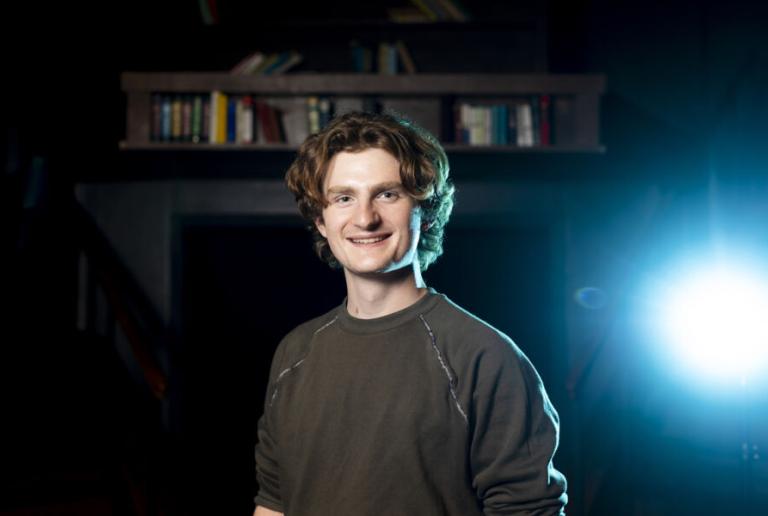
Andrew Mueller stands in the Mary Moody Northern Theatre with a set piece for a play behind him.

Scholarship Audition Weekend

Prospective theater students who have applied for university admission and been accepted to St. Edward’s are invited to join us for a weekend in February of theater program activities. You will sit in on classes, tour the campus, dine with current students, meet program alumni, audition for a theater scholarship, see a show, meet the cast and crew and take workshops with university faculty. Scholarship Audition Weekend is a perfect way to test your 'fit' with the theater program as you are making that all-important college decision.

Explore Details About the BA in Acting

Major Requirements: 

The Bachelor of Fine Arts requires 66 hours of major courses, which include a core theater coursework paired with acting coursework.

General Education Requirements: 

The degree requires 54 hours of general education courses that students compete over four years in addition to their major courses and electives.


View and download the full degree plan for our Acting major.

At St. Edward’s, our faculty are outstanding scholars, thought leaders, teachers and mentors who bring energy and enthusiasm to our vibrant learning community. They take pride in getting to know you, helping you achieve your goals and celebrating your successes.

View a list of our faculty members and their contact information on the Department of Performing Arts webpage.

Subscribe to School of Arts and Humanities