


The mood and tone conveyed by our photography should be personal, authentic and bold. Our style aims to engage and captivate the viewer with honest, relatable images. We emphasize real visual documentary storytelling over staged, posed and AI-generated photos.
General Guidelines
- Photograph full-frame. Establish a mood and tone with bold images focused on moments of authenticity. Use available light to capture a bright, airy, genuine feel.
- Aim for honest, personal and direct images that are powerful and eye-catching. Attempt to capture moments happening instead of posing people to smile for the camera.
- Do not use stock photography or AI-generated images.
- Use a captivating documentary style that reveals a behind-the-scenes perspective of the diverse and passionate St. Edward’s community.
- When photographing, keep all possible mediums in mind: print layouts, website pano images and social media. Capture both landscape and portrait orientation as well as close up and far away shots.
- Create powerful, eye-catching imagery by combining genuine moments, thoughtful composition, and pleasing colors, light and shadows.
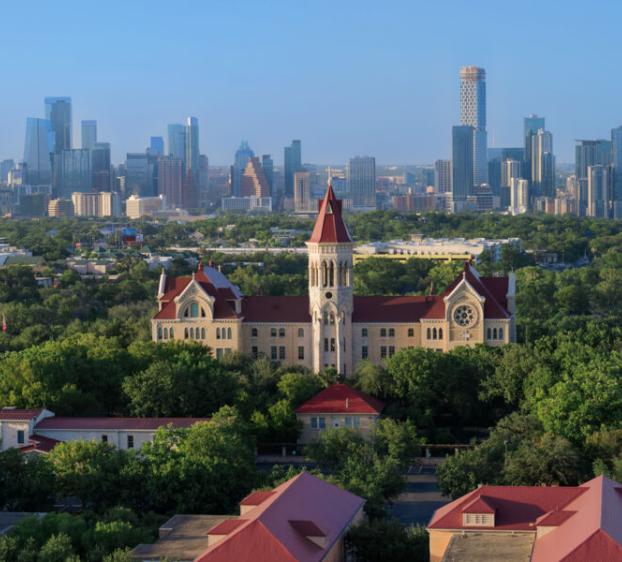
University Photo Library
The Marketing Office has compiled a collection of popular photos for the university community to use.
Photography Categories

Academic Moments
Capture learning in action — students working with professors and in settings where students are experiencing their breakout moments.
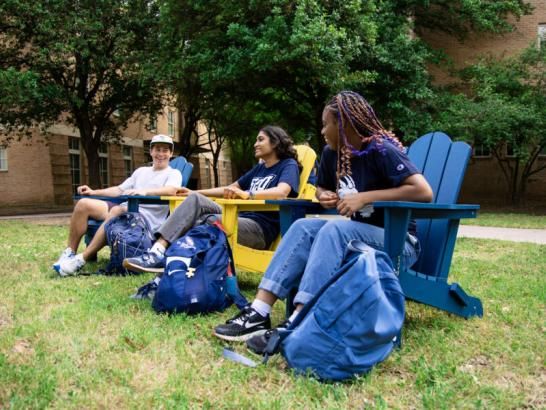
Campus Life
Show community, environment, movement and laid-back lifestyle. Photograph active moments at campus events and quiet moments of students on campus.

Details
To illustrate a sense of place and to provide more information on the subject matter, detail photos from around campus and Austin can be used to enhance the storytelling. Details will almost always be up-close, tight photos. They can be of items (printed photos, food, jewelry, flowers, etc.) or of people (hands, eyes, etc.).
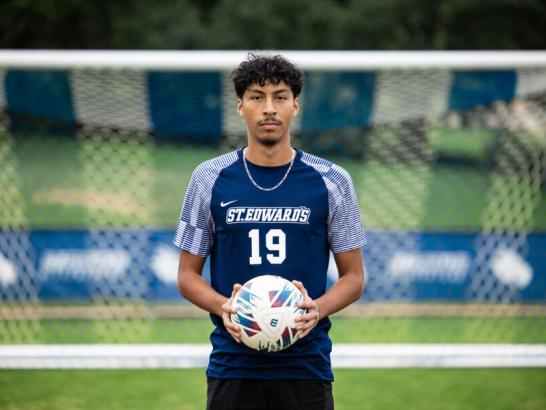
Environmental Portraits
Photograph portraits with energy and expression, and feature subjects in an environment relevant to their story. Vary focal lengths for different uses in digital and print — close up, waist up and full body, etc. with both horizontal and vertical orientations. Feature more of the background in the frame when it makes sense.
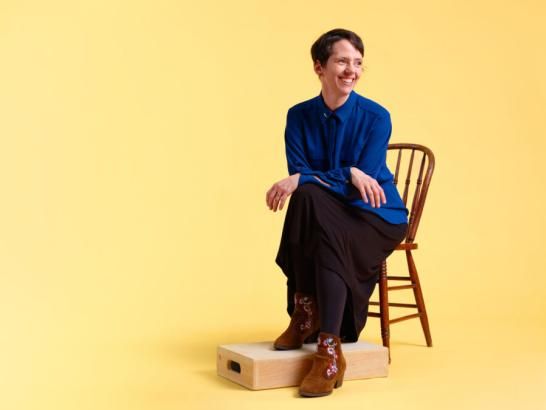
Studio Portraits
Use colorful, bold studio backgrounds that align with the university's color palette. Make portraits with movement, energy and expression.
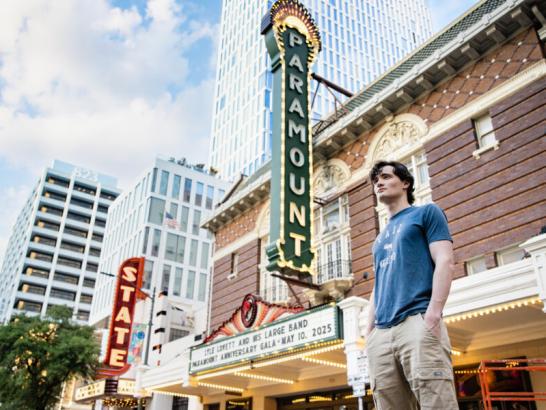
Austin Portraits
Show students' connections to Austin's culture, internships and opportunities. Integrate the city's color and texture through murals, landscapes, flora and other things that show the St. Edward's experience in Austin.
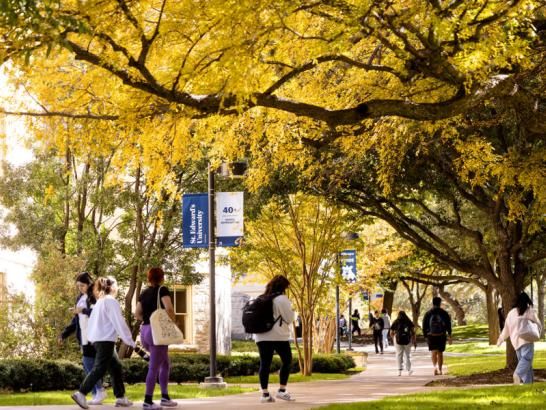
Campus Beauty
Beauty images of campus should be as bold as portrait and details photos. Aim to take wide photos with new and interesting perspectives. Capture what makes a specific building or location on campus unique. Pay special attention to light and shadow as compositional elements. Focus on highlighting spaces with greenery as well as beautiful architectural elements. Include people in the frame whenever possible.
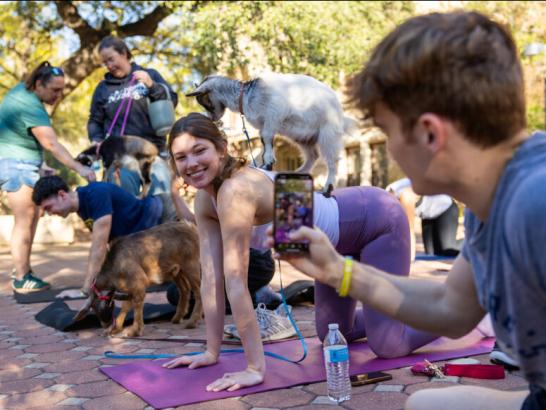
Events
Don’t be afraid to get close! Wide images of big crowds work well but also get small groups or individuals engaged in the moment (taking photos with phones, interacting with others, actively participating in the event, etc.) Seek out storytelling details that provide more context about the event. Capture genuine, emotional moments — excited, smiling faces make for energetic moments, and pensive expressions can portray quieter moments.
Additional Information
If you would like to hire a freelancer to photograph your event, the Marketing Office has complied this list of photographers from which you can choose.
Please use this online form to obtain consent from subjects when taking photo or video for university purposes. For guidelines on the consent of usage, please see the Photo/Video Release Statement.
If you are looking for specific images and cannot find something to fit your needs in the University Photo Library, or you are hoping for coverage for a particular event or need, please submit your query via our Photo/Video Request Form.
Caption content: Cover the who/what/where/when/why by using AP style captions.
- Structure: (Person’s name) (action/describe what they are doing) (specific event/location) (city, state) (day of the week, month, day, year). Include a second sentence if needed to give more context.
- If there is more than one identifiable person in the photo, name them from left to right.
- Example: Mariah Olivarez and Nina Martinez walk by Sorin Oak at St. Edward’s University in Austin, Texas, on Friday, June 21, 2025.
Naming Convention: YearMonthDay_What/Who_SequentialNumbers (001, 002, 003, etc.). Examples include:
- 20251108_Homecoming_Parade_001
- 20250531_Campus_Drone_020
- 20250428_Presidential_Award_Portraits_Sarah_Calvin_004
Note: Do not feel like you need to update file names to reflect each person in the photo. Names should be in tags. The only time you should include a person’s name in the file name is if it’s a portrait session or photo session exclusively of one person.
Credits: Any photos taken by the university photographer are free for university use. When sharing photos with outside parties, please check with the Marketing Office first by emailing the request to brand@stedwards.edu. Once approved, let the outside party know they must credit with "(Chelsea Purgahn/St. Edward's University)"
- Do not compete with the photo; allow the image room to breathe and aim for a minimal, clean approach.
- Utilize negative space without detracting from the content of the image; this is especially true when placing captions on a photo.
- Use Adobe Express or Adobe Photoshop to edit and crop photos, but be intentional about cropping — do not excessively crop as the frame composition is important to the visual storytelling of the image.
- No additional edits or crops should be made if images are provided by the Marketing Office, as they have already been carefully edited and cropped.
Photo Sizing: A 3:2 aspect ratio is typically best for most photos. (3000x2000 px, 4000x2667px, etc.) The aspect ratio of an image describes the proportional relationship between its width and its height.
Resolution: 300 DPI (dots per inch). DPI measures the particular number of individual dots that can be placed in a line within the span of 1 inch. The higher the number, the better the resolution. (If saving for web, the standard is 72 DPI.)
File format: JPEG (a compressed file type and one of the most popular file types in digital photography because of its smaller size and quality picture).